
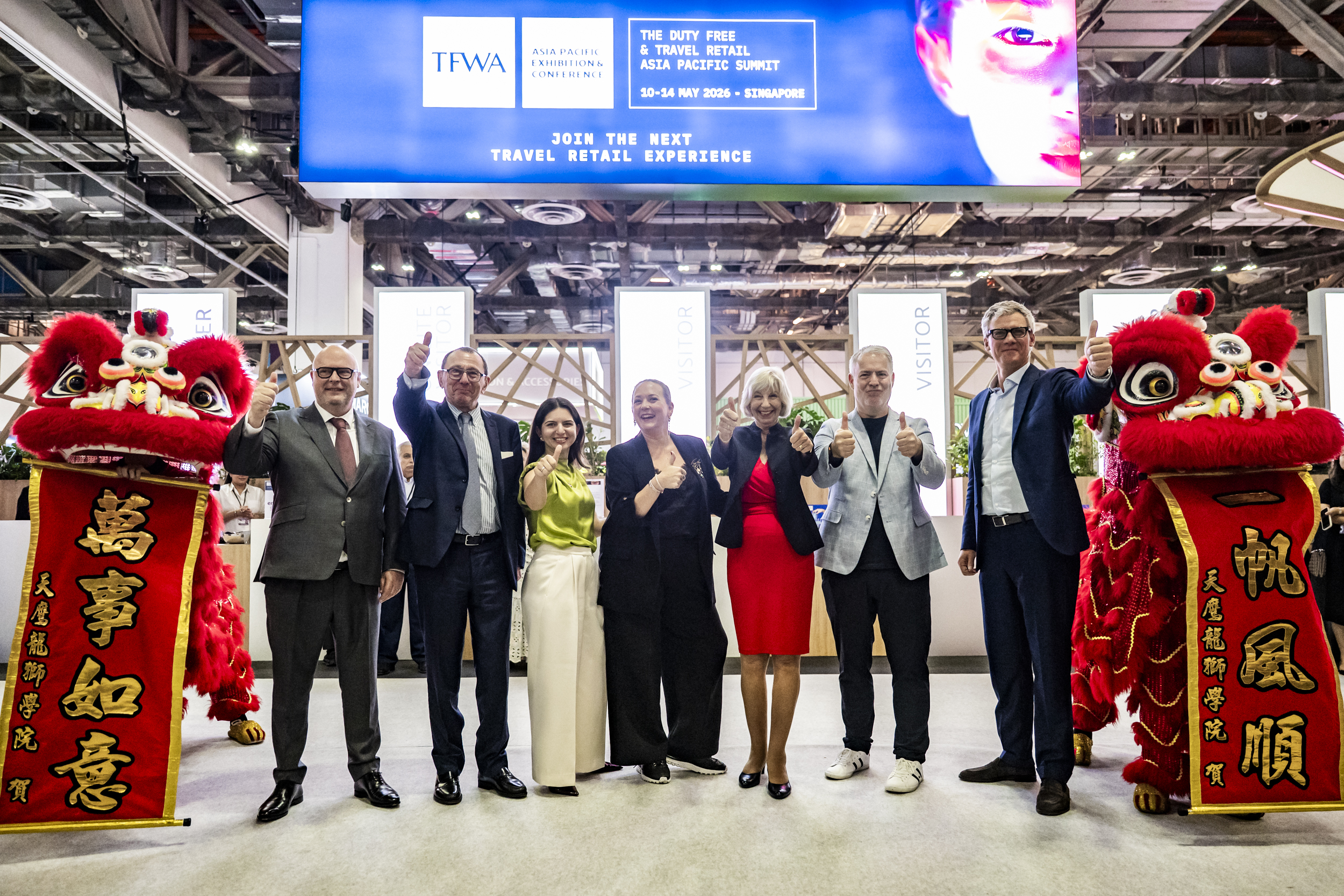
BW Confidential highlights the key talking points, news, views and trends gleaned from the TFWA Asia Pacific Exhibition & Conference, which took place in Singapore from May 10-14
This year’s TFWA Asia Pacific Exhibition & Conference took place against a backdrop of a Middle East war and continuing difficulties in Asia’s travel retail sector, especially in Korea.
However, despite this, there was nonetheless a strong positive buzz at the show. The show floor may have been quieter than in previous years, but exhibitors underlined that key buyers were at the event (albeit in fewer numbers) and they had a full agenda.
This year’s show introduced a renewed format including a show floor organized by product category, a new area of emerging cosmetics and fragrance brands called Launchpad hosting 10 companies, and another new section called Taste of the World with a focus on food and beverage.
Some 200 companies exhibited this year, including 61 cosmetics and fragrance brands, representing 30% of the total. This makes cosmetics and fragrance the second-largest category at the event, after wines, spirits, beers and non-alcoholic beverages, whose exhibitors account for 32% of exhibitors at the show. There were 60 first-time exhibitors and emerging players.
The TFWA said that 2,814 visitors attended the show. This included visitors from 58 major airports, alongside representatives from major airlines and cruise lines, which collectively accounted for 10% of attendees, as well as duty-free and travel retail operators, which represented 30% of visitors. Agents and distributors accounted for the largest share of attendees at 38%.
The show’s new Agora amphitheater hosted a strong program of talks and pitch sessions and attracted 662 attendees.
Key talking points & themes from the show
- With air route changes as a result of the war in Iran, Middle Eastern aviation hubs such as Dubai and Doha have been hit hard – as one brand manager put it, “we have had no traffic for two months”. There were some question marks over whether these hubs will be able to regain the position they had prior to the war, not only in terms of perceptions of the safety of these locations, but as more long-haul flights between Asia and Europe for example have become available. Executives also said that Singapore is set to become an even bigger hub, given the events in the Middle East.
- There are worries about the impact of inflation on the travel-retail business in light of the war in Iran. Increased fuel prices have meant higher air fares, which could curb travel or reduce spend in duty-free stores. In the face of this situation, some executives have called for an increase in more affordable ranges in travel retail, and better signage about savings in stores.
- However, inflation in energy, logistics and raw materials costs may see prices of many products sold in duty free increase. There were strong price hikes in fragrance during Covid (and prices did not come down post Covid), and any additional increases could make consumers think twice about making a purchase.
- Re-routing as a result of the Iran war has changed the dynamics of passenger profiles in certain locations.
- Executives report a large gap between sell-out and sell-in, as retailers show caution about orders over the next few months given the volatile geopolitical situation and a potential drop-off in passenger numbers at some destinations. This is particularly the case in Europe. Brands say they are worried that retailers are too cautious and may cut their stock levels too much, which will mean if passenger numbers remain steady or increase they will see lost sales.
- There are worries over the summer holiday season particularly in Europe, if the price of air fares continues to climb, or if flights are cancelled due to fuel shortages.
- Despite the war in Iran, there was a strong turn out of fragrance companies from the Middle East at the show, with exhibitors including Ajmal, Lattafa, Al Haramain, Al Fakhar and Khadlaj Perfumes.
- The changes in travel-retail operators in Asia was a key talking point. Retailer Sunrise Duty Free exited Beijing and Shanghai and was replaced at the start of 2026 by Swiss company Avolta and China Duty Free Group (CFDG). Meanwhile, in Beijing Capital International Airport, Sunrise was replaced by CFDG and Wangfujing Group. LVMH also sold its travel retailer DFS’ Hong Kong and Macau business to Beijing-based China Tourism Group Duty Free. The transition has led to some business disruptions, or as some called it “teething problems”, with a string of infrastructure and regulatory constraints and logistics and operational challenges, which are negatively impacting sales. As a result, in the short term, the changes are viewed as negative, although executives said they were hopeful that the situation would stabilize in the second half of the year. In the long-term, most see the changes in a positive light. Sources say that these new players also want to redefine the level of promotions and discounts at the stores. Avolta is also seen as pioneering new retail concepts, which could help stimulate the market in the long run.
- Chinese passengers are still traveling less in general, and a lot less outside China. There continues to be a strong shift towards Asians traveling within Asia.
- “Hainan is back”, was a refrain at the show, with most players saying they are seeing strong growth on the Chinese island after three years of declines. This is in part due to China introducing an island-wide special customs operations in Hainan, which expanded eligible duty-free product categories and relaxed purchase restrictions for locals. In terms of passengers, as many Chinese still do not have a passport, they are traveling domestically, and often to Hainan. This has changed the passenger profile on the island, as consumers from tier-one and tier-two cities are no longer there, as they now prefer to travel in Asia or to other parts of the world. Consumers from the tier-four and tier-five cities who now travel to Hainan do not have the same purchasing power as those in the first-tier cities, so sales are not necessarily following the traffic. There is a worry about offering too many promotions to entice these travelers, as it can quickly become difficult to re-establish a full price assortment. The issue is not one of traffic, but of converting passengers, which is why there is more investment once again in retail experiences in Hainan. Also, in terms of passengers, industry players pointed to a strong flow of Russians holidaying in Hainan (instead of Dubai, as a result of the Middle East war).
- Political tensions between Japan and China have weighed on Japanese brands and on duty free in Japan. Flights between the two countries have been canceled after the Chinese government warned against traveling to Japan, and sources say that Japan’s duty free stores have lost up to 55% of Chinese travelers.
- Ongoing shifts in Chinese shopping behavior remains a key issue. These consumers are more measured and rational about what they are buying and are also expecting more when they shop in stores, such as facials or other services.
- Several executives commented that brands can no longer use traveler numbers as an indicator of how their business will grow. While in the past, budgets were calculated based on pax growth, now there are so many variables, including the reduction of Chinese travelers outside China and a more conservative and cautious attitude to spending. In light of this, there is an opportunity, say some, to work harder to get consumers to trade up and focus more on building value rather than volume. According to a study by Oliver Wyman in collaboration with the TFWA, since 2021, travel-retail sales in Asia have captured only 70% of traffic growth — implying roughly $5bn in missed opportunity. Two forces explain the gap: luxury spend reshoring to domestic markets and stagnant value propositions from operators.
- Southeast Asia is held up as one of the most dynamic regions in terms of passenger growth, with traffic exceeding pre-Covid levels. However, markets such as Thailand, which was a favorite spot for Middle East travelers, is seeing a strong decline in passengers from the region.
- Developments in India and Indian travelers were key talking points. Indian travelers are expected to capture a larger share of future growth, around 20%, according to a study by Oliver Wyman in collaboration with the TFWA. These travelers have different needs, spending behaviors, category preferences and service expectations.
- The difficulties in Korean duty free were a major issue at the show. Travel retailers in Korea continue to feel the ongoing impact of daigou regulations and have reported steep declines in sales and profits and store closures. In addition, they are up against increasing competition from domestic players – in beauty from Korea’s dominant retailer Olive Young, especially. Executives say that the financial stress these retailers are under is palpable. They add that while many of these players have ideas about making their store better, the losses they have incurred make it impossible to put any new concepts into place. Brands continue to look to rationalize their distribution network in Korea and are focusing only those stores that offer unique experiences or are in the best locations. On the upside, traveler numbers to Korea are positive, but the issue is coming up with what will make these passengers enter a duty-free store.
- Online discounting and lower prices in domestic markets continue to impact duty free. In addition to Asian travel retail, steep discounting in the Chinese domestic market is affecting Chinese travelers’ habits even in Europe. Many Chinese travelers now no longer see the value of shopping in Paris for example, when the promotions and gifts offered at home are better.
- Brands shared that more airports and landlords are more actively involved in creating the travel-retail offer with the operator compared to several years ago when the discussion was dominated by brands and retailers. One executive said: “Airports and landlords are much more involved now and saying this is our traveler and we want to entice specific travelers or we want these brands that we know have high awareness in our country, and we want them to play in our space.”
Opening conference
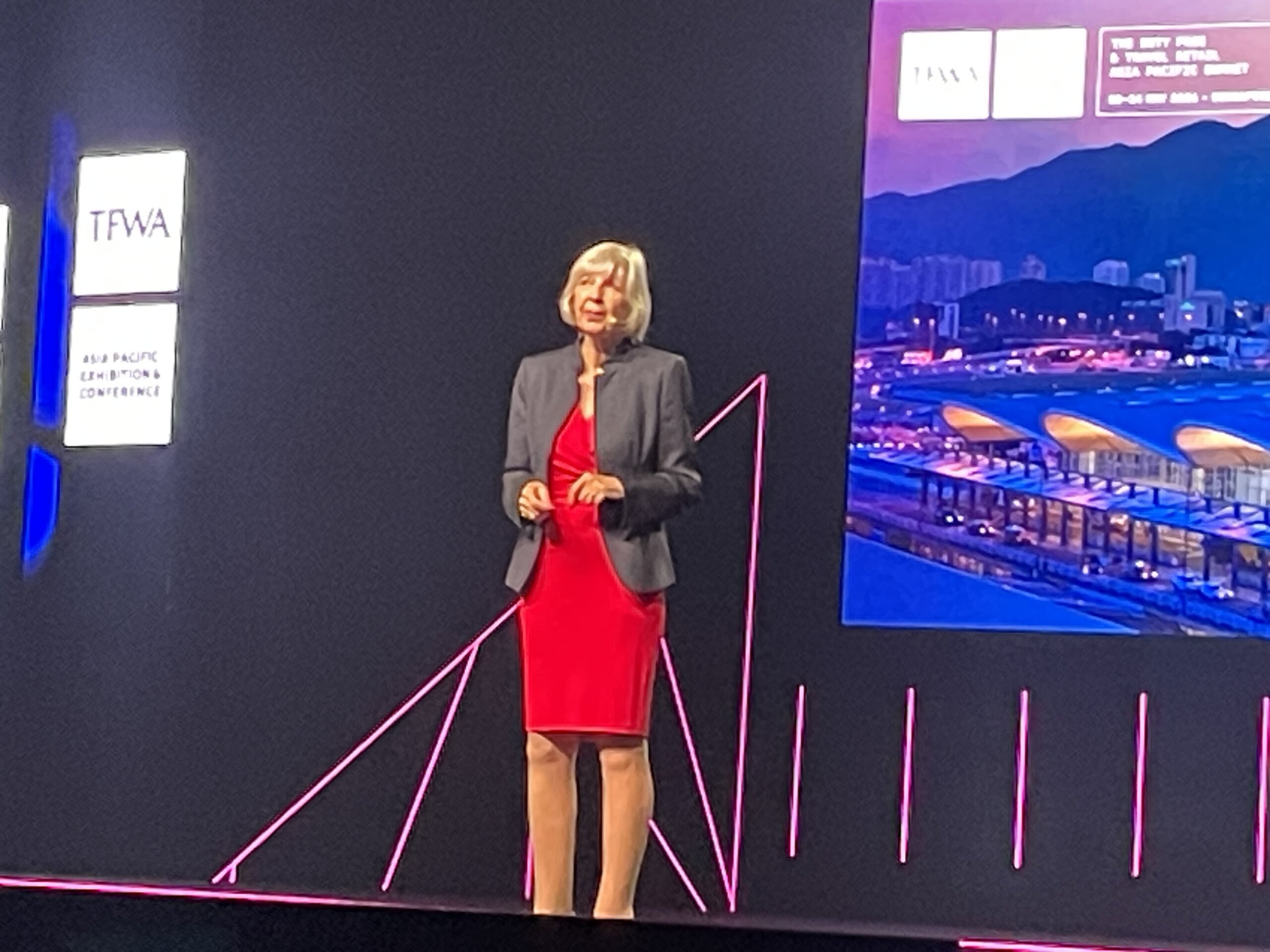
In her first address as TFWA President, Sarah Branquinho underlined Asia’s resilience in the face of the Middle East war
Despite the impact of the war in the Middle East on travel retail, the industry in Asia remains resilient and well-placed to withstand disruption, TFWA President Sarah Branquinho told the audience at the opening conference of the TFWA Asia Pacific show in Singapore.
While acknowledging the severe impact of the war in the Middle East and the ripple effect across the world in terms of shifts in aviation routes, disruption to supply chains and increases in air ticket prices, Branquinho underlined that demand for travel in Asia remains strong.
Air traffic in Asia Pacific outperformed other regions in 2025, and is expected to do so again this year, and seven of the world’s 10 busiest international routes are in Asia Pacific, Branquinho stated. International passenger departure numbers from Asia Pacific are expected to increase 5.7% in 2026 to reach 548.6 million, according to figures from Amadeus Traveler Statistics.
Shanghai airports (Pudong International Airport and Hongqiao International Airport) had 135 million passengers in 2025, up 8.3% on 2024; Beijing had 70.7 million passengers in 2025; Hong Kong had 61 million passengers last year, up 15% compared with 2024; Beijing’s annual passenger volume exceeded 70 million, and Singapore saw 69.8 million passengers in 2025 surpassing its 2019 peak
In Japan, international air traffic has rebounded fully with its airports handling more than 100 million international passengers in 2024. In South Korea, Incheon Airport reached a record 74 million passengers in 2025, although duty-free sales remain at around 50% of pre-pandemic levels and retailers continue to face pressure given the move away from daigou or shoppers bulk buying.
In terms of revenue in 2025, Asia Pacific travel retail and duty-free sales rose 4.4%, according to preliminary figures from Generation Research. Globally travel retail and duty-free sales rose 2.4% in 2025 to reach $75.9bn. All categories saw growth apart from cosmetics and perfume, which declined 3.2% to $24.45bn. However, cosmetics and perfume remains the most-purchased category, with a 32.2% of market share of the travel retail and duty-free channel globally, per Generation.
A key trend that is likely to be reinforced by the Middle East war is Asian passengers traveling within Asia. “Around 68% of this region’s passengers are traveling within Asia itself. That means that the significant share of traveler spend remains within the region. Even as geopolitics reshapes global travel patterns, it may ultimately reinforce this intra-regional strength,” Branquinho said.
Keeping up
However, although travel demand remains strong, there has been a shift in how passengers shop. “The Asia Pacific shopper continues to be a major cornerstone of our industry, wherever we are, with the region driving high footfall, high in store, dwell time and high spend. However, these shoppers are more demanding than ever, are more purposeful about entering the store, have a keen interest in differentiation and also demand quality and premium options. Today’s shopper is evolving, and we need to stay abreast of developments if we’re to continue to take full advantage of the opportunity they present,” Branquinho commented.
She continued: “No single stakeholder can meet these expectations alone, brands, retailers, airports and other travel retail channels, cruise ships, airlines, downtown, duty free. Stores need each other more than ever.”
She added that travel retail is not immune to trends in the domestic markets. In China for example widespread discounting calls into question the reason for shopping in travel retail where products can often before expensive.
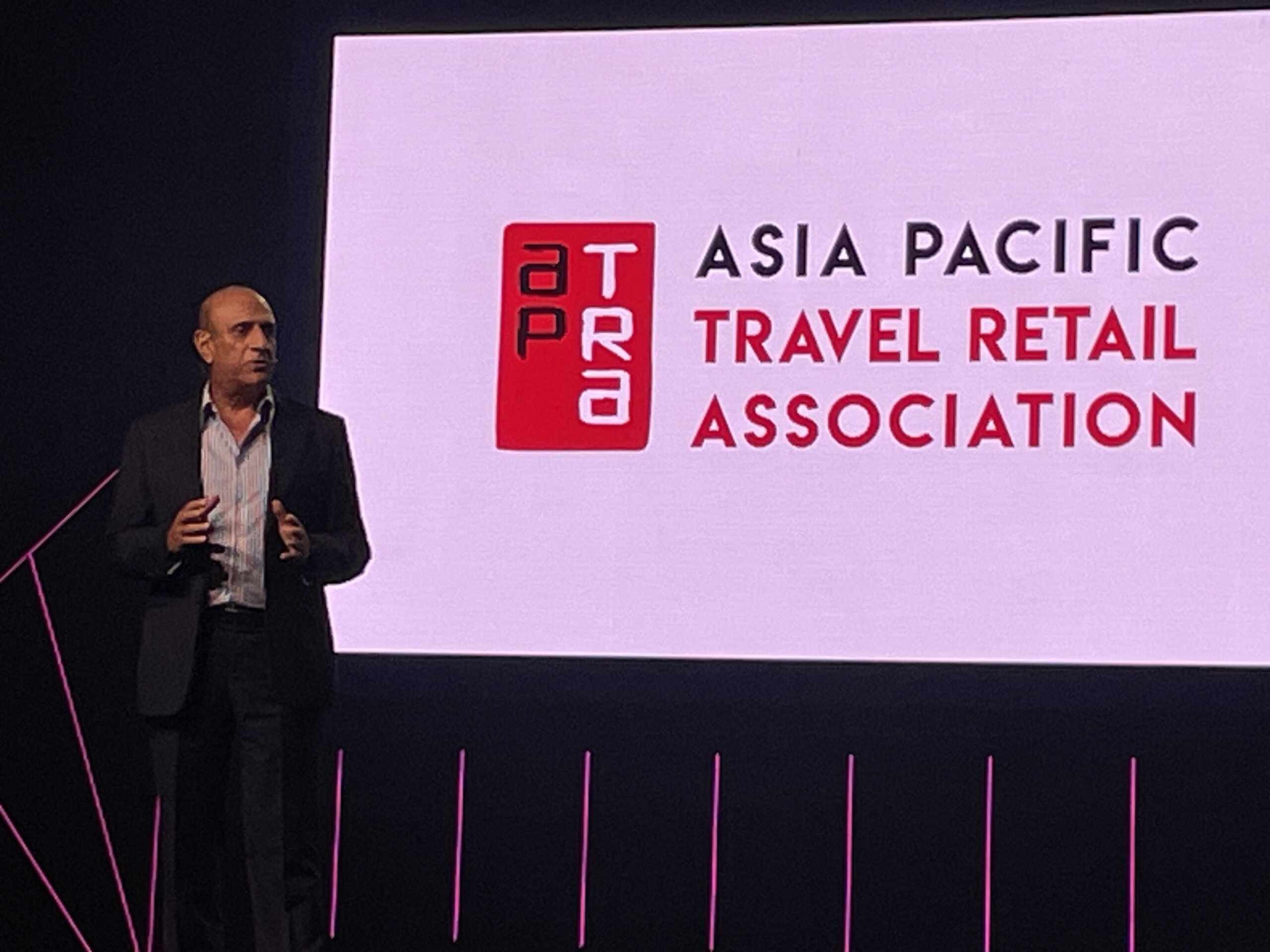
APTRA President Sunil Tuli: structural growth underlines region’s potential
Asia Pacific Travel Retail Association (APTRA) President Sunil Tuli highlighted the advocacy work the association is undertaking, and said that in times of geopolitical uncertainty, the role of trade associations in protecting the health of the travel retail industry is more important than ever.
He also illustrated the long-term potential of Asia Pacific. Citing Airbus’ April 2026 global services forecast, Tuli said that that Asia Pacific is expected to become the world’s largest and fastest growing aviation market, driven by traffic. He added that according to OAG, regional infrastructure development is expected to add nearly one billion airline seats over the next decade, while airport expansion in India, China and Australia will add further capacity.
However, he warned that while the long term vision remains positive, the short term reality is challenging, underlining that the fallout from the US-Iran war and the wider instability surrounding the conflict will weigh heavily on Asia Pacific, especially as the region is deeply connected to global energy flows, shipping routes and aviation demand. For example, the Asian Development Bank indicated that growth in Asia Pacific could slow from 5.4% to 5.1% in 2026 and 2027.
“A sustained period of conflict raises oil prices, weakens business confidence and puts pressure on household spending. This has direct consequences, not just for national economies, but also for travel demand, airport travel and consumer spending and travel
retail. The aviation industry feels that pressure; airlines across the region face high fuel bills, route disruption, insurance loss and more complex scheduling, as carriers navigate airspace risks and longer routings,” Tuli said.
This is especially the case for low-cost carriers, whose business models depend on tight margins, high aircraft use and price-sensitive consumers. Higher airline costs feed into higher fares in some markets, while operational disruption reduces frequency, suppresses discretionary travel, and creates knock-on effect for airport commercial revenues, Tull added.
“For our industry dependent on traveler footfall, dwell time and consumer confidence, those shifts matter greatly. However, it’s important to keep in perspective that the fundamentals of Asia Pacific aviation remain strong. Rising middle class demand, a strong youth population and airport investment are all going to sustain structural growth over the longer term. So while geopolitical shocks create short-term, pain they do not erase the region’s underlying potential,” he stated.
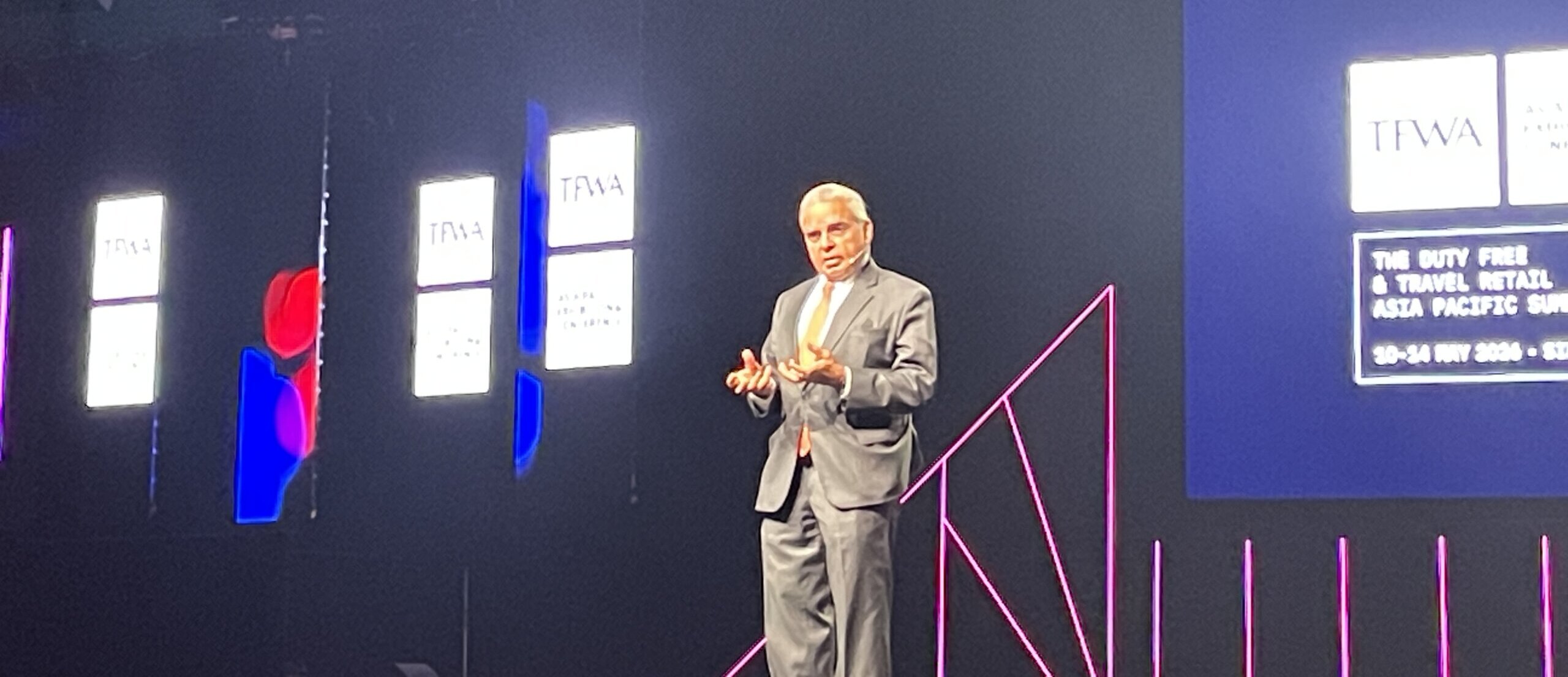 Distinguished Fellow at Asia Research Institute National University of Singapore (NUS) Kishore Mahbubani
Distinguished Fellow at Asia Research Institute National University of Singapore (NUS) Kishore Mahbubani gave his views on the future of globalization
Mahbubani’s address began with the question: is globalization a sunrise or a sunset industry? A question whose answer he believes will determine where many industries, including travel retail, will be in the next 10 to 20 years.
Mahbubani outlined the major shocks that have shaken the strongly held belief over the past 25 years ago that globalization meant a new dawn in human history. These came in the form of Covid, Trump’s tariffs, the China shock and the current Iran war.
He indicated that until Trump’s ‘Liberation Day’ tariffs last year, the US had been the leading defender of an open global trading system, and the idea that globalization led to prosperity.
“The lesson was very clear – countries that open up and engage, succeed. If you have any doubts about this, just go to the Korean peninsula. When the Korean War ended the1950s North Korea and South Korea’s economy were the same. Today, where is South Korea and where is North Korea? Open yourself up to globalization, do more trade, and you succeed and you win. But then suddenly, the chief defendant of the system says ‘no’.”
In terms of the China shock, Mahbubani said that the reason there has been a backlash against globalization, especially in developed countries, is because these markets feel that they cannot compete against China. He added that as China has been successful in growing its economy and producing quality and cheap products, it has taken jobs from developed countries.
Globalization’s resilience
Mahbubani’s conclusion is that given the immensity of these shocks, the global system should have already shattered, and that the fact that it has not, is testament to its strength and resilience.
He added that Singapore is an indicator of the resilience of the global system. As the most globalized country in the world with total trade that is three and half times the size of its GDP, it should have been the first country to feel the effects of a crack in globalization, but instead, in 2025 it reported 5% growth.
“If the most globalized economy in the world manages to grow at 5% in a very difficult economic environment, it’s an indicator that the forces of globalization are still alive.”
He added that given how integrated the world has become economically and in terms of communications makes it almost impossible to pursue an isolationist agenda.
“The idea that you can shut off the world cannot happen. While there will be temporary retreats occasionally by countries from globalization, most countries realize that you have to keep opening up yourself with the rest of the world if you’re going to succeed, and the idea that you can close the doors to the world can no longer happen. So globalization, therefore, has been structurally plugged into our world, and it will continue to grow.”
Mahbubani concluded by talking about the CIA countries – China, India and Asean – which together account for 40% of the world’s population or 3.5 billion people. In 2000, only 150 million had middle class living standards, but by 2025, the number had risen to 1.5 billion and by 2030 it should reach three billion. He went on to say that aspirations of newly middle class are to travel, thereby heralding much potential for travel retail.
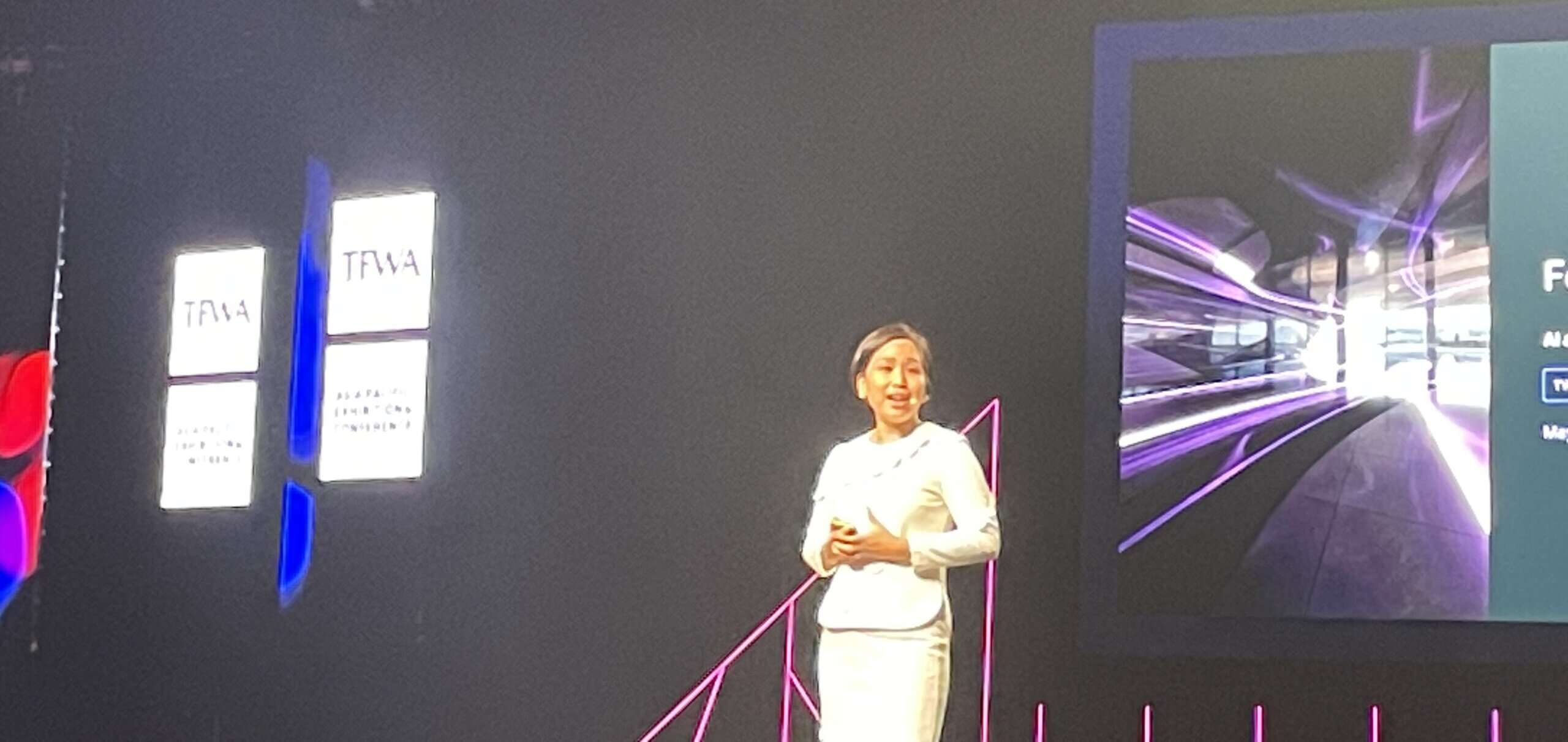
INSEAD Professor of Strategy Hyunjin Kim shared her views on how companies should be thinking about AI
INSEAD Professor of Strategy Hyunjin Kim said that companies are thinking too narrowly about AI. She stressed that a key limitation is that many businesses are looking at how the technology can optimize their operations or make them more efficient, rather than rethinking and re-imagining about what is now possible because of AI.
She outlined three major shifts when it comes to AI: the fast pace of development of AI; how AI changes companies’ relationships with consumers and how companies are built.
“Travel retail is flooded with many different technologies that touch every piece of what you produce, from how you interface with your customer and the latest version of real-time pricing, to biometric gates, self checkout, augmented reality try-ons and different ways to personalize. The response across the industry has been this rush to adopt a variety of tools to experiment and to pilot.”
However, she said a more fundamental shift is the way in which the interface with the customer is being rebuilt. Online search for a purchasing a product for example, is being replaced by conversation, and these conversations are increasingly being replaced by agents that give recommendations and make a purchase on your behalf.
As more decisions become mediated by agents, companies relationships’ with consumers will change, particularly how brands remain visible for consumers and how retailers influence the buying process. “If the customer relationship is increasingly owned by that agent layer that both learns and steers how purchase decisions get made, then how does that change how you approach building the customer relationship?
AI and new companies
Another change is in how AI has made it possible to create companies with hundreds of millions of dollars in turnover with just a handful of employees. She cited, Cursor, an AI-powered coding agent that made $100m in annual recurring revenue in 21 months with 20 people, or Midjourney, an image generation company that does revenues of $200m with just 10 people, or Lovable, a vibe coding app, which reached $10m in annual recurring revenue in just two months with 15 people. “This shows how tiny teams can now operate at the reach and ambition of much larger companies, and are able to scale at incredible speeds, getting large amounts of revenue with very limited labor and very limited capital”
AI native firms have 25% fewer employees compared to non-AI firms at the same stage and that scaling also no longer requires the same hiring.
Kim indicated that theses shifts mean that companies need to reimagine how they build their business.
However, most companies focus AI efforts on improving emails, notetaking, summaries, using copilots and building more and more chatbots. “This is really narrow thinking in terms of where AI might be able to change your business, and in part, why we really haven’t seen the performance gains arise from these large investments that companies are making. The missing step in all of this usage is to think about where does AI map in your own production process? Where are the bottlenecks that currently constrain you in terms of growing your company, in terms of how you create value as a business?”
She continued: “The breakthrough is around solving the mapping problem, understanding how AI can unlock bottlenecks in what your company actually produces.”
She cited the example of Bark, originally a subscription box company for dog treats. After optimizing operations with AI, the company was able to see that their relationship with a customer was a bigger asset than that box they sold, which enabled rethinking what their company stood for and new services to pursue. It moved from ‘we sell dog treats, to we make dogs happy, and the result was Bark Air, an airline for dogs
“Once you have that free operational capacity, then you can think about how can you reimagine the brand and about what your brand can become […]. What can we build now that wasn’t possible before, instead of how do we sell better? You have a choice – you can either optimize the current model that you have and run faster, or you can reimagine the future of what you can become.”
She ended by urging companies to ask the following question: “If you were building your current business from scratch today with AI, what would you build? What are the products, the business models and the bigger brand narrative that you can dream up.”
For travel retail this could mean re-imagining the consumer experience on that 40 minutes before taking a flight. And that could go beyond just looking shepherd passengers into concession stands.
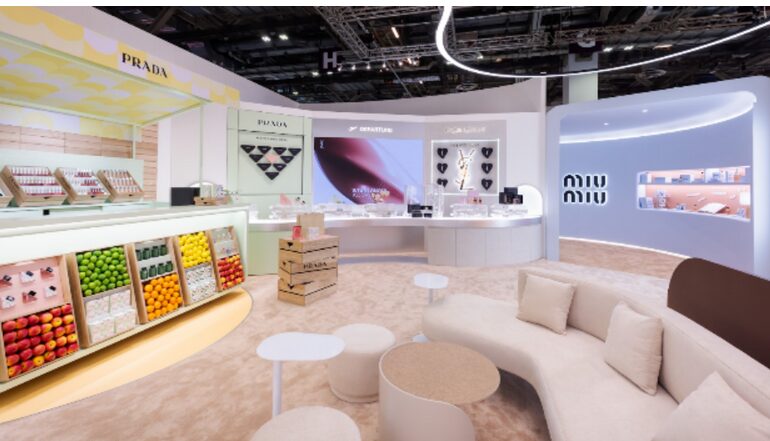
L’Oréal puts focus on differentiation, retail-tainment and new services
L’Oréal had a strong presence at the show, with a king-sized booth showcasing a string of retail concepts and services. The group took part in two discussion sessions in the show’s new Agora ampitheater and also hosted its annual cocktail party at its booth.
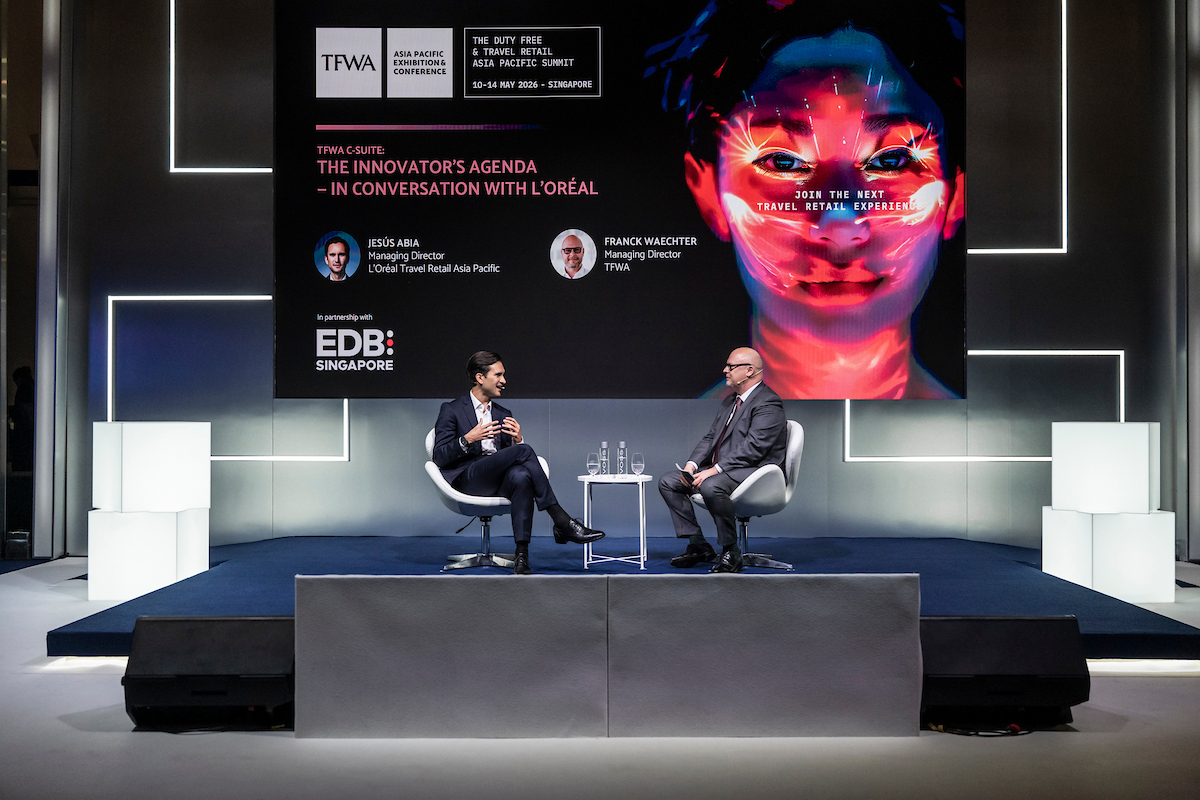

In a Q&A session with TFWA Managing Director Franck Waechter, L’Oréal Travel Retail Asia Pacific Managing Director Jesus Abia said the industry needs to focus on consumer centricity and to stop talking about the point of sale, and instead talk about the point of discovery or point of experience.
In a bid to reflect L’Oréal’s approach to bringing excitement to the channel, Abia first appeared at the panel discussion in the form of a break-dancing hologram, before arriving on stage in person.
Talking about what is needed to reignite the category, Abia said: “You cannot just expect your consumer to enter the store, and this is the real challenge that we are facing today. Now there is not a correlation between traffic growth and sales growth. That’s why I strongly believe that experience will be critical, as will differentiation versus the domestic market. Probably the first time most of our consumers are exposed to our brands is online. So our opportunity is that when the second time they are exposed to our brands we offer a very premium, elevated brand equity. We need to have the latest innovations and private exclusives.”
He added: “We are fighting for attention, and we have a big competitor, which is our passengers’ phones and we need to do better than their phones; this is our challenge. Some 45% of shoppers think that the in-store experience is the reason to buy in travel retail, so we need to really start transforming our POS.”
As an example, Abia pointed to its YSL Lovestore in Hainan, which featured an AI Assistant Robot (the robot was also present at the discussion and at the L’Oréal booth) that interacted and guided shoppers around the store.
Another element of consumer centricity is targeting consumers before they travel (which L’Oréal has been doing through partnerships with Asia’s ride hailing app Grab and with Meta. Such initiatives can improve understanding consumer needs, which Abia says has been lagging in the industry. “We are probably the industry with the most nationalities and most consumer needs, and in the end, we need to understand our consumer much better. If we understand our consumer and have the right insights, we will be able to give them a differentiating offer when they travel and be relevant for them.”
He emphasized that creating partnerships with the ecosystem – retailers, airlines, media and brands from other categories – is key.
L’Oréal recently announced a partnership with Asian travel platform Agoda for Southeast Asia, and in the Chinese ecosystem has a partnership with Alipay. “In the years to come, I think Ctrip and the main travel platforms in China are going to be very important for us. In the end, it is about how do we connect with the right consumer at the right time with the right offer – this is where we are moving forward.”
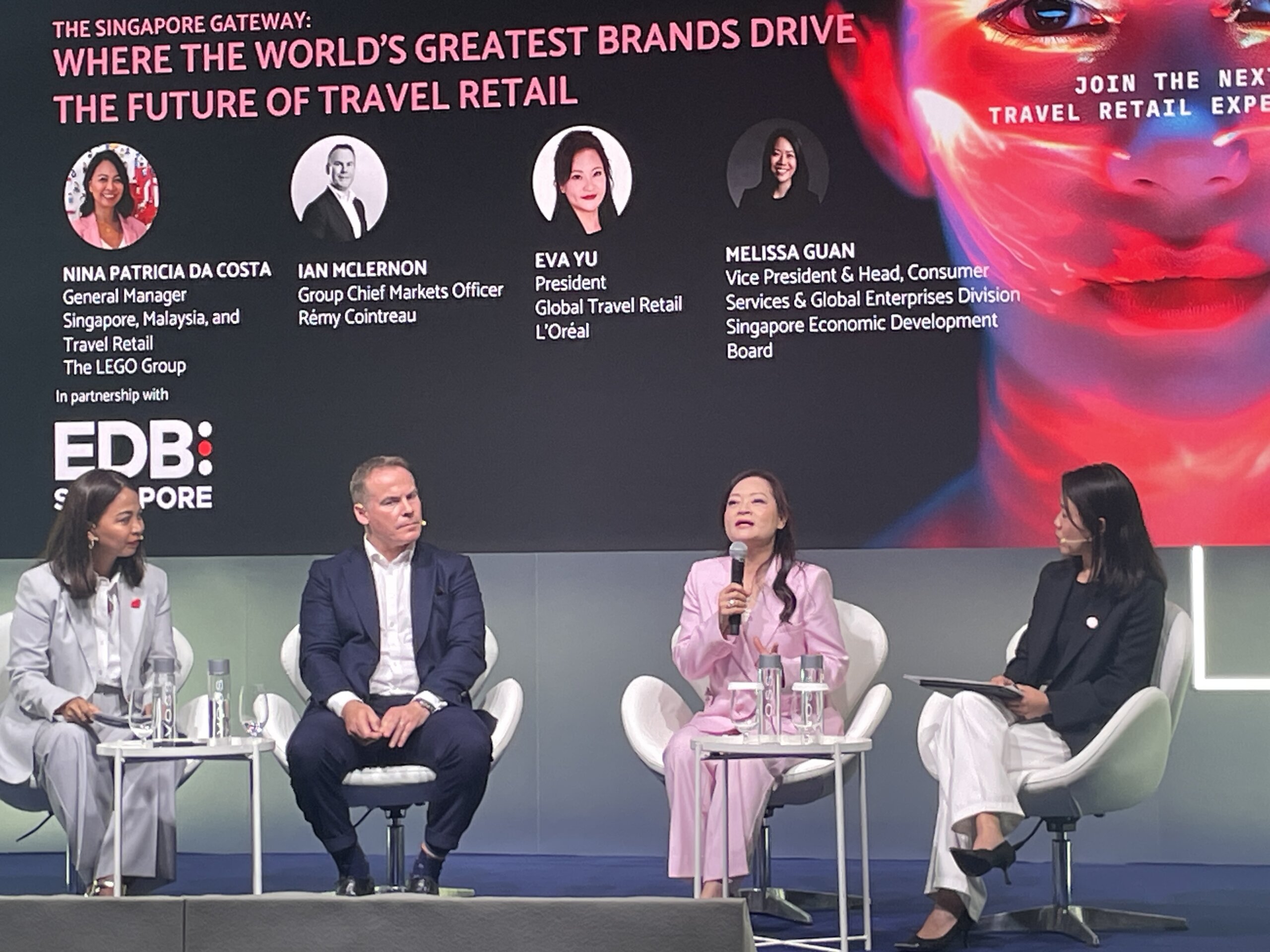
During a separate panel discussion, L’Oréal Travel Retail President Eva Yu also emphasized that the ecosystem for travel retail has to be reshaped and redefined to better reach travelers and provide them with a more personalized experience. “We want to connect online touchpoints with partners before the trip and during the trip, because this is the best way to give them a more personalized experience.”
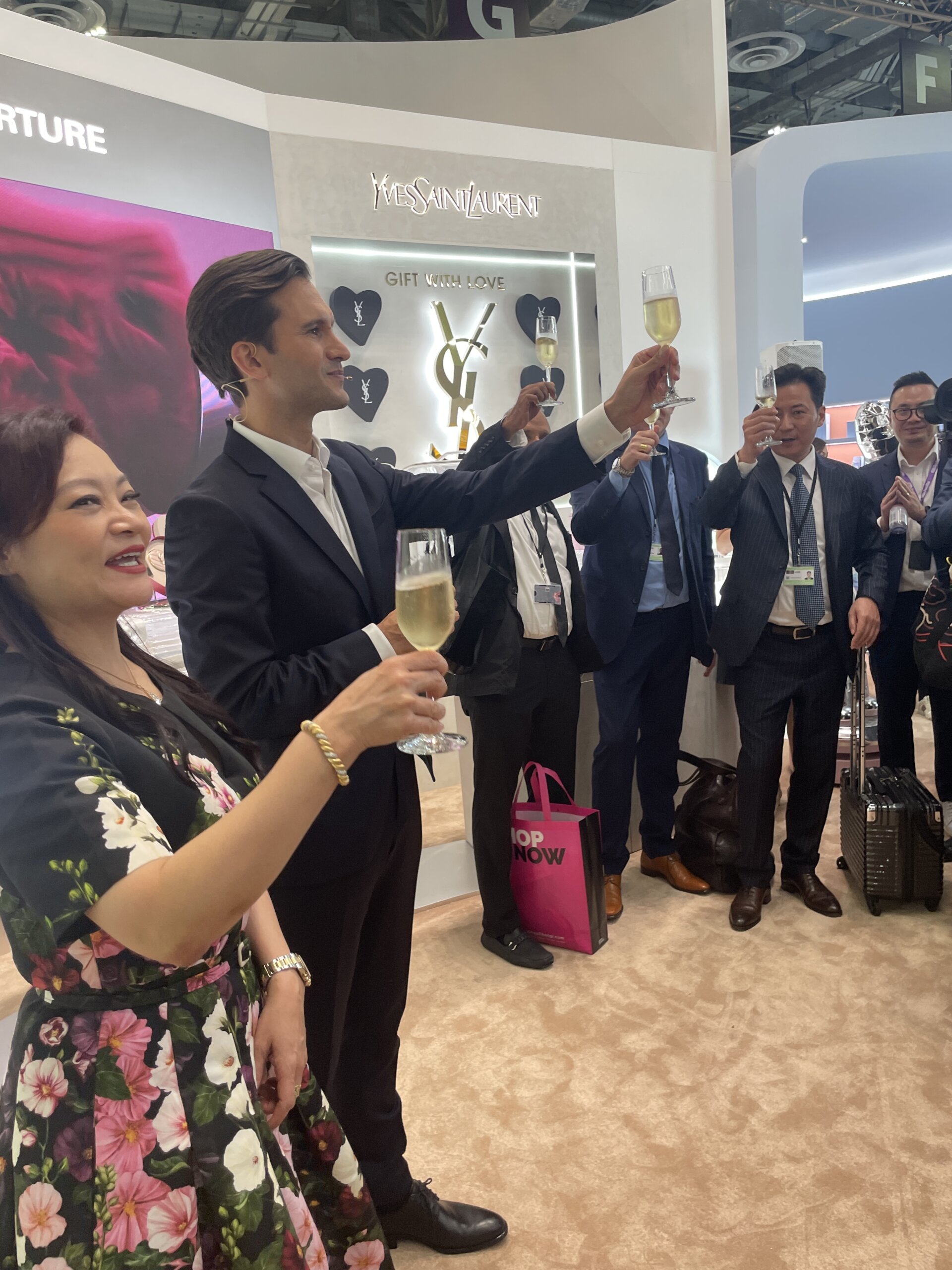
At L’Oréal’s annual cocktail party, Abia highlighted key features of the group’s booth at the show. He emphasized that what was on display was exclusive for travel retail, which is key to creating differentiation with the domestic market, and that it can be easily implemented in partner stores.
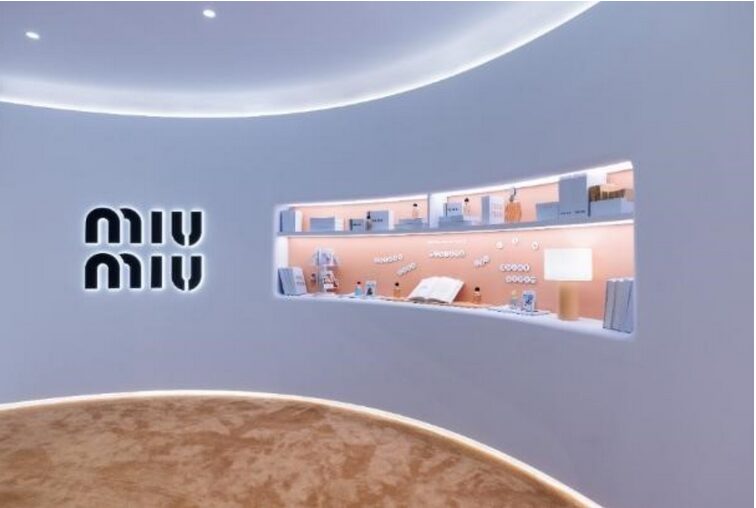
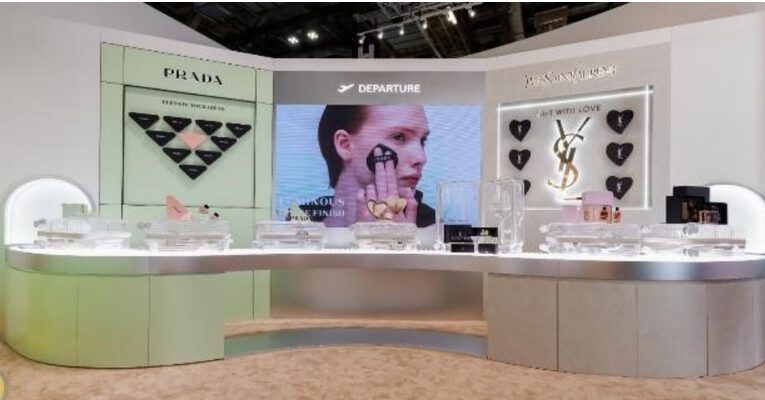
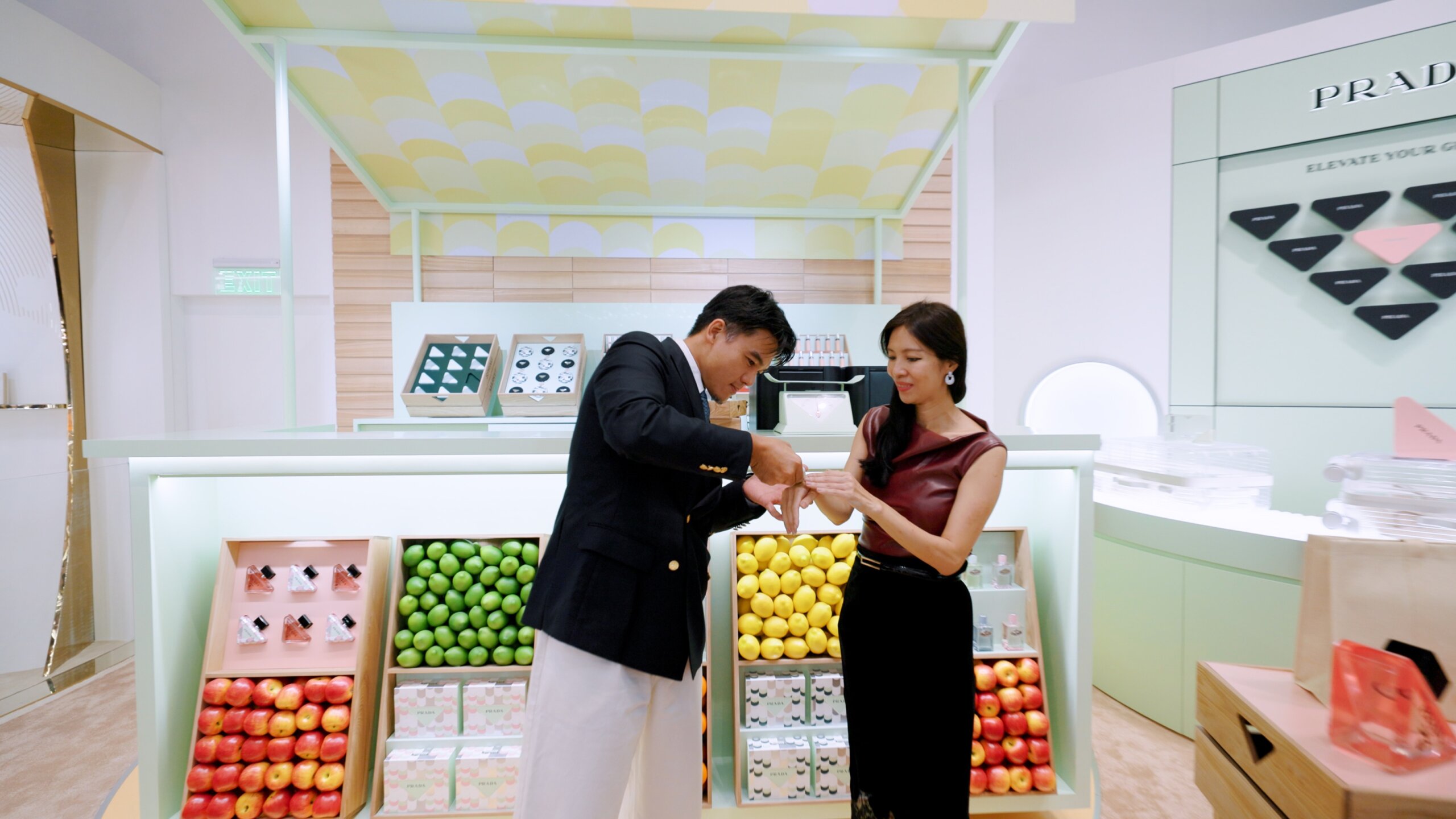
Abia pointed out gifting features, such as a travel retail exclusive Prada Paradoxe gift box with a lipstick and hand cream, the Prada market, a display in the form of a market stall, due to launch this summer, Helena Rubinstein’s first class recovery service, and the Longevity Oxygen shot to accompany the launch of Lancôme’s new Longevity line.
During the cocktail, L’Oréal’s Eva Yu said a big focus for the group is engaging Gen Z, a cohort that will account for 35% of the global traveler base by 2028. “At L’Oreal, we are committed to turn our partners space into a space of discovery and a space of excitement.”

Shiseido has been focusing on doing more to attract nationalities other than the Chinese in Japan, in the light of recent political tensions between Japan and China. These tensions, which involved the Chinese government issuing a travel warning for Japan, have seen the number of Chinese travelers to Japan plummet.
The group said that it has seen high double-digit growth in Japan from non-Chinese nationalities, mainly from Taiwan, Hong Kong and Southeast Asia, especially Thailand.
“In the past years, Japan travel retail has been quite Chinese dependent. But since the end of the last year, we have been losing some Chinese customers, so our Japan travel retail team quickly adjusted their strategy to put investment behind serving different nationalities. For example, before, we mainly trained beauty advisors to speak Chinese, but now we use English more and try to understand what non-Chinese travelers are looking for. The uplift from other nationalities has still not yet 100% compensated for the loss of the Chinese, but we are getting there,” Adele Zhang, Shiseido Deputy Managing Director, Travel Retail Global Business Division and General Manager, Travel Retail Asia commented.
Zhang underlined the importance of delivering an experience at the point of sale, and pointed to the group’s recent initiatives in Hainan, including The Beauty Terminal, Clé de Peau Beauté’s “Explore Your Extraordinary”, and NARS’ ‘Face Everything’ Natural Matte Longwear Foundation activation.
“Customers are not only more price conscious, but they are looking for different experiences, especially in travel retail. Travel retail is no longer just a replenishment channel. Retailers and brands need to create a very strong reason for them to stop at our counter and purchase at our counter. Customers are more informed and more selective, so how you build your brand equity, how you attract your customers to shop in the travel retail channel over other channels is the key, and the question we have to think about every day,” Zhang said.
“This goes back to why we still strongly believe in the travel retail channel. Travel retail is not only transactional. It is a place to showcase our brands, build awareness, build brand equity and recruit new customers. Before, we launched in local markets first and then had a halo effect in travel retail. Now it’s different. We are discussing whether some launches should happen in travel retail first because travel retail attracts a broader customer profile, not only Chinese customers.”
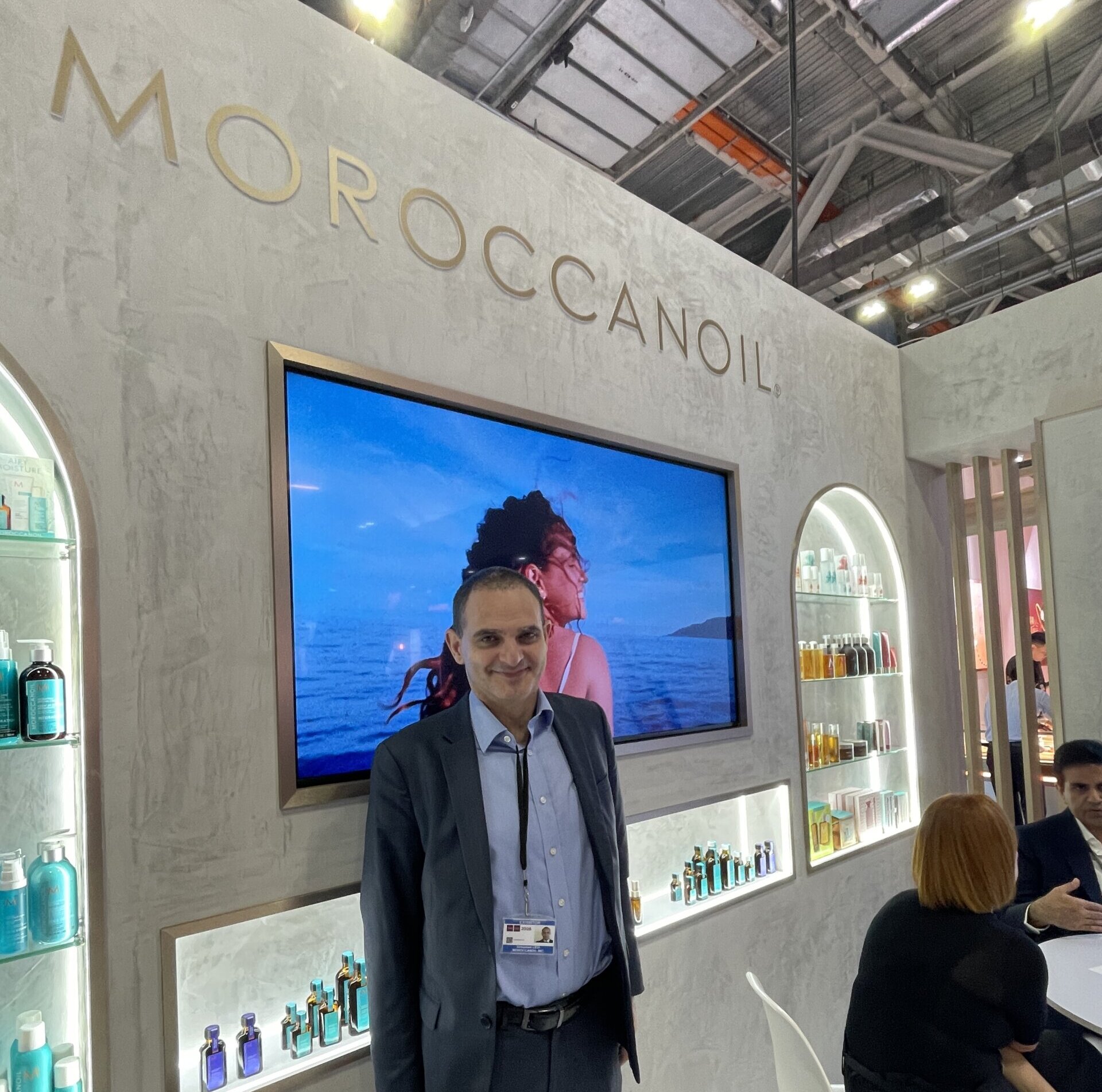
Moroccanoil had a bigger booth than in the past at a prominent position beside the entrance to the show, which enabled it to showcase its growing product portfolio. The company continues to push its more recently launched categories. Within bodycare, it launched a new subcategory with lip balms, which are performing well. In addition, it continues to add to its fragrance offer following its entry into the category in 2025. To complement its first fragrance L’Originale, Moroccanoil added Lumière du Jour, for which it secured a string of major animation spaces at key travel retailers, including Avolta and DFS. Another fragrance is also in the pipeline.
“What is interesting is that now consumers and the operators understand that we go beyond haircare. People want more of the brand, which we saw with the launch of the EdP last year. It was a big bet for us, but people are reacting very positively, and the brand is in very good shape,” explained Moroccanoil Vice President Global Travel Retail-Direct Premium Retail Europe Sebastien Levi.
Meanwhile, the new The Moroccanoil Treatment Mist format has seen strong success, without any cannibalization of the original product. “We see two types of consumers for the mist: it has brought in new consumers who didn’t use the original treatment, and those who used the original Treatment, but want to use the mist as well as a refresh during the day. It has really been an addition,” commented Levi.
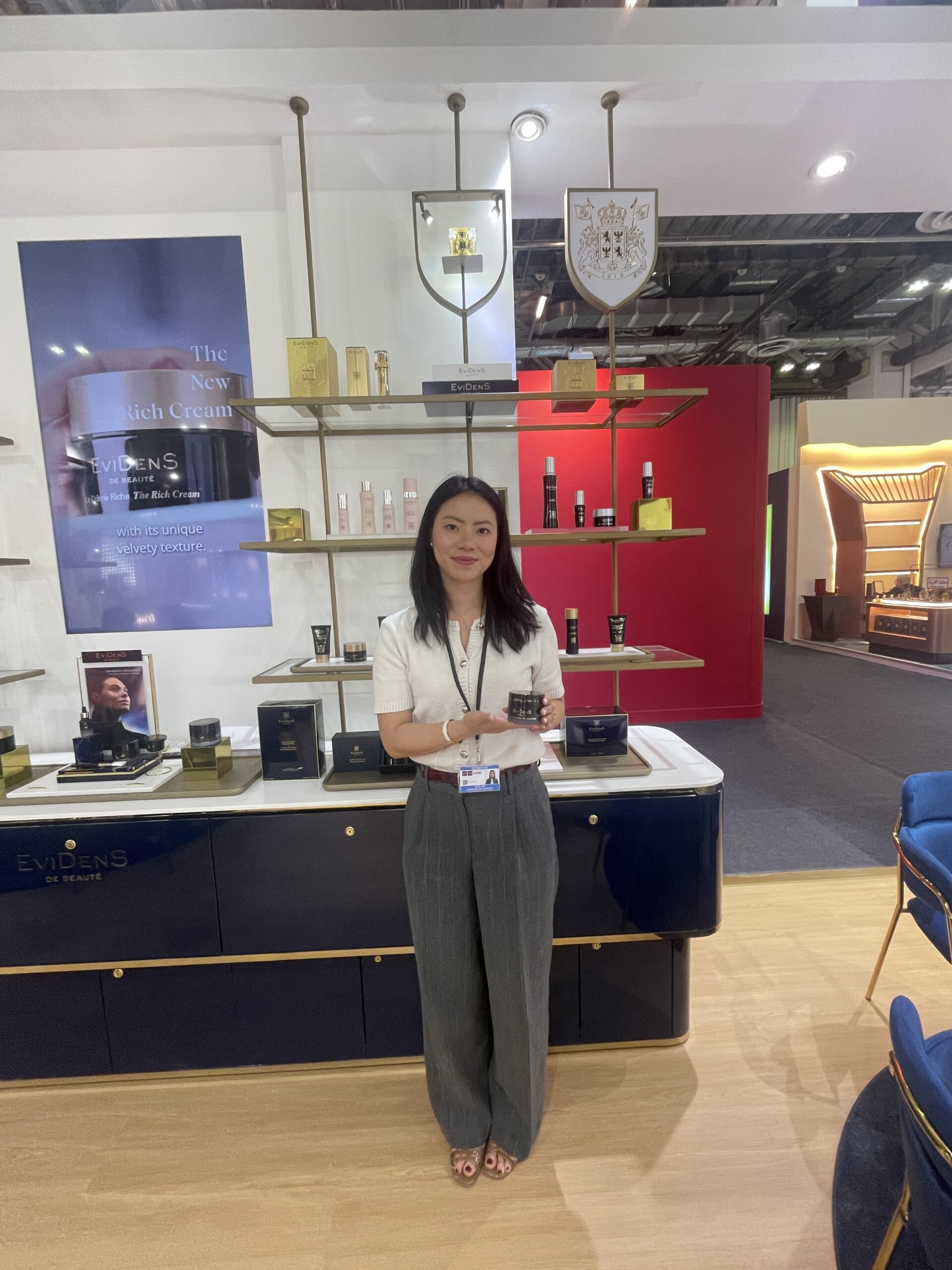
Skincare brand Evidens de Beauté revealed it is to move into fragrance, with the launch of a collection of three scents this fall. The collection called Jardin De Grasse pays tribute to the brand’s links with the south of France. The scents are designed as three different chapters, with the first focusing on the idea of the French Riviera, the second centered on citrus and the encounter between the brand’s founder with his wife, while the third is intended to convey a fragrance for nighttime in the south of France. The scents retail at €135 for 30ml.
“Being a French-Japanese brand, fragrance was an obvious extension, especially as we are so close to Grasse, the capital city of fragrance. It was also important to support the retail growth of the brand. Today we are opening more stores, and there is a need to extend to a new category, and for our consumers we also needed to have a new way of expressing ourselves,” explained Julie Hui, International Operational Marketing Manager at Evidens de Beauté.
Also in terms of new products, the company will launch Ultimate Shield SPF 50 targeting younger consumers with combination to oily skin and featuring a light texture. The company’s Total Shield SPF 50 is a bestseller, but this new launch is intended to recruit new consumers and is also more affordable at €75 (compared with €140 for the Total Shield SPF 50). The product was developed at the brand’s new R&D center in Paris, which opened last year and is a complement to its existing R&D center in Japan.
Evidens de Beauté is currently sold in 419 doors, and will have added 30 new doors by the end of this year. Hainan is now one of its top doors. At retail, the company is focusing on services, experiences at the pos and clienteling. Travel-retail exclusives, which are built around the brand’s bestellers, are also important and represent 61% of product mix. The company will launch a pop-up in Paris’ Galeries Lafayette Haussmann department store in July, and a new treatment room at Harrods in London.
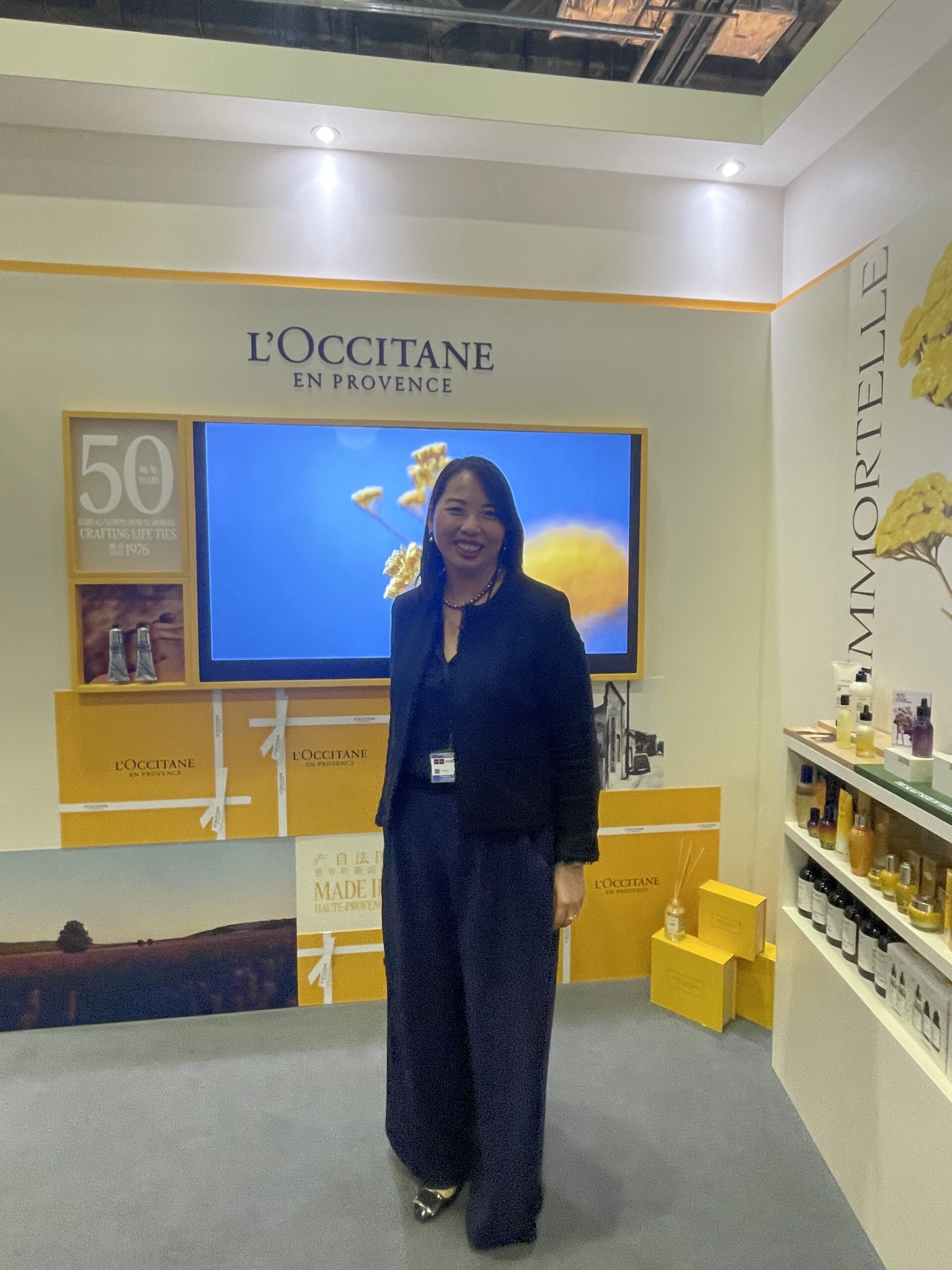
For L’Occitane Group Managing Director Global Travel Retail Evelyne Ly-Wainer, the industry needs to do more to get consumers into the stores and buying, especially in light of the increased price of travel as a result of the war in the Middle East.
“If you look at APAC, passengers coming to the region from Western countries used to transit via the Middle East but now go through other routes which maybe more expensive, and that is a real pressure point. Travel budgets are only so much, so the more you spend on airfare or hotels, the less you might spend on other things. That means it’s our job, together with the retailers to create this urge for consumers to step into the shop and buy new things, and that’s why it is important to have different price positionings with offers that are more affordable and for impulse buys, as well as [ranges for those] who may not be so sensitive to price. We need to ensure that today in our assortment we cover different ground and the different needs of the consumers more than ever,” she comments. The L’Occitane brand is bringing back some smaller-format travel sizes that allow consumers to discover the product and that can be used during their travels. “That is our answer to the shifting needs of our consumers.”
On travel-retail exclusives, which are becoming an important differentiator in the face of cheaper or discounted products in the domestic market and online, Ly-Wainer adds that the industry needs to view these items from a consumer perspective. “We need to understand what consumers expect from these products and what is meaningful to them. I believe less in just changing the packaging or adding some colors, and more in terms of exclusives that represent the destination or in collectible items, such as charms, for example. What is also very strong in our DNA is the gifting part, and we are looking at how we can bring that more into play in travel retail.”
On the situation in Korean travel retail, Ly Wainer suggests that a new take on assortment could make duty-free stores (which are facing fierce competition from domestic retailers, especially the dominant beauty retailer Olive Young) more attractive. “Korean retailers need to look at their brand lineup and assortment and the very unique or strong cool brands that will help them bring people back to the shop [in addition] to the brands that are widely or internationally distributed. It is a focus on what people get in terms of unique offers or experiences and what they can get only in Korea. What was very special with Korea in its heyday was [the retailers’] ability to concentrate so many different brands in one area, alongside their CRM programs, which were very strong and which they should continue.”
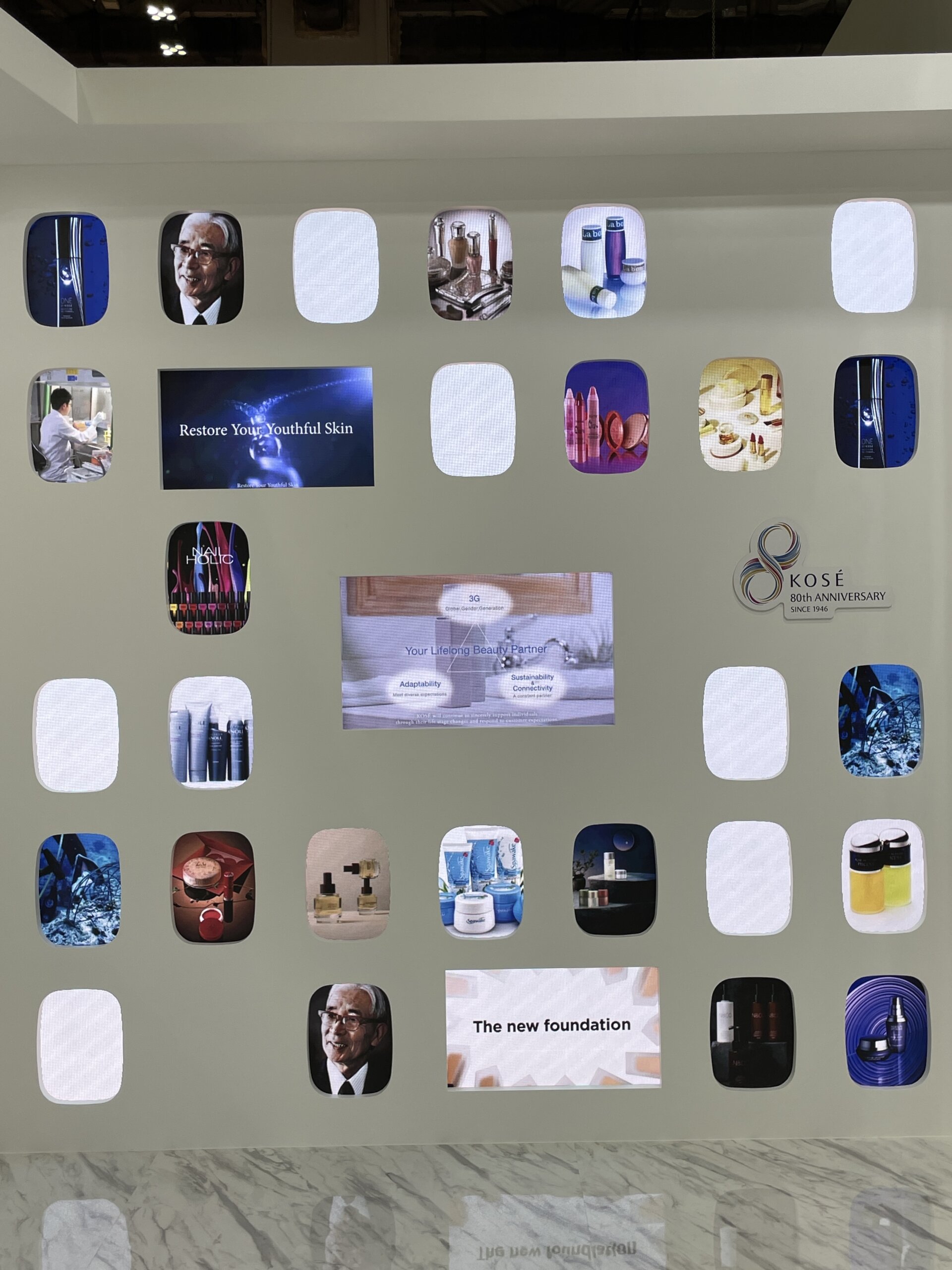
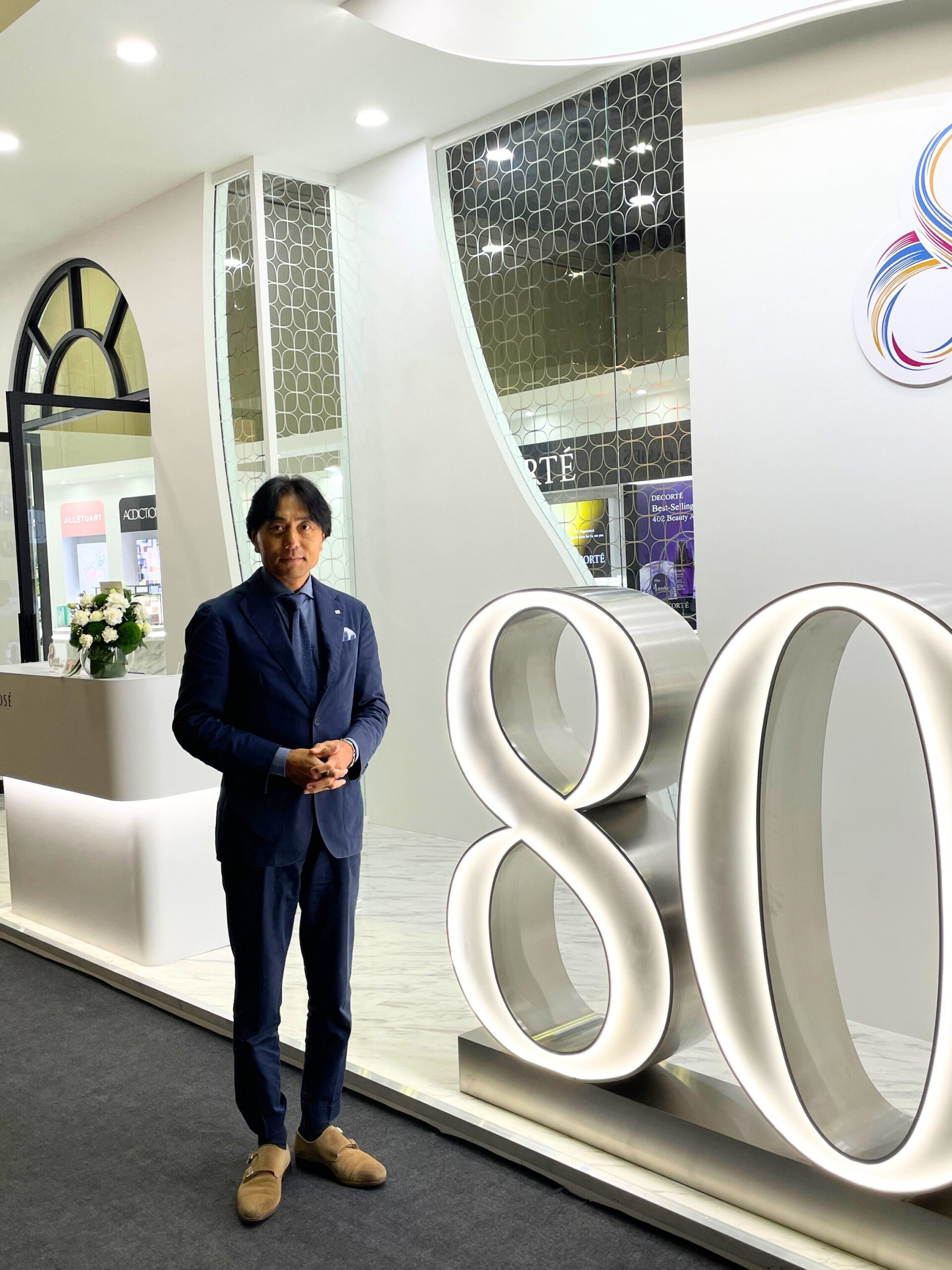
Japanese company KOSÉ underlined that travel retail is a key part of the group’s strategy to increase the share of the group’s international business. International sales currently account for 36% of the group’s sales, a figure the company wants to grow to 50% by 2030.
KOSÉ Holdings Corporation celebrated its 80th anniversary earlier this year and is currently in ‘Phase II (2024–2027)’ of its roadmap to become a global company. For fiscal year 2026, KOSÉ TRAVEL RETAIL said it has three key focuses or the ‘3Es’: Exclusive (providing value found only in travel retail and amenities); experience (bespoke services and events), and environment (sustainable business activities).
The company is currently running a campaign for its DECORTÉ brand’s hero product LIPOSOME on online platforms, offline and inflight. It plans to ramp up the campaign next year and expand the number of countries where the brand is sold and strengthen its presence in Southeast Asia, France, and the US.
In the months of July and August, the company will also run a campaign for its Sekkisei brand, which will include special events with China Duty Free. In addition, it will organize the Save the Blue Festival in Okinawa this November, a three-day event, designed to drive engagement of both its retail partners and the general public.
Lastly, KOSÉ TRAVEL RETAIL launched its travel retail website. The site is available in three languages (Japanese, Chinese and English) and provides key information about travel retail, such as events, exclusive products and counter locations. It will also include key information on its hotel and inflight amenity business.
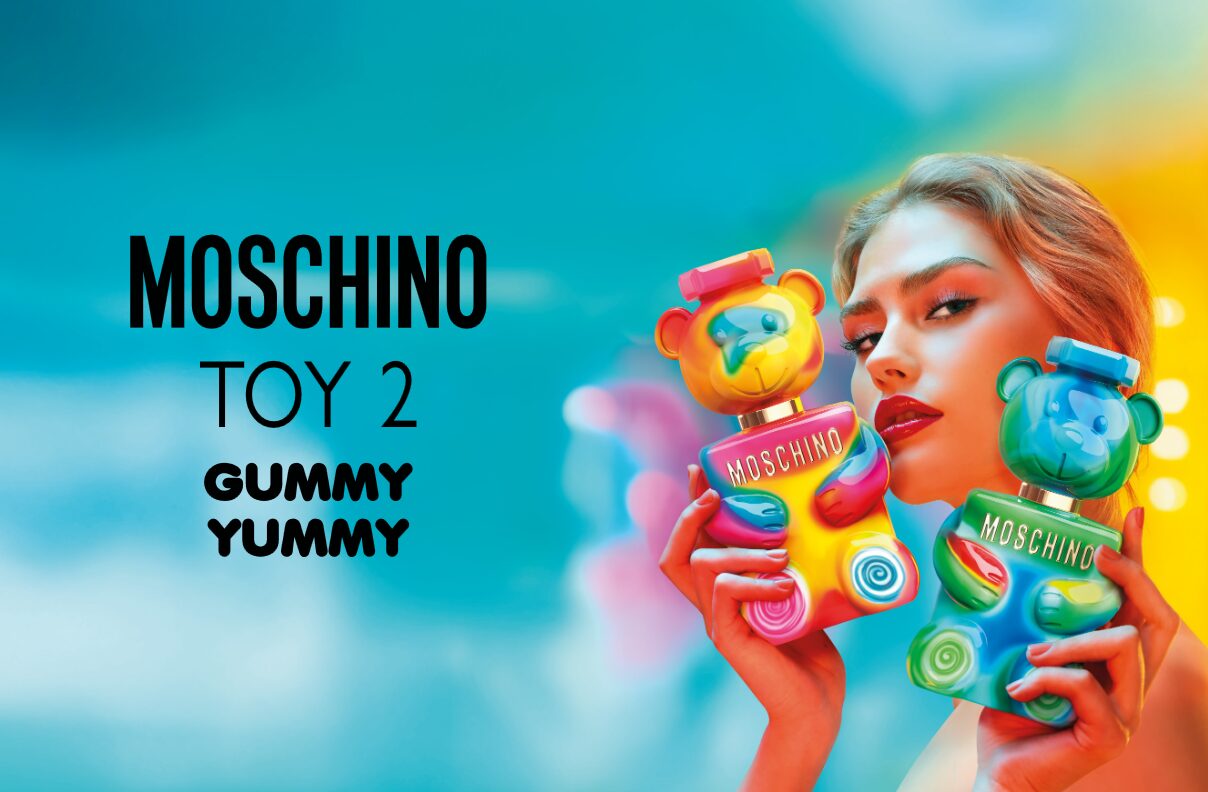
Euroitalia showcased its new key launches at the show, which included the Moschino Toy 2 Gummy and Yummy fragrances, which come in colorful teddy bear packaging. Another key focus was the Versace Crystal Emerald, the latest edition to the Versace brand’s Crystal line. The Versace Dylan Blush Pink was also featured at the booth. For the company’s niche fragrance brand Atkinsons, it recently launched new fragrances including Mystique Moonlight and Spice of London.
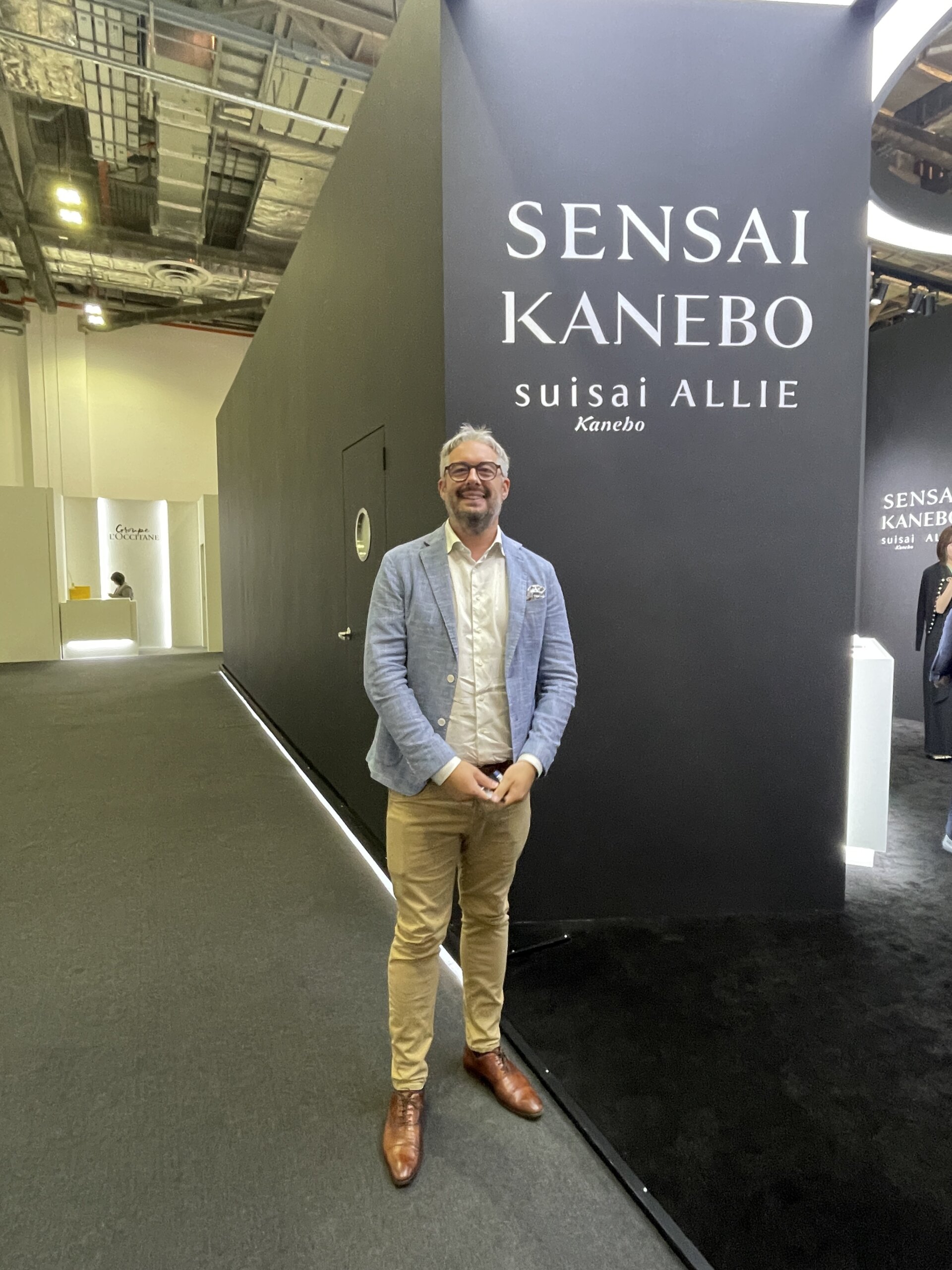
Japanese company Kao Corp continues to develop the SENSAI brand in Asia. The brand, which is mainly sold in Europe, launched in Asia in 2019 in Japan and then in China in 2020. A key focus is Southeast Asia, in markets such as Thailand and Indonesia – it will open a boutique for the brand in Jakarta this summer – while India is also on the brand’s radar.
SENSAI General Manager EMEA Julien Noilou says the brand has also seen success among Chinese consumers in Japan. “Our Chinese customer base is seeing very strong growth. For example, last year in Osaka in the Hankyu department store, SENSAI was a number-one cosmetic brand.” However, local consumers are key to the brand’s strategy. “Our goal is both to follow international customer movements but, above all, to develop our local customer base, [rather than be dependent on one nationality]. This is especially the case today, considering so many changes in routes,” Noilou adds.
Also key for the brand is its focus on developing skincare rituals. “Skincare rituals are really part of our heritage, and we want to communicate more on this. Every time we launch a lotion for example, we sell the ritual as well. If customers can truly understand this, then we can differentiate ourselves from competitors who just sell product lines,” Noilou stated.
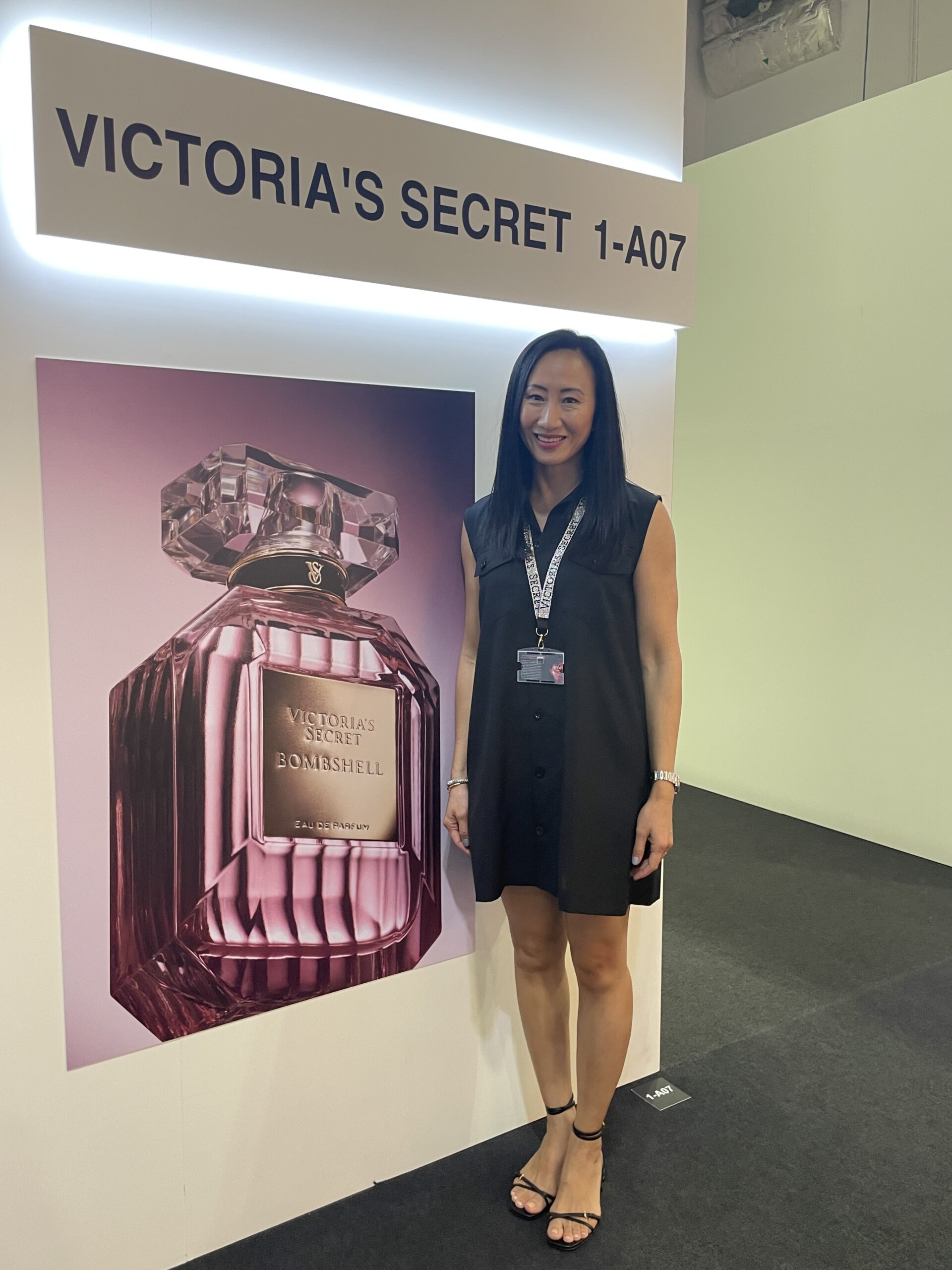
Despite the current difficulties in travel retail, US-based Victoria’s Secret says the brand is well positioned to capitalize on the changes in passengers’ shopping behavior. “This is for several reasons. One is that we have very strong awareness and are known as a dominant player in intimate apparel and our fashion shows are widely shared on social media. The second thing that has made us appealing is that our offer is very much in line with what shoppers are looking for right now as our price points are quite accessible – we have ranges from $20. The third reason is that when we work with our partners to open a store in a top airport location, we are playing in both the beauty space and the fashion space, so we’re bringing more to the table than a typically pure-play single category offer,” explains Helly Ding, Head of Travel Retail for Victoria’s Secret.
Ding adds that the brand has a robust beauty business, especially in fragrance, with up to 25 fragrances in its travel retail portfolio. This includes a mist collection and fine fragrances with higher price points.
The key focus for the brand in travel retail is to increase its footprint in the top 100 airports globally. “We are currently in 55 out of the top 100 airports, so we are [focusing] on getting into the other 45 airports. Aside from that, we have [a presence in airports] that are not in the top 100 but are still important to our business. Travel retail brings such brand value and is a showcase for the brand,” Ding says.
She adds that there is opportunity to develop in Asia Pacific. “We are a little bit more penetrated in airports in Europe and Latin America, with significant presence in those two regions, while Asia Pacific is a big white space.”
Victoria Secret’s international business (which includes travel retail) accounts for 30% of total sales.
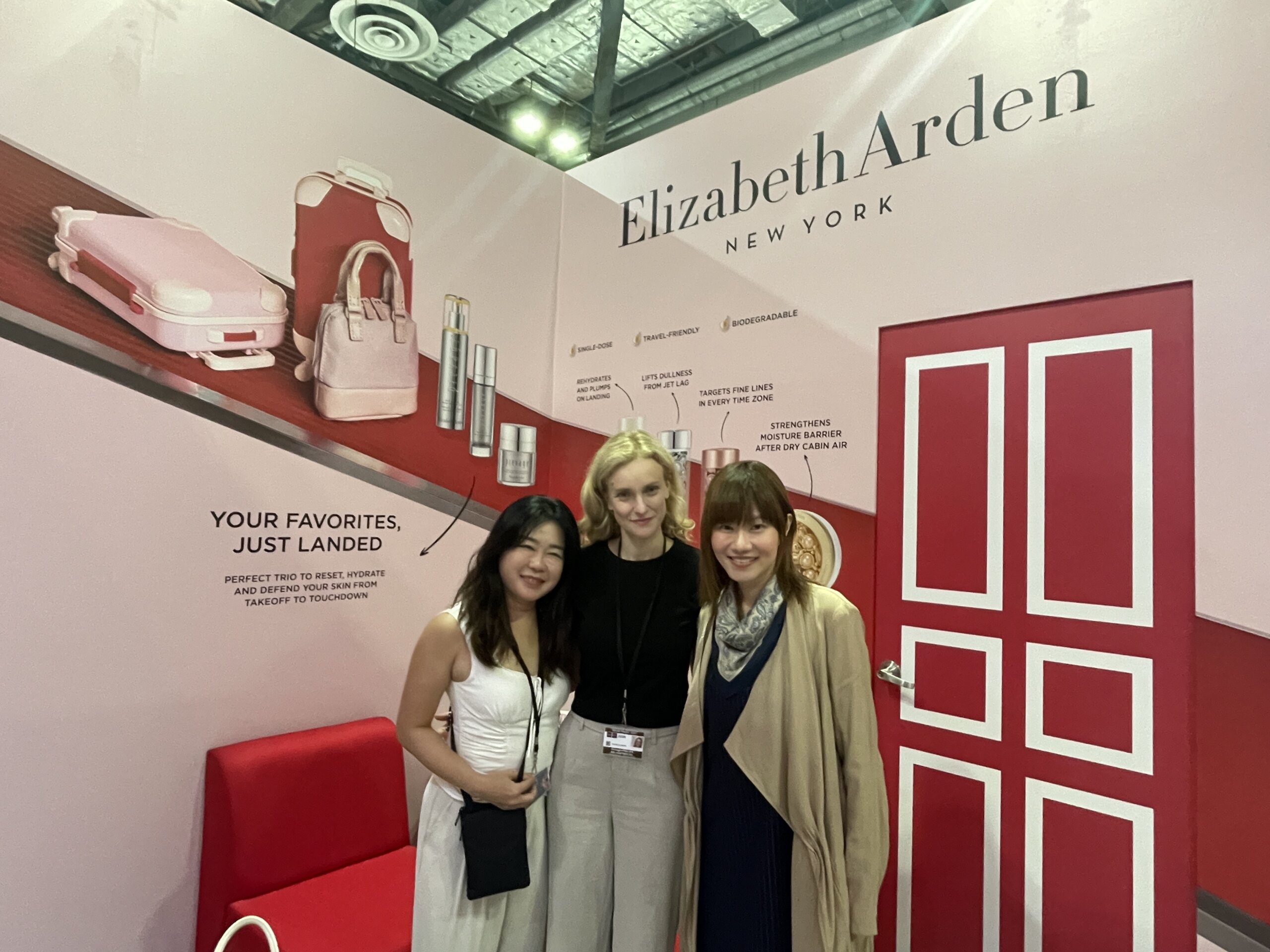
Elizabeth Arden General Manager (Asia Pacific Travel Retail & Japan) Yumie Chia highlighted strong growth in Hainan and said that despite the current volatility in the market, she feels more positive about Asia Pacific this year than in 2025.
“In the last quarter, we managed to double the sales in Hainan. Part of this was of course due to of the government’s vouchers, but we also had some nice activations. For the industry, Hainan is covering up the shortfall in some other regions There are also pockets of growth in other areas, such as Vietnam for example.”
“I’m positive that the business will get better and I think the only setback could be inflation, with the oil prices going up. Even though some flights have been cancelled due to the Middle East situation we have not seen an impact on sales so far.”
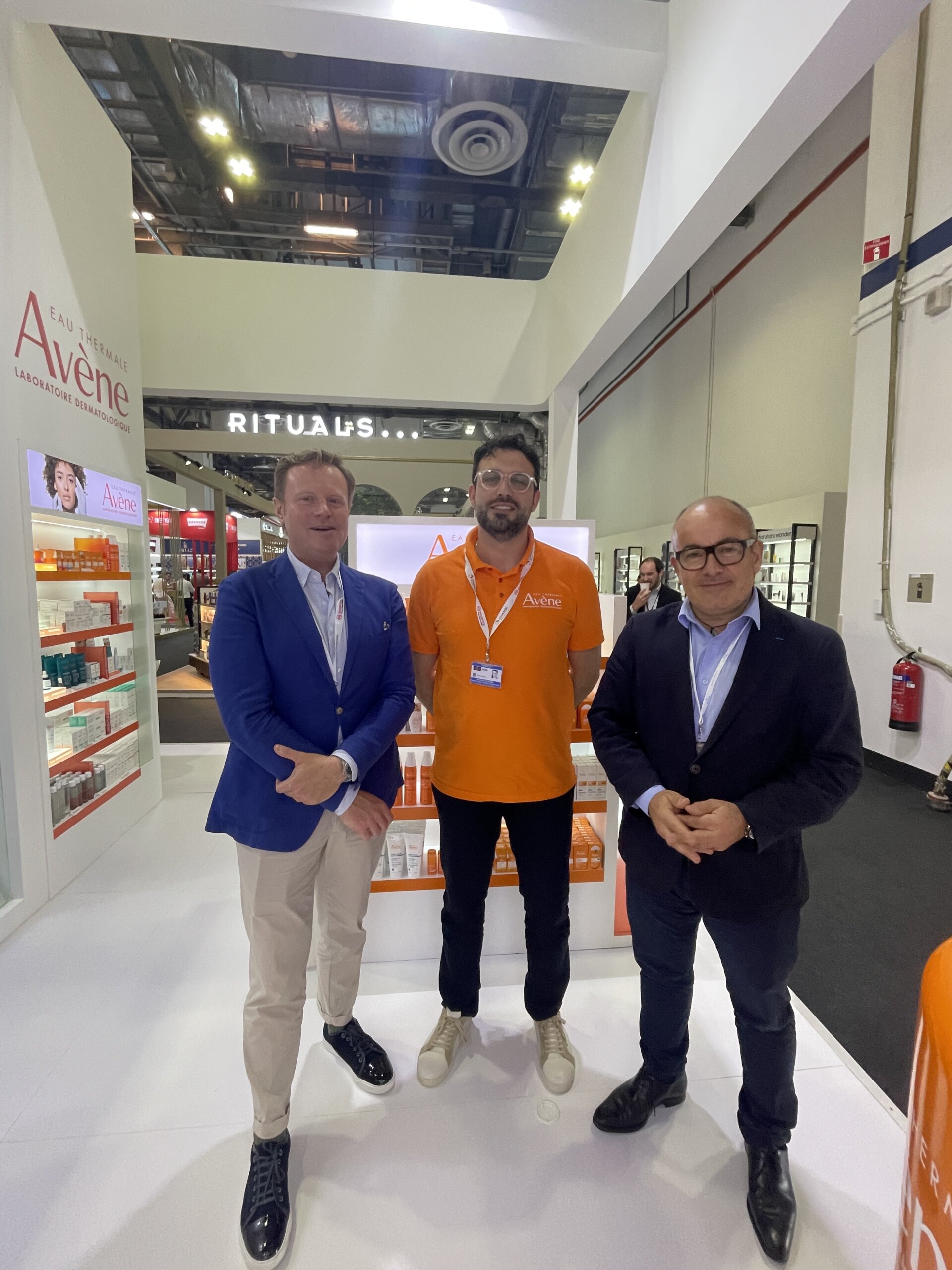
French skincare brand Avène is looking to build its business in travel retail. The brand, which is owned by pharmaceutical and dermo-cosmetics company Pierre Fabre and based on thermal spring water that is claimed to calm and restore sensitive skin, is mainly distributed in pharmacies in its domestic market. It says its medical-first approach fills a gap in the travel retail channel.
“The positioning of the brand is ‘born from the medicine of the skin,’ which is especially important for the current generation, as people are more aware of the science behind skincare. If you put yourself in the shoes of a traveler, in travel retail stores you see big names, but they don’t necessarily answer traveler needs. Many travelers today want something based more on science, on targeting a symptom and with a therapeutic approach, at a more affordable price,” explains Pierre Behnam, Global Managing Director – International Strategic Partnerships, at Pierre Fabre Dermo-Cosmetics. He adds: “We see that there is a demand perhaps for less luxurious and more affordable ranges. Retailers need to get the consumers in the store, and sometimes [price] can be a stumbling block.”
A key product for the brand is Ultra Serum SPF 50 with a light texture that can be incorporated into a daily routine (its tagline is ‘As light as a serum, as strong as SPF). “The insight with this product, is that 90% of people know they need to wear sun protection every day, but only 20% do so, and the reason for the gap between the 90% and the 20% is that often the products are too oily, too sticky or leave white marks,” Behnam comments.
The brand has a full range for travel retail. “In travel retail, we understand people have less time, so we developed a range that helps the traveler navigate the shelf and make a choice. It’s based again not on beauty criteria, but on symptoms. The discussion we have with retailers is that we should be part of beauty and close to the skincare area. We don’t necessarily want to come alone, but with a group of brands to create an area within the skincare section dedicated more to science-based cosmetics.”
The brand’s merchandising uses medical or pharmaceutical codes, such as the pharmacy cross and references to the dermatologist recommendations.
The brand is currently in 30-40 airports, and the ambition is to be sold through more than 100 airports in the next 12-18 months.
Dubai-based Lattafa is looking to build its presence in Asia, given how the fragrance market is developing in the region. The brand, which is sold through more than 100 countries, has distribution in Asia, in Malaysia, the Philippines and Vietnam. “We are looking into how we increase the depth of that distribution, and also how do we invest more in terms of the consumer and driving that pull. In terms of the push, the distribution network is there, but now we are looking at how do we understand more about these customers, because they are significantly different in terms of their habits, behavior and media consumption,” explained Lattafa Head of Global Marketing Amber Rahman.
In terms of distribution, online is the dominant channel, although travel retail is also potentially on the cards. “There is an interesting opportunity to evaluate how travel retail could play a role, in terms of driving discovery of the fragrances in Asia Pacific,” said Rahman.
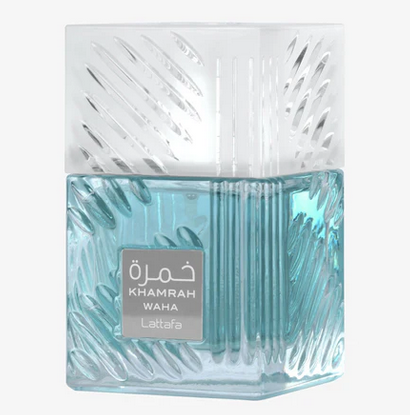
The brand also showed Khamrah Waha, a new fragrance with heart notes of cucumber juice, as well as iris, juniper, yuzu and ginger.
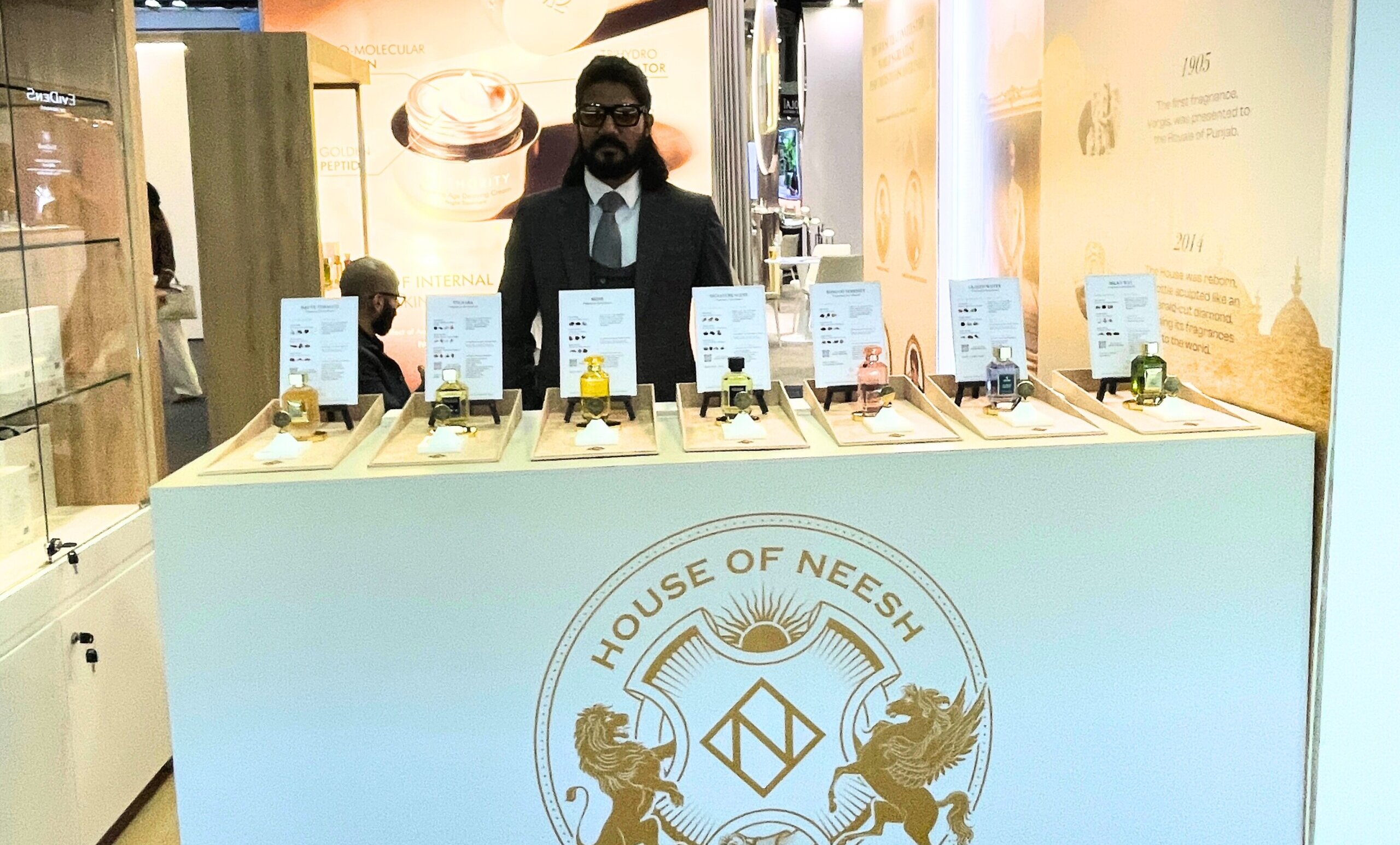
Indian fragrance brand Neesh showcased its line-up at the show. The brand’s concept is based on inviting renowned perfumers to create a fragrance inspired by India. The company is described by its founder as a “story-focused culturally rooted and truly niche brand”. Each fragrance conveys a story of a perfumer’s trip to India, and the brand says there are no budget limitations when it comes to creating the fragrances. The brand, which originated in 1904 and was re-established in 2019, is currently sold in India (in airports and online), and is looking to expand internationally with an initial focus on the UK, the UAE and the US.