
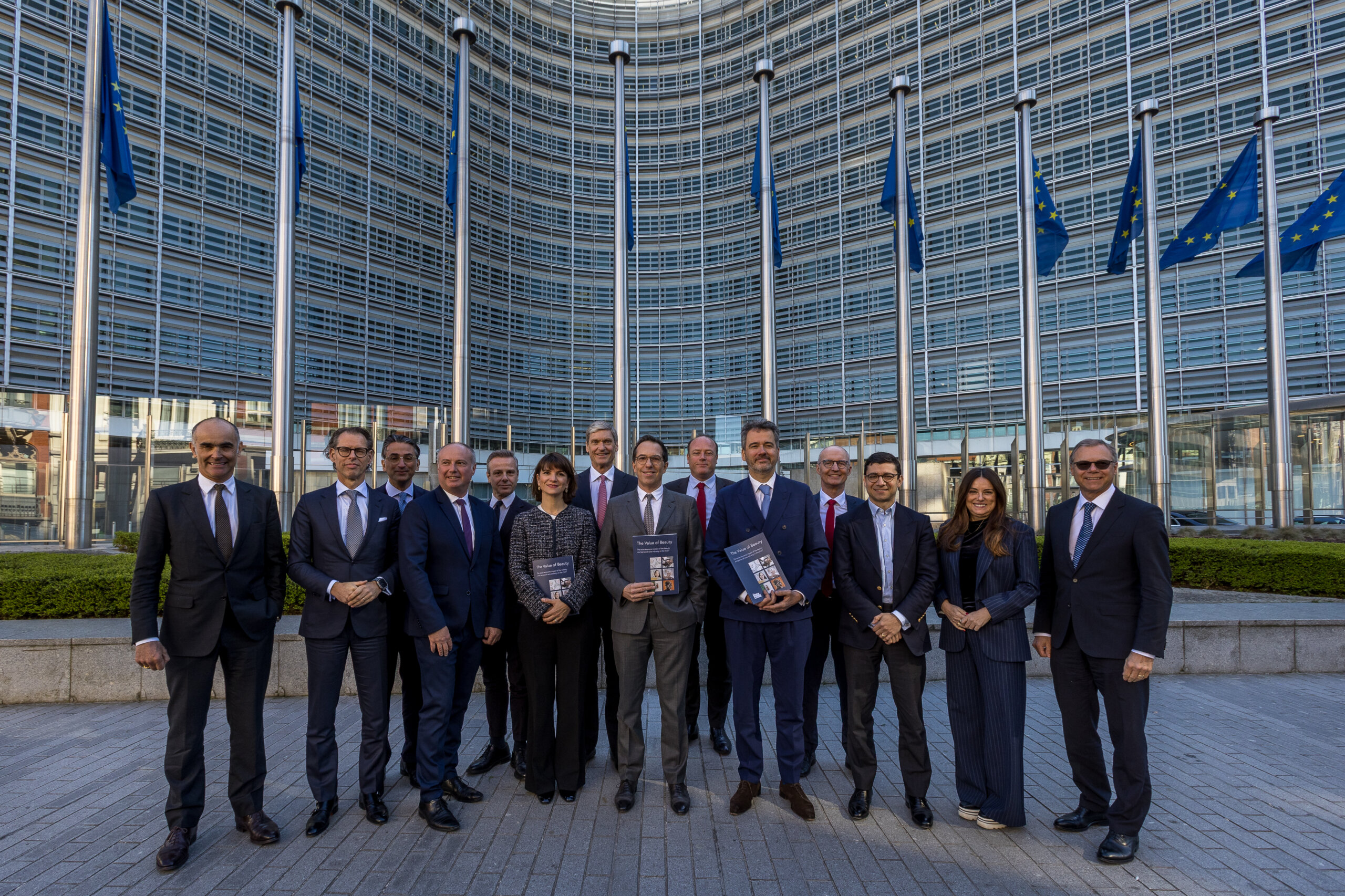
CEOs from major beauty companies under the umbrella of the Value of Beauty Alliance gathered in Brussels yesterday in a bid to push for closer dialogue with EU institutions over how the beauty industry is regulated in Europe and the impact of EU policies on the sector’s competitiveness.
As reported, the Value of Beauty Alliance was created in January 2024 with the aim of ensuring that the entire beauty value chain is taken into consideration by European policymakers and is recognized as a strategic sector of the EU’s economy.
While last year the focus was on building awareness about the beauty industry, the alliance is now looking to have a stronger voice among policy makers and more influence on industry regulations.
Yesterday afternoon, the executives met with President of the European Parliament, Roberta Metsola and other officials.
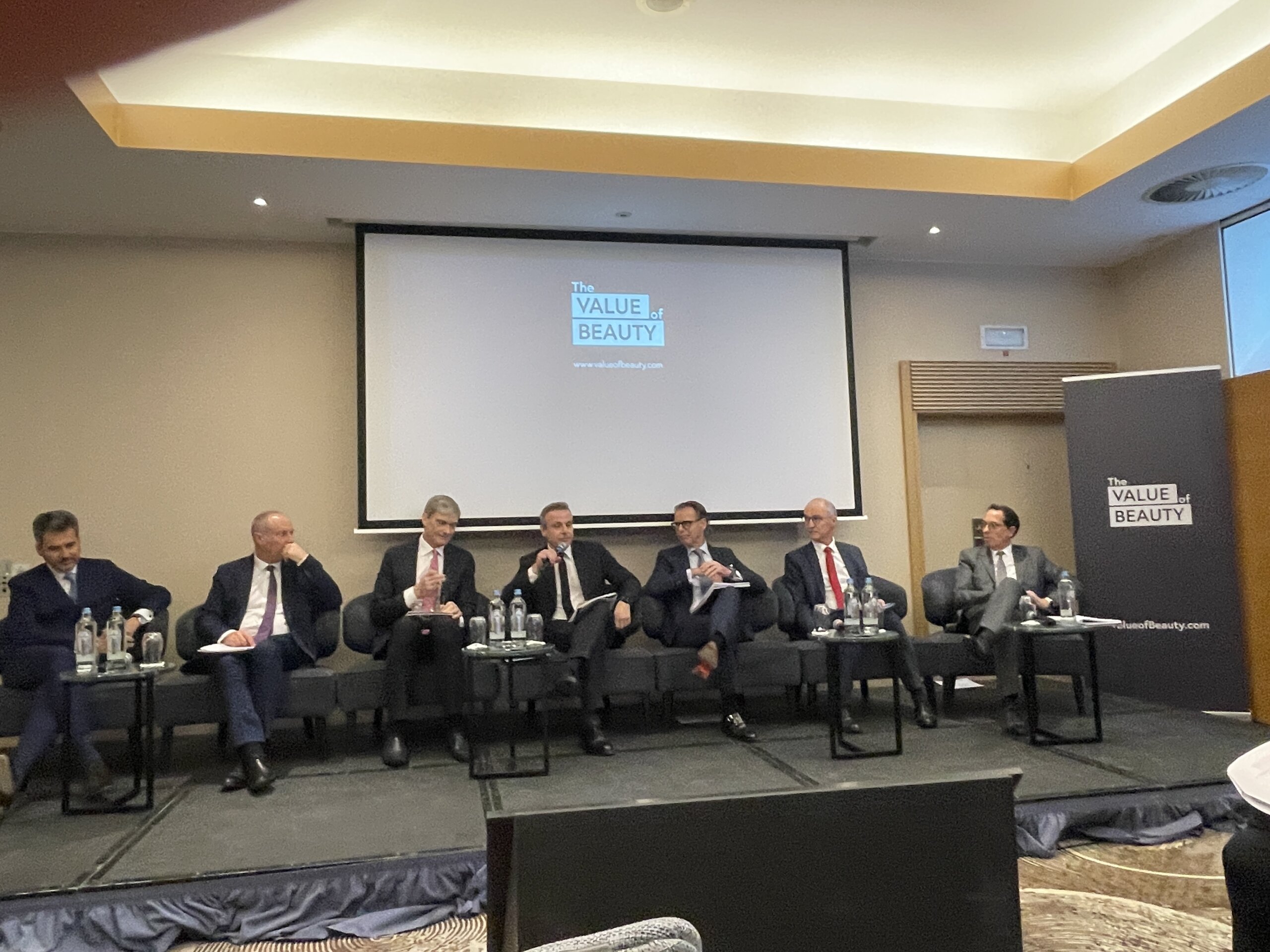
At a morning press conference, a panel of CEOs (which included L’Oréal CEO Nicolas Hieronimus, Givaudan CEO Gilles Andrier, dsm-firmenich CEO Dimitri de Vreeze, IFF CEO Erik Fyrwald and Beiersdorf CEO Vincent Warnery) stressed that EU regulations need to be fair and balanced, simplified so as to ease the administrative burden on companies, especially SMEs, and based on scientific risk assessment when it comes to chemical policy so as to avoid unnecessary bans of ingredients that could end up crippling innovation and European competitiveness.
They highlighted that beauty is one of Europe’s leading industries, with five out of the top seven beauty companies worldwide based in the region. However, while the European industry currently leads globally, it risks being stifled by certain EU policies. In addition, European companies point out that in many areas they are not operating on the same playing field as foreign competitors, often putting them at a disadvantage.
“Most regulations are imposed on all European companies, and today, if we talk about CSRD [Corporate Sustainability Reporting Directive], for example, it is not imposed on any Chinese company, any Asian company, or even an American company, as long as they don’t have their headquarters in Europe. So we put a lot of burden on the European companies today, on our competitiveness […]. We have to be fair and have the same goals everywhere […]. Europe is putting more constraints on its own economic environment,” explained Albéa Group CEO François Tassart.
The wastewater issue
A key issue is the Alliance’s call for the EU to urgently review recently adopted legislation on the treatment of urban wastewater to ensure that all sectors contributing to micro-pollutants in water are held responsible, in line with the polluter pays principle. It says this will ensure that a disproportionate cost burden is not placed on one of Europe’s few globally leading sectors.
In addition, while the alliance was not specifically created to address tariffs, the issue was discussed in meetings yesterday morning among the Value of Beauty members. The consensus was that as Europe exports more beauty products than it imports, adding cosmetics to a European retaliation list of tariffs would be mistake, given that counter measures would negatively impact European companies. This stance on tariffs will also be communicated to European policy makers.
Timely initiative
The executives present were hopeful that their efforts to have more say in EU regulations on the industry come at the right time, given the current geopolitical situation and Europe’s realization that it needs to ‘wake up’, as one CEO put it on the fringes of the conference, and put itself forward on the global stage. The alliance hopes this backdrop will help fuel support for what it sees as one of Europe’s powerhouse industries.
In addition, the push comes as new EU policy priorities are being shaped and as former European Central Bank President Mario Draghi’s report on European competitiveness outlined the need for more investment in innovation, resilience and closing the skills gap. The alliance says the beauty industry is at the forefront of such ambitions in Europe.
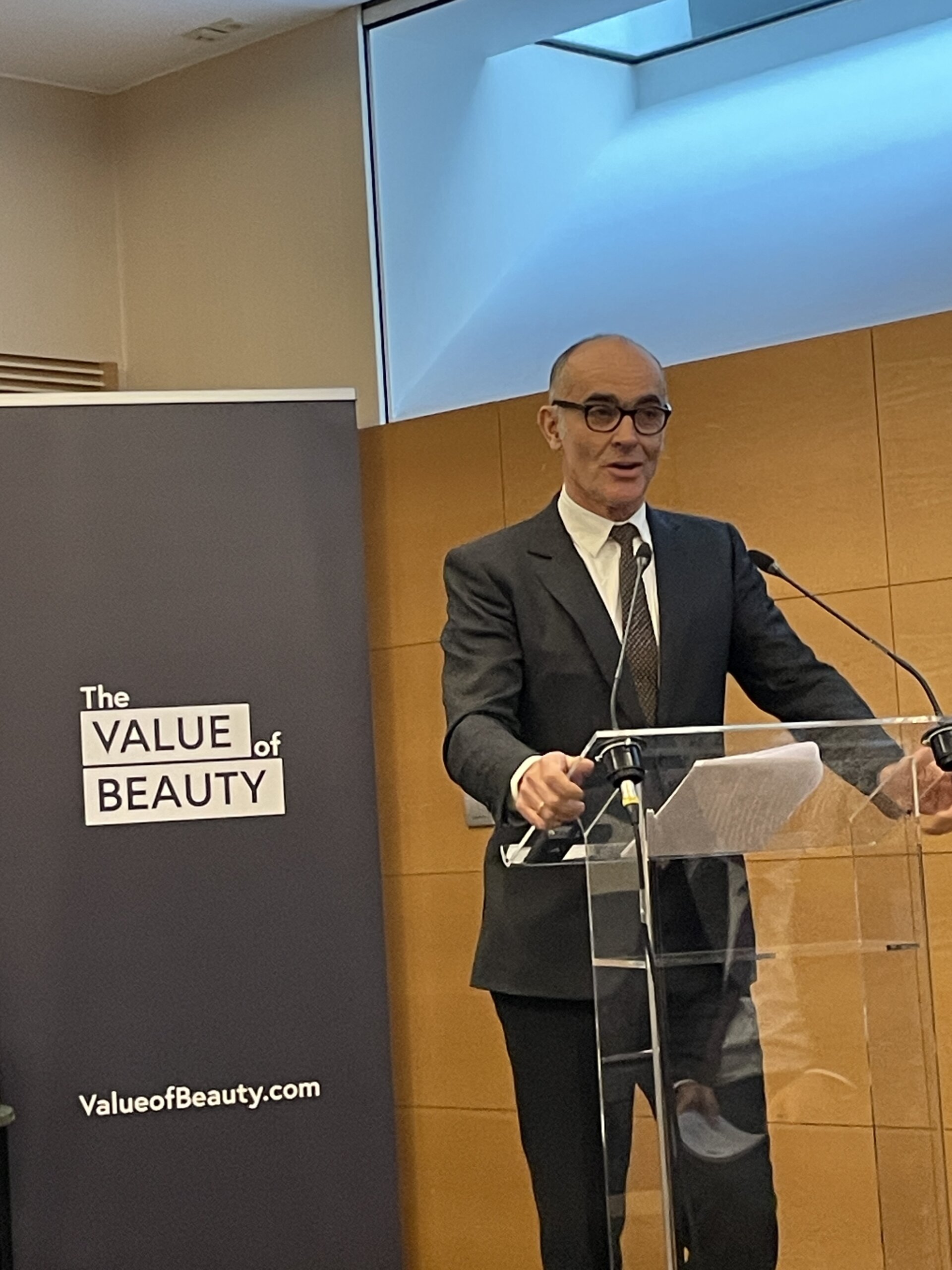
Asked why the beauty industry has waited until now to have more of say in European policy, unlike other industries that have lobbied EU institutions for years, L’Oréal’s Hieronimus said:
“Before we were innovating at the forefront of the sustainability transformation and were not waiting for regulation to transform our own industries. We’re the good guys, and the good guys suddenly got hammered because we were not complaining and not asking for anything. And we realized that probably because we’re less loud than all these [other industries], we ended up being more of a victim of some of the new regulations.”
He continued: “The wastewater treatment directive is a good example of that on a very clear, good principle that we all adhere to – the polluter payer principle – you pollute you pay. We are 100% in agreement with this. However, when two industries are asked to fund what is a totally underestimated cost of de-pollution, it’s unfair. If you take the beauty industry, we took the very data that that was used by the Commission and our calculation is that beauty represents less than 1% of the pollutants you find in the water, but based on their calculation, we will be paying almost 20% of the de-pollution. So again, maybe because we weren’t in this room before, we ended up being one of the few industries that are supposed to fund this very necessary de-pollution effort.”
We put a lot of burden on European companies today, on our competitiveness […]. We have to be fair and have the same goals everywhere […]. Europe is putting more constraints on its own economic environment
Albéa Group CEO François Tassart
Key priorities
Other key areas the alliance is urging the EU to prioritize are:
-REACH Regulation and Cosmetic Product Regulation Revisions, with a focus on consumer safety and environmental protection based on robust risk assessment and real-world ingredient use, maintaining high scientific standards.
-Trade Agreements. The alliance wants to prioritize market access, reduce regulatory barriers, and support the export of high-quality European products. In addition, it wants to strengthen customs checks and rigorously enforce environmental and sustainability requirements for imported products, both online and offline, to ensure a level playing field.
-Bioeconomy Transition. The alliance calls for the implementation of policies that support sustainable ingredient manufacturing, address the “green premium” for sustainable technologies, and secure a reliable long-term supply of sustainable feedstock.
-Workforce Development: Partner with the industry to develop targeted training programs and investment instruments for upskilling the workforce.
Showing its worth
In a bid to underline the importance and size of the European beauty and personal-care industry, its contribution to the economy and the number of jobs it represents, the alliance unveiled a new report by Oxford Economics.
The study found that:
-The beauty and personal care value chain contributed €180bn to the EU’s GDP in 2023 and supports almost 3.2 million jobs.
-Direct contribution to GDP (€78bn) surpasses several manufacturing sectors, including beverages, textiles, and air transport.
-The sector contributed to €71bn in tax receipts in 2023.
-Daily consumer spending on beauty and personal care is nearly €500m.
-EU beauty and personal care manufacturing companies exported €26bn worth of goods to customers outside of the EU, making the EU27 the largest beauty and personal care exporter worldwide.
-Beauty and personal care R&D expenditure exceeded €2bn in 2021, with 30% growth from 2013-2021.
The Value of Beauty Alliance launched in January 2024 and brings together the European beauty and personal care value chain through 16 members: Albéa Group, Ancorotti Cosmetics, Beiersdorf, Capua 1880, Cosmetic Valley, dsm-firmenich, FIABILA, Givaudan, IFF, IFRA, KIKO Milano, L’Oréal Groupe, PATYKA, Puig, Verescence, and Ziaja.