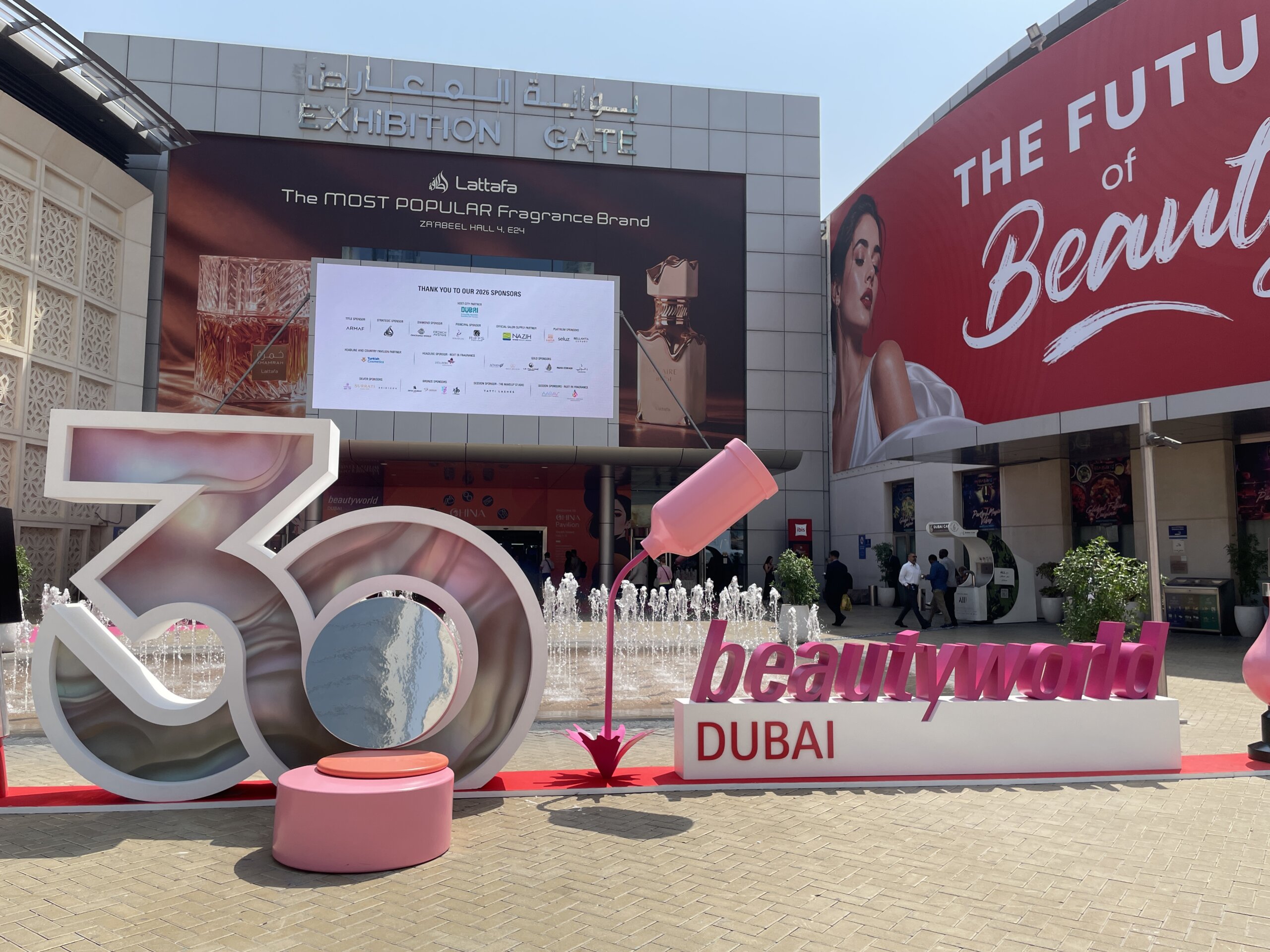
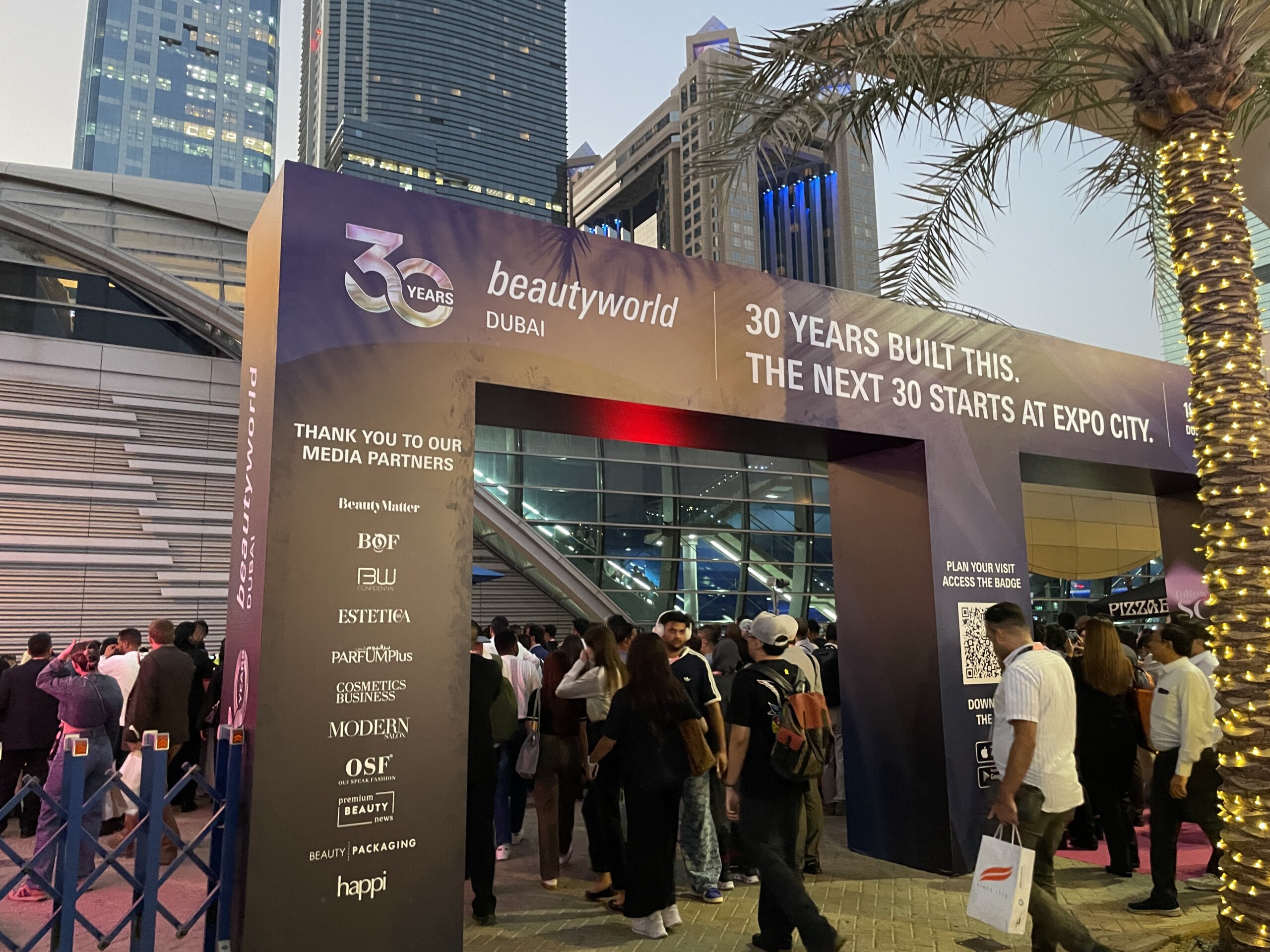
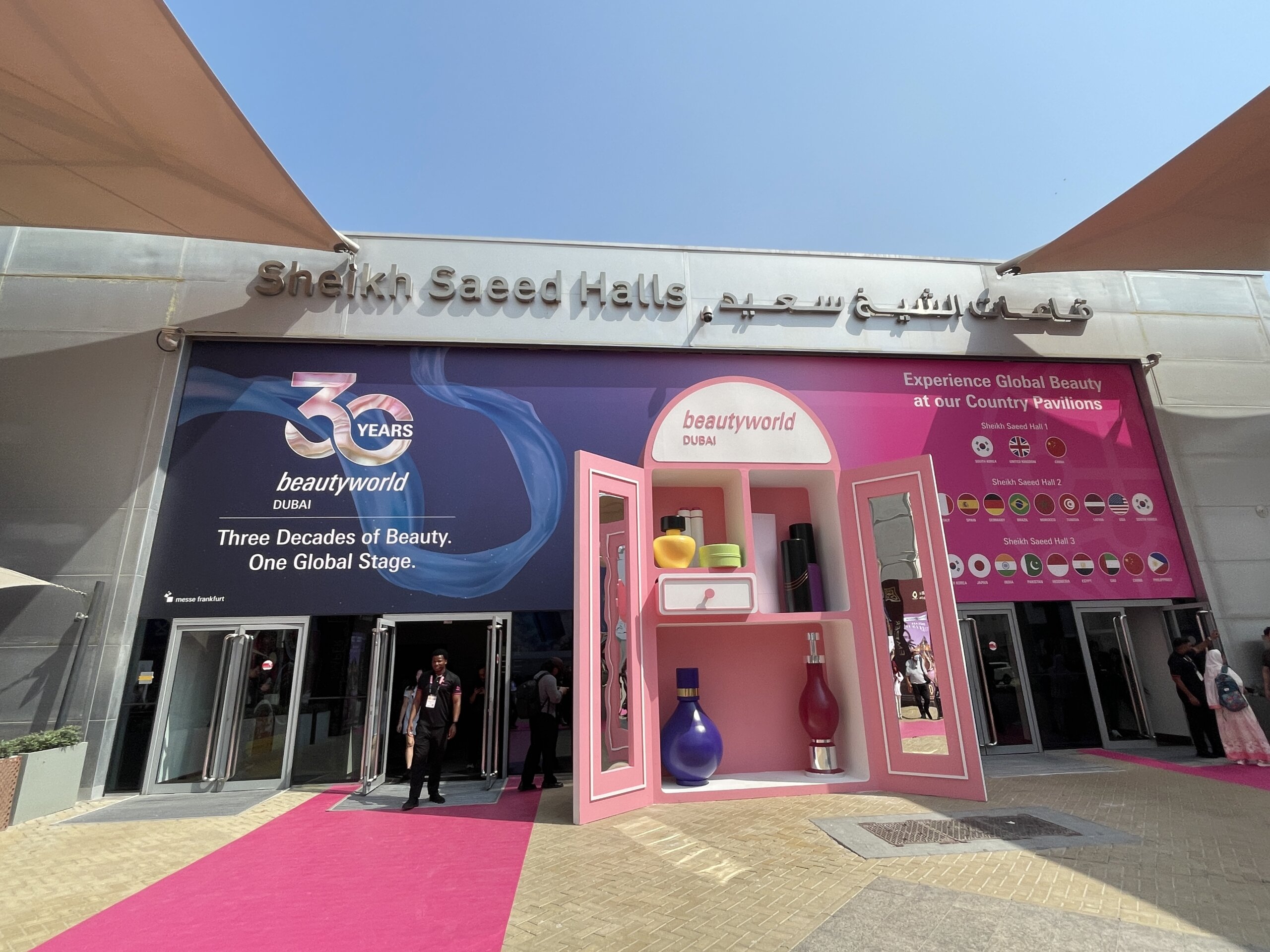
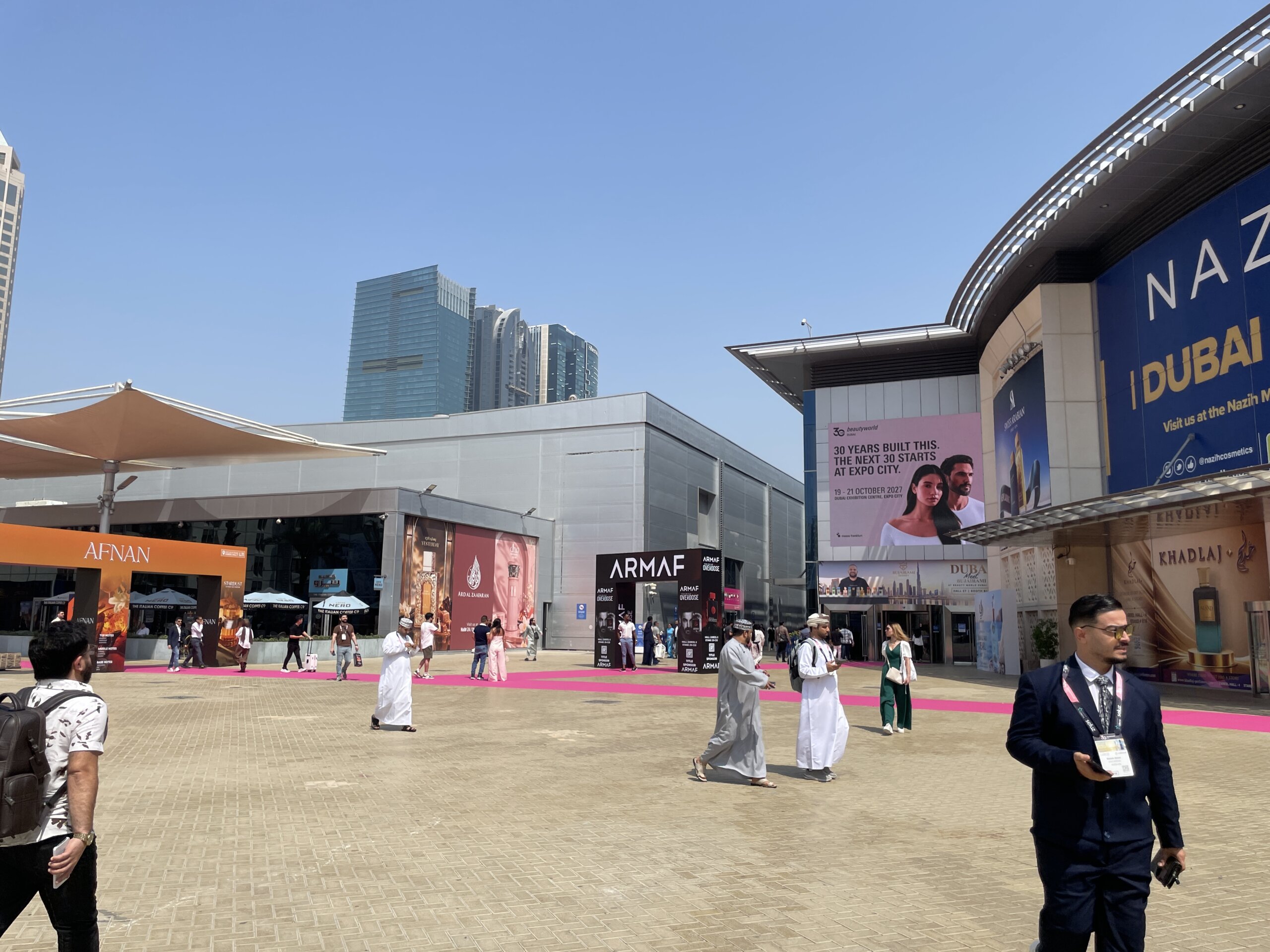
BW Confidential reports on what was seen and heard at the 30th edition of the Beautyworld Dubai trade show, which took place from October 6-8
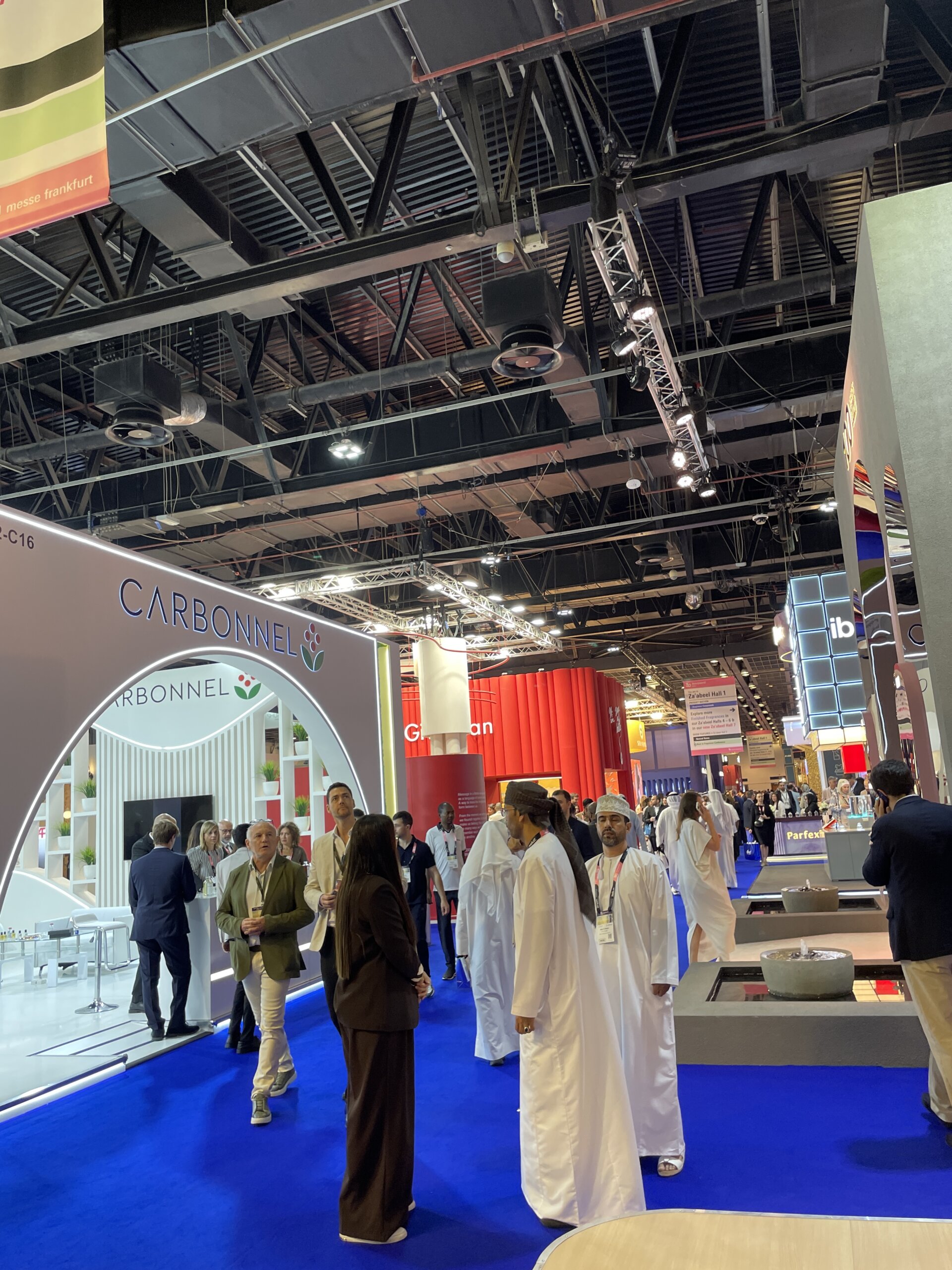
There was much uncertainty over how the Beautyworld Dubai show would pan out this year, given the war in Iran. However, against all odds, the fragrance halls of the show were extremely busy, with exhibitors saying that most of their clients came to the event.
Fragrance houses added that Beautyworld Dubai has cemented its position as one of the most important events for perfume globally. This is also a reflection of how big this region has become for the fragrance industry, as well as the growth and international expansion of Middle East companies.
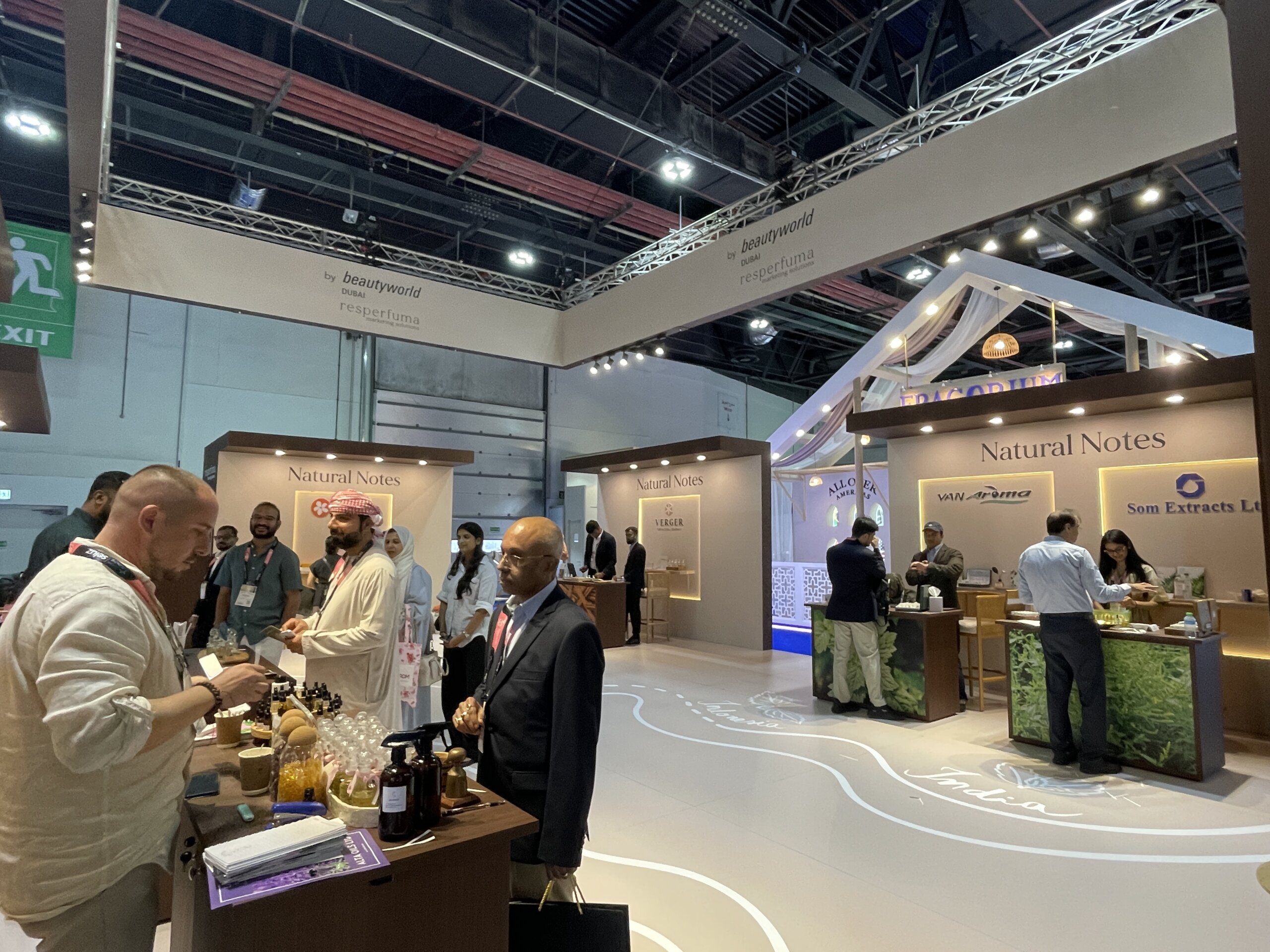
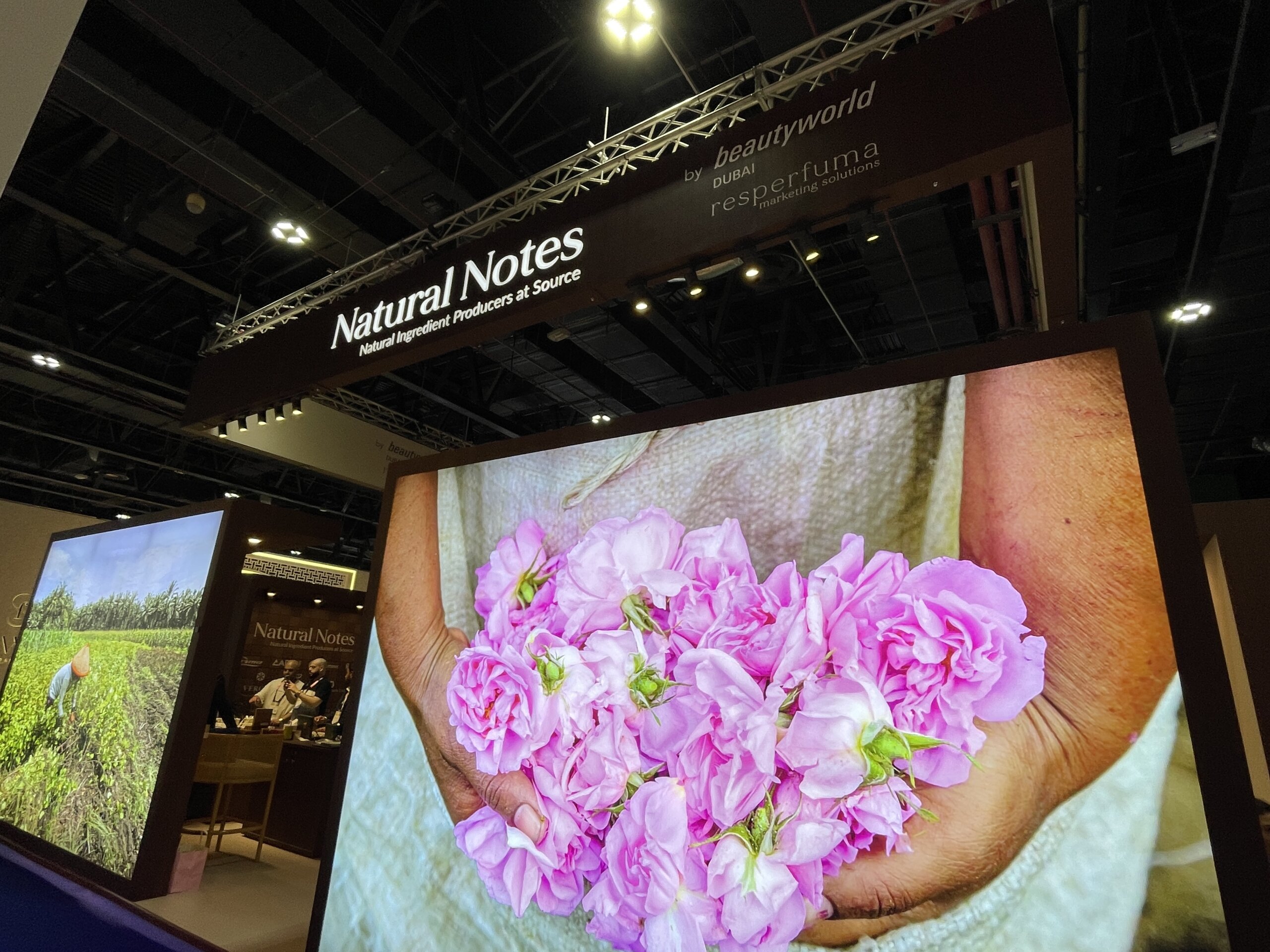
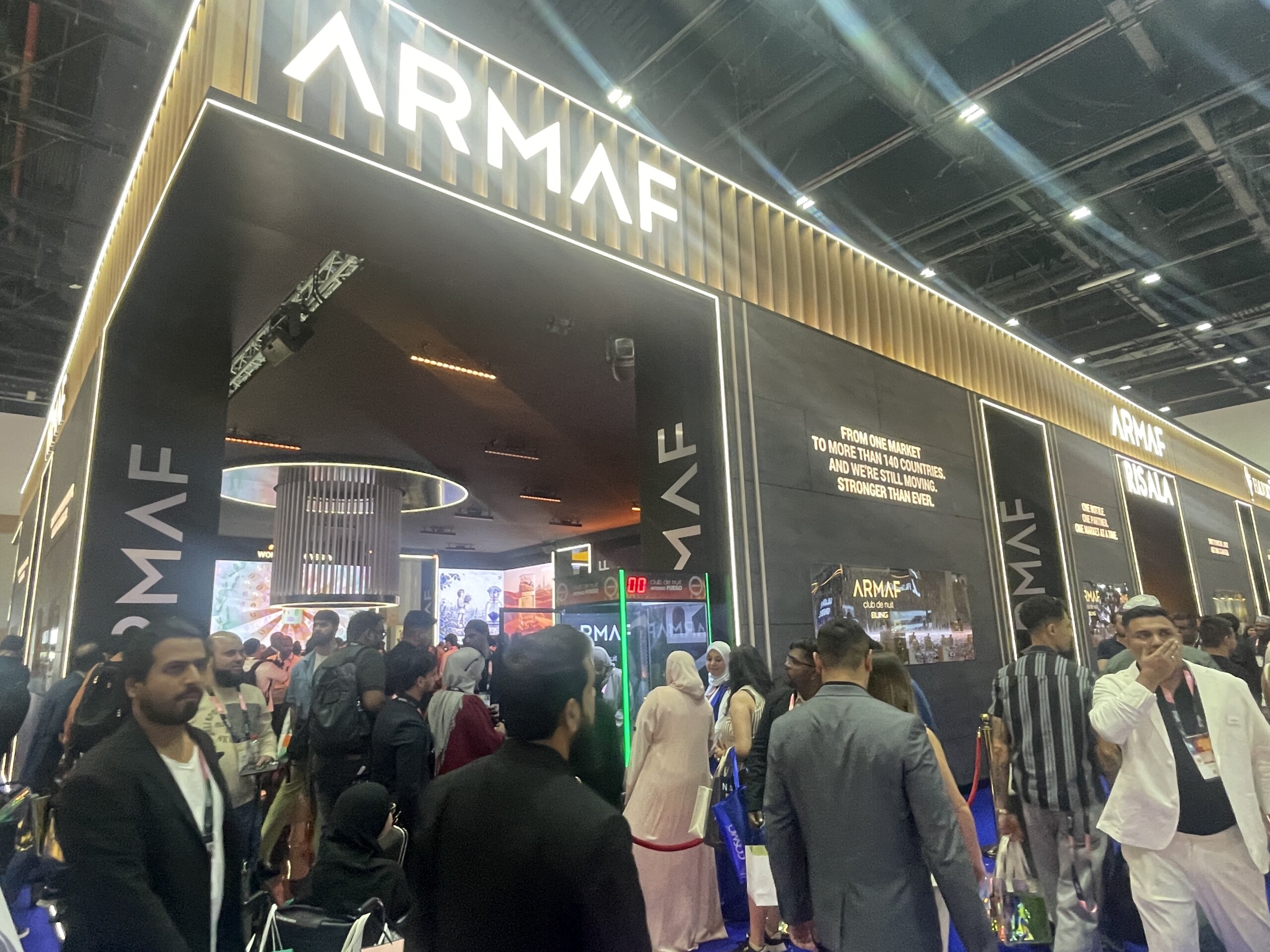
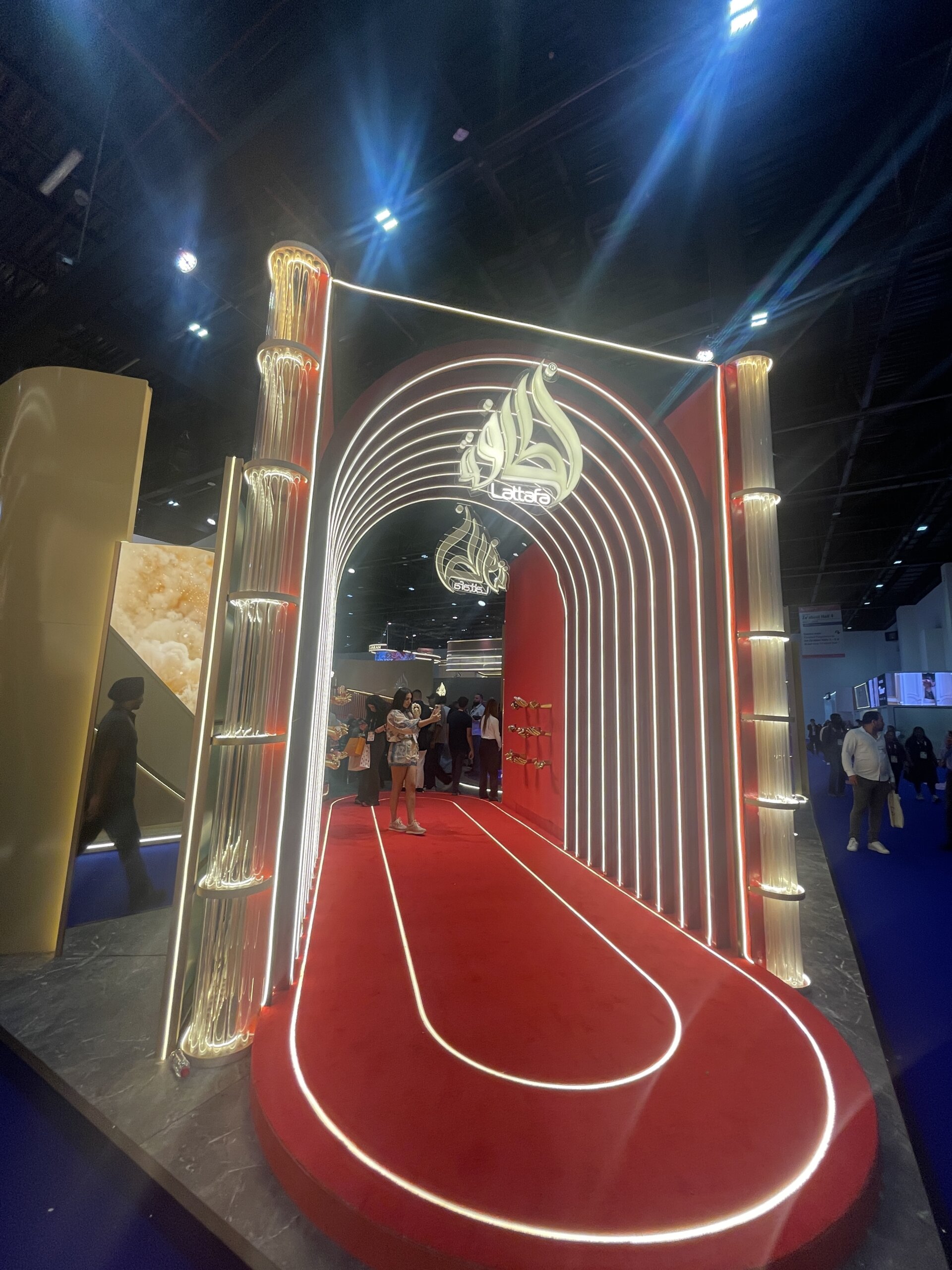
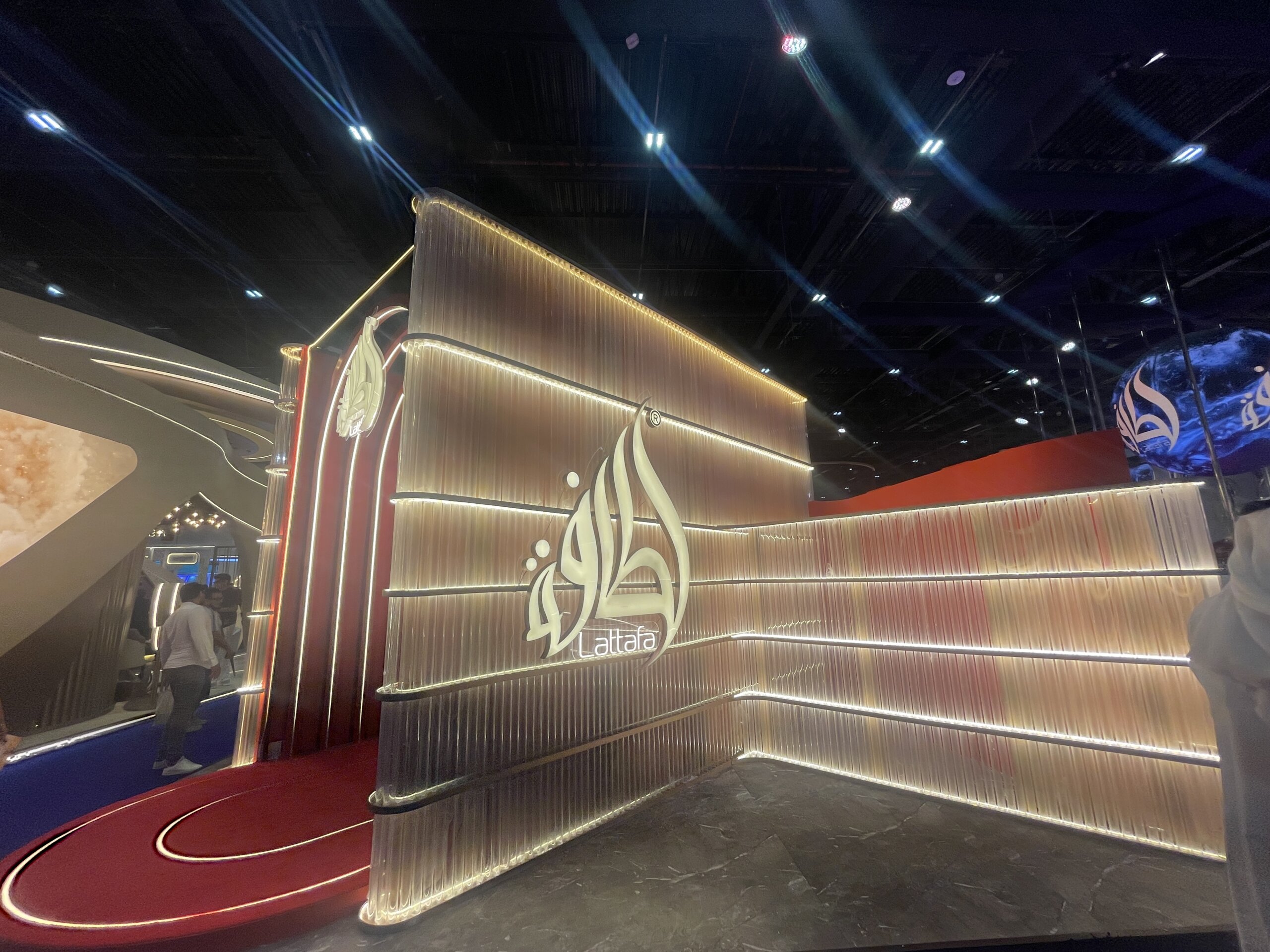
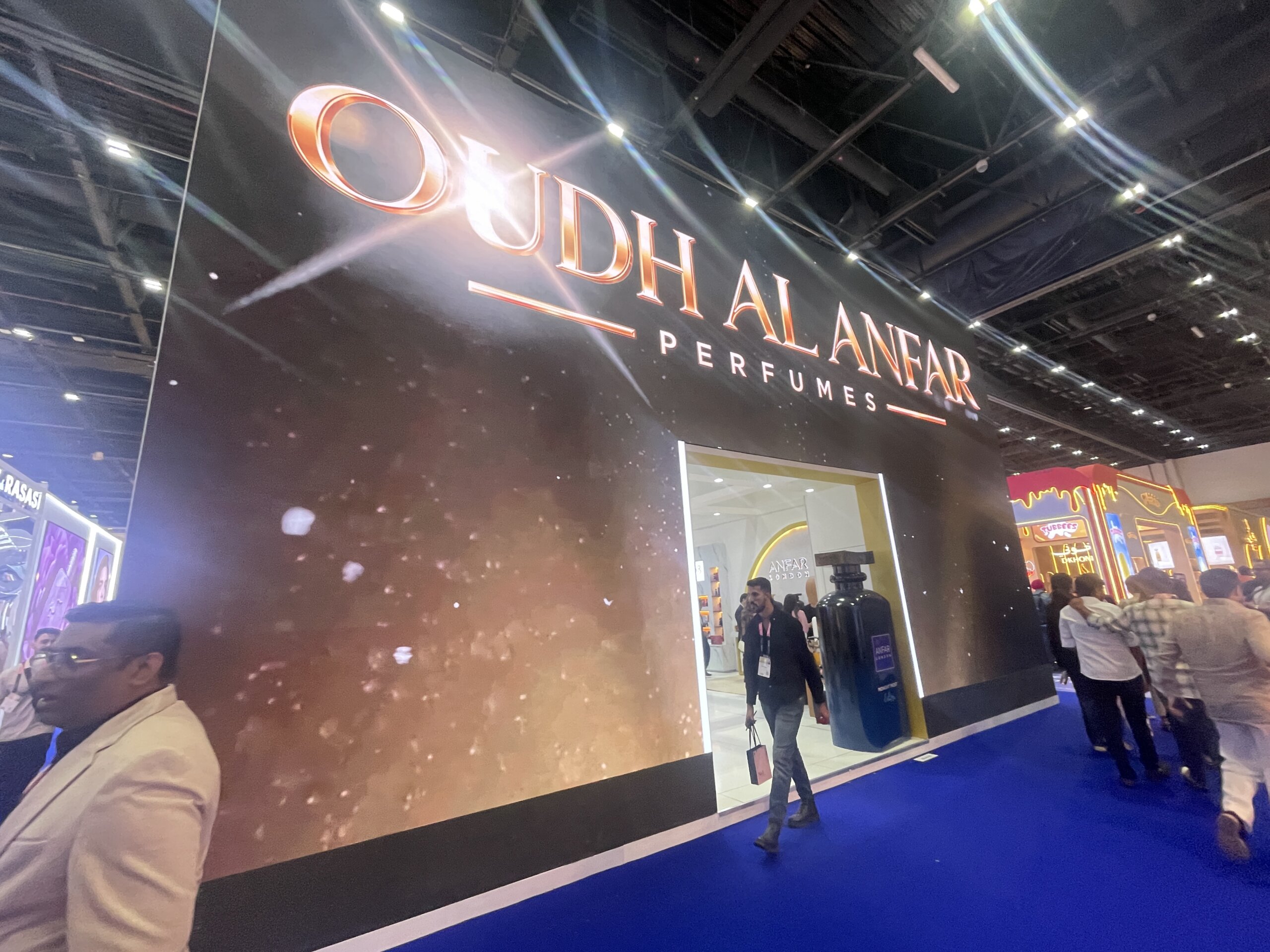
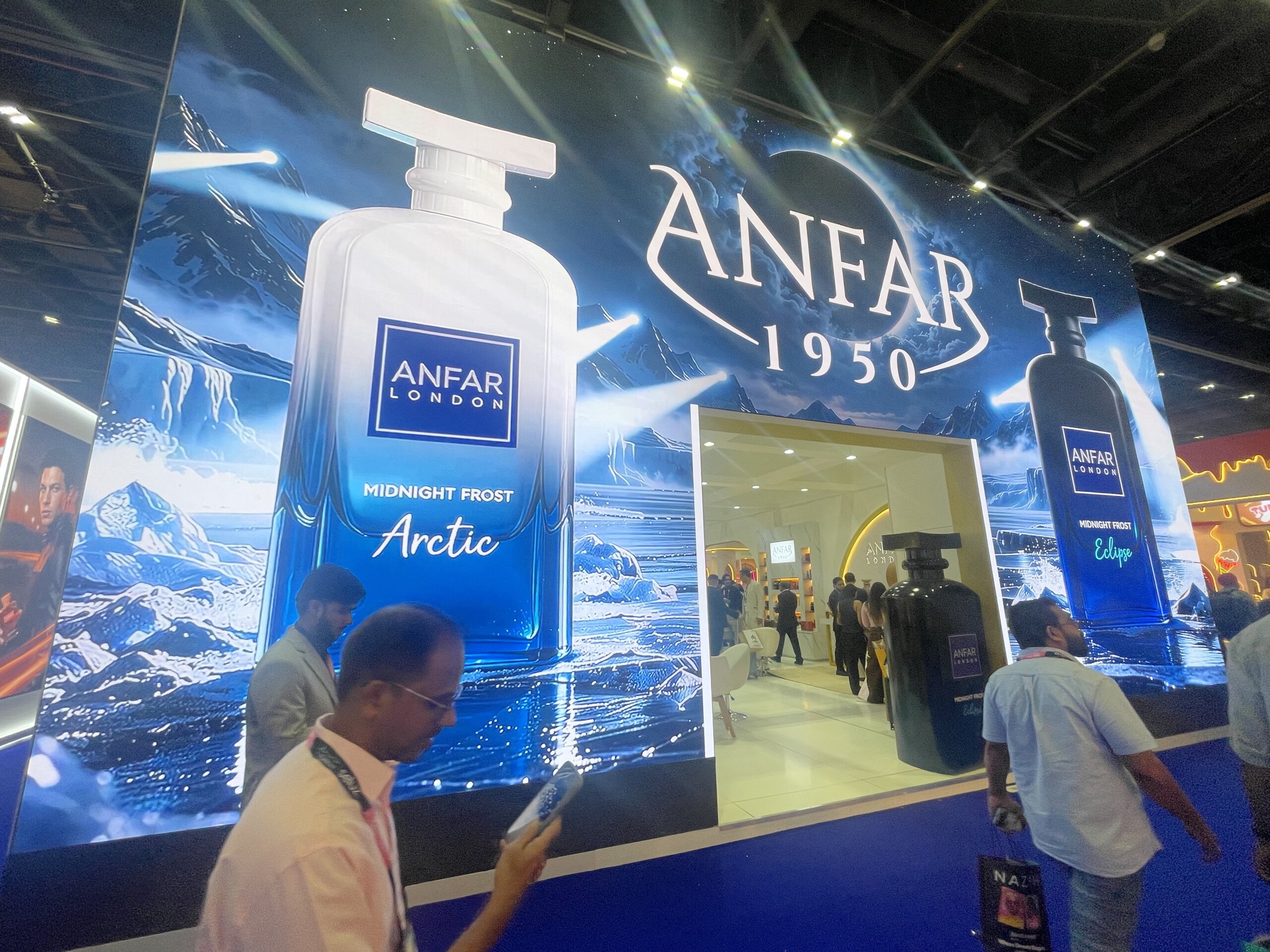
Almost all of the major fragrance houses exhibited, while there were also a string of smaller fragrance suppliers from India and Turkey. In terms of finished products, an impressive number of fragrance brands from the region exhibited, most with elaborate booths and hosting frequent animations. Bollywood actor Salman Khan, for example, made an appearance at Dubai-based Rasasi Perfumes’ booth for the launch of its new luxury fragrance house Kenz de Rasasi. In addition, Armaf ran The Armaf Hour at 12.30pm each day of the show to highlight a fragrance launch.
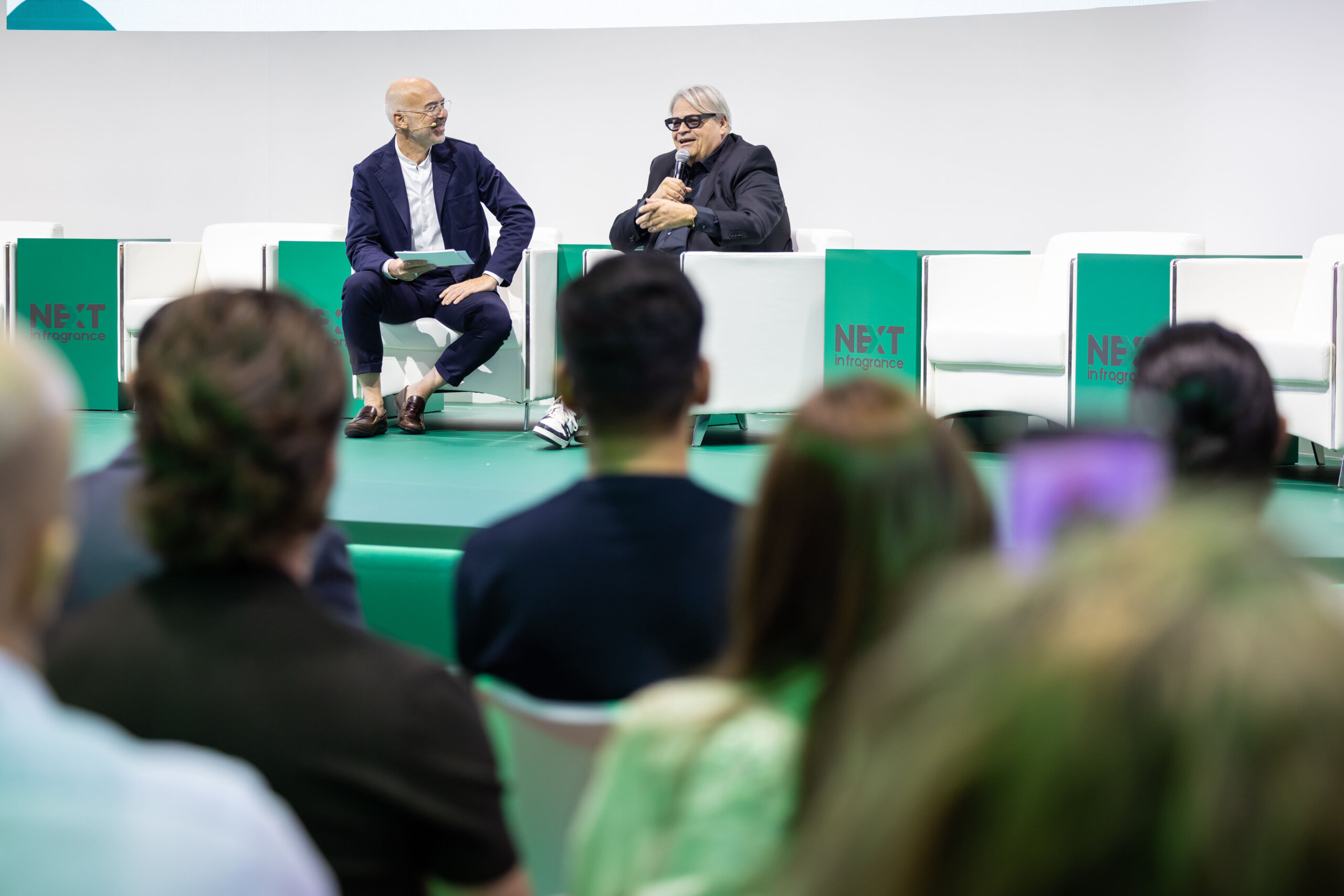
All in all, Beautyworld Dubai organizers said that the show hosted 1,300 exhibitors from 56 countries, while visitor numbers reached 62,130, a strong turnout especially given the geopolitical context. Some 42% of visitors were from outside the United Arab Emirates (UAE), with Brazil, the US, the UK, France, Saudi Arabia, Kuwait and Oman among the leading countries represented. In addition, the show’s conference line-up featured a string of key industry players, including perfumers Jacques Cavallier Belletrud and Aurélien Guichard.
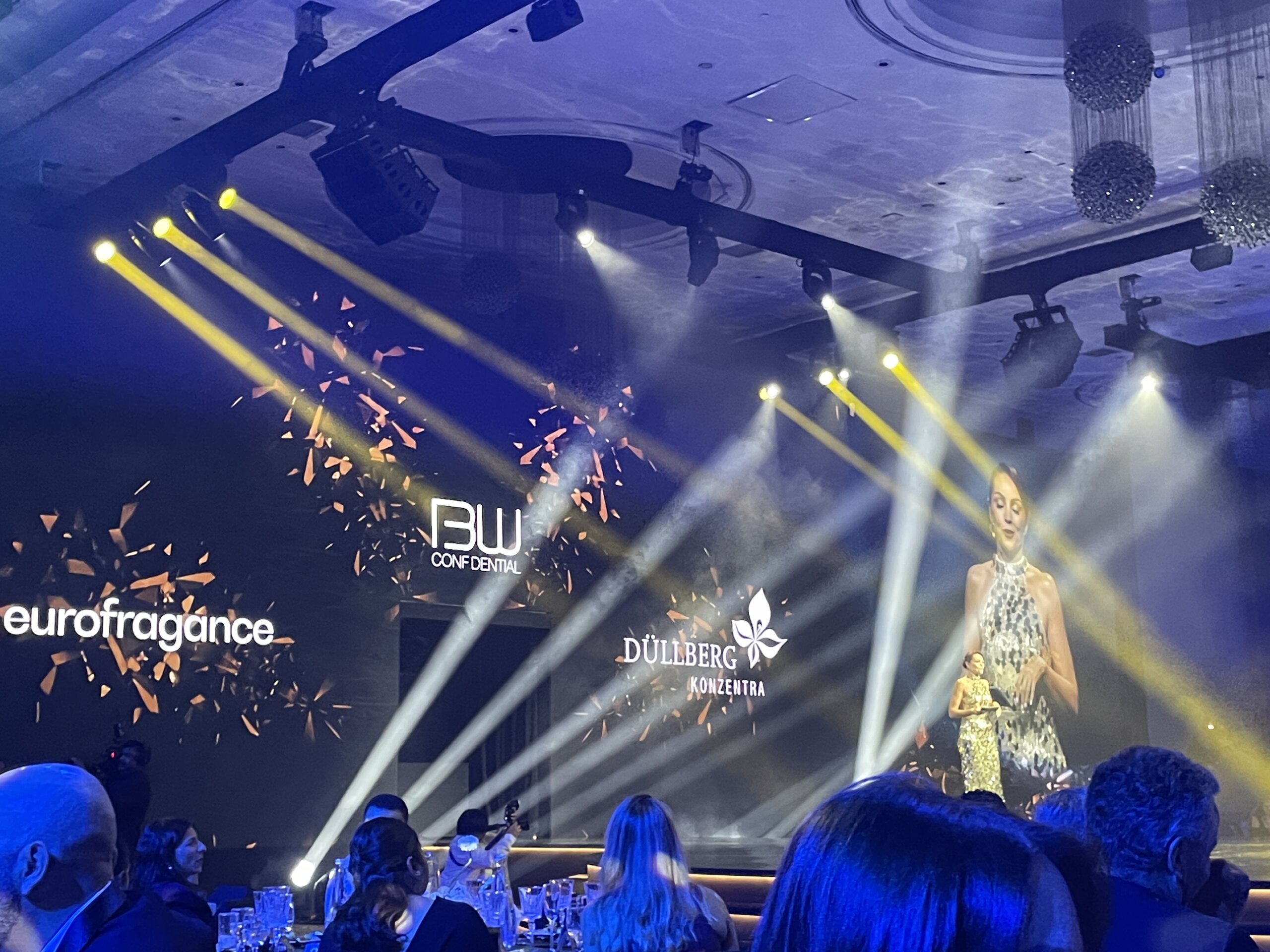
Another highlight of the show was the Beautyworld Dubai Awards. The awards were drawn from a shortlist of 85 finalists spanning established international names, homegrown Gulf brands and first-time challengers. A focal point of the awards ceremony was the presentation of the Beautyworld Icon Award to Huda Kattan. Entrepreneur and founder of the Dubai-born Huda Beauty brand, Kattan is seen as a personification of what it means to build a beauty brand from the Middle East and take it to the global stage. It was a fitting marker for an edition that the organizers said celebrated not just global beauty, but the region’s growing place within it.
“When this show began 30 years ago, the industry came here to sell. Today, it comes to discover, to invest and to learn,” said Ravi Ramchandani, Event Director, Beautyworld Dubai. “That’s the real story of this edition, not just how much happened over three days, but what it says about where the center of gravity in beauty is moving. We’re proud that so much of that conversation is now happening in Dubai.”
Talking points
Key issues under discussion among exhibitors and visitors at the show included the impact of conflict in the region on the business, as well as the rise and globalization of Arabian fragrance and beauty brands.
In terms of the Midde East market, most players agreed that the demand for beauty in the region remains largely intact (apart from travel retail which has suffered at the region’s major hubs). The key problems revolve around more complicated logistics (getting components in, especially packaging from China, and getting product out) and the associated increased costs – some companies say their cost of transport has quadrupled. This has of course taken its toll, with some local brands having built up high levels of stock that they have been unable to export, which in turn has impacted cash flow.
Another challenge is the impact of the current friction between Saudi Arabia and the UAE on business. Some distributors told BW Confidential that this has resulted in companies in the UAE not receiving payments from Saudi companies.
In terms of the growth of Arabian fragrance brands, exhibitors remarked on how fast regional brands move and how quick they are to tap into trends, come out with new products and develop internationally. They also pointed to these brands’ prowess when it comes to social media and also to the quality of their products in terms of ingredients and their overall savoir-faire when it comes to fragrance. This is increasingly appreciated by consumers, especially when the price point is lower than that of some more traditional fragrance brands. All this is something Western brands may need to pay more attention to.
Key trends from the show
–Water-based scents, with fragrance houses presenting new technologies in this area focused on the transparency of the formula, non-sticky textures and higher fragrance dosages.
–Widening use of fragrance, such as through layering, new applications, or products for hair and body. Increased perfume usage is also linked in part to the rise of water-based fragrances, which creates a new way of applying scent and incorporating fragrance into beauty regimens.
-More new formats for fragrance, especially in line with demand from Gen Z.
-Continued focus on fragrance’s impact on moods, wellbeing and sleep, as well as on the health benefits of scents and how these benefits can be measured using medical devices.
-Expansion of the home fragrance category, through new propositions for layering of home scents and creating scents for different rooms in the home.
-More personalized fragrances though different layering options and the rise of fragrance primers to be mixed with traditional scents.
-Continued growth globally of UAE-based fragrance brands, and expected international expansion of Saudi Arabia-based brands.
-Increased demand for naturals, premium and high-quality ingredients.
-Development of the gourmand fragrance family away from obvious foody and sugary scents and towards more subtle iterations or savory twists.
-Questions over potential attrition in the niche fragrance sector, given the number of brands and products coming on to the market. Some players say the segment in some ways resembles a bubble and is likely to stabilize at a more sustainable level in the near future.
Industry views on the market
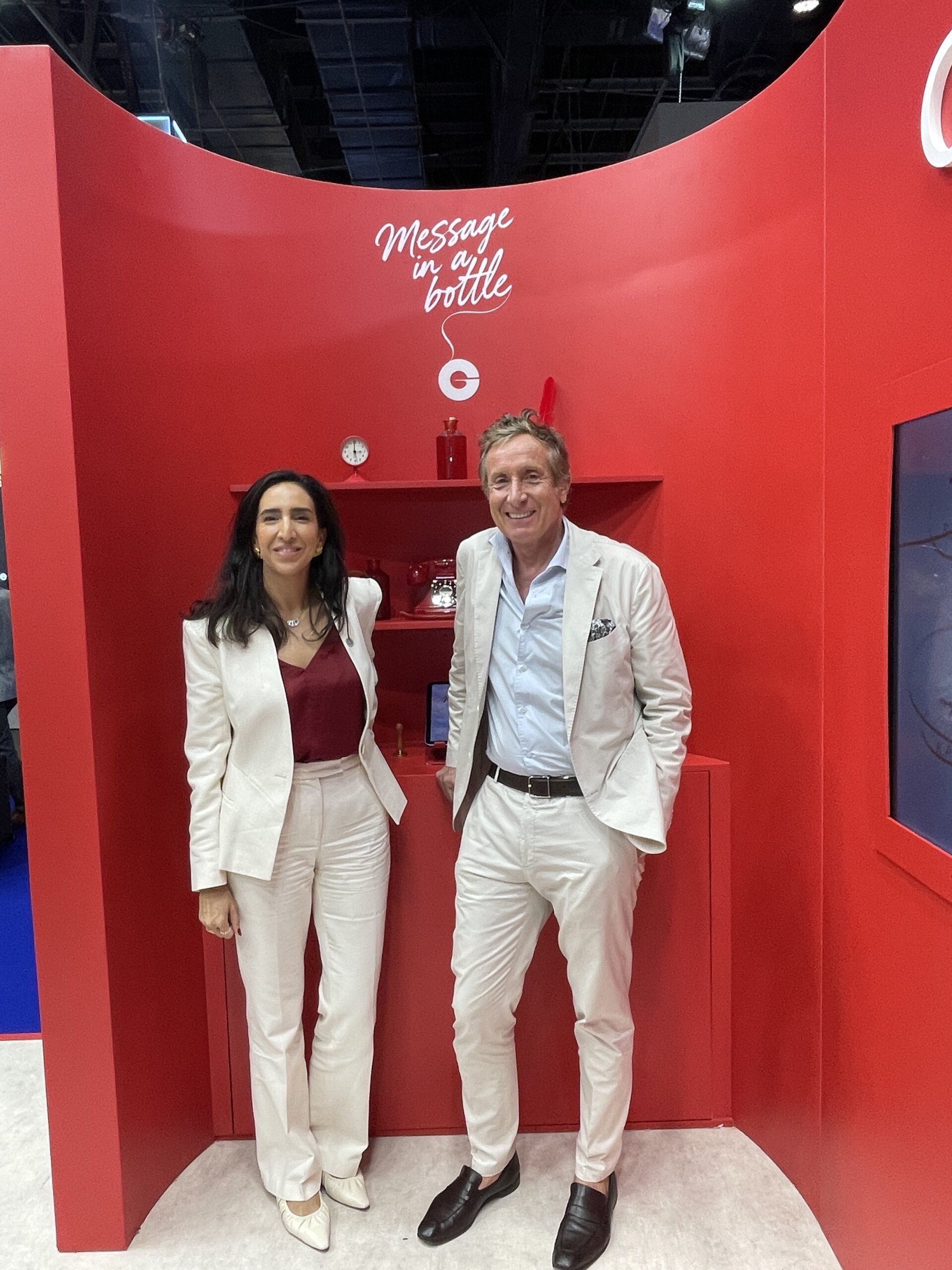
Givaudan Global Head of Fine Fragrances Xavier Renard & Givaudan Fine Fragrance Director, South Asia, Middle East, Africa, Danielle Hokayem give their views on the fragrance market in the Middle East
How do you see the growth of Middle East-based fragrance brands?
Xavier Renard: These brands have been developed over several generations and today are expanding rapidly and exporting to many countries around the world. If you look at Latin America or even the Americas in general for example, you’re talking about 400 million to 500 million consumers who love perfume. These brands offer exactly what those consumers are looking for: a reasonable price, high quality, creativity, a distinct olfactory identity and something entirely different from what they’ve known for the past 30 years. If each person there spends just €20, that’s already €10bn. So these brands are generating incremental growth; they have created an entirely new segment of the market.
Danielle Hokayem: It’s no longer just a trend. It has become a sector in its own right, and a distinct style of perfumery.
As Middle Eastern fragrance brands expand, they are taking share from Western players. How should Western players react?
Xavier Renard: They have to reinvent themselves. They must fully grasp the reality that they are facing competitors that offer an exceptional product and that are quite aggressive from a commercial standpoint. Perhaps the most important point is the high level of olfactory creativity from these brands; there is a real level of expertise. This isn’t something that happened in just five years, but the result of 40 years of accumulated expertise and know-how.
Danielle Hokayem: The quality is there. It’s generous—the volumes and the materials—and these brands have a rather unique business model. They’ve poured all their resources into the product itself, rather than everything surrounding it, which is one of their key strengths because today’s consumers are much less drawn to celebrity endorsements and what they really want is the product itself. Then there’s social media, which has completely changed the game. TikTok is essential for sales, and these brands ride the wave of virality and trends. Their speed is unprecedented—they are incredibly fast and agile and that resonates very well with young people.
How do you see the state of the fragrance market in the region in light of the geopolitical situation?
Danielle Hokayem: The problem is 100% logistics; demand just keeps growing. Also, Saudi Arabia wasn’t as severely impacted, nor was Oman, and so we have managed to leverage that. It’s a resilient market. We’ve seen many companies successfully find solutions to the challenges and navigating around delays and logistical issues.
In fact, the silver lining is that this experience pushed them to develop a “Plan B” and to diversify their operations. We’ve seen many companies begin to establish a presence in Europe, the US, Latin America, and elsewhere, and that’s a good thing, because it will facilitate exports and market penetration.
Xavier Renard: Yes, getting bottles for example, has been an issue for brands in the region, but the brands are diversifying and approaching their supply chain differently. They have adapted to this ‘new normal’, and it won’t stop them from continuing to export around the world. It’s a bit like Covid, which allowed them to implement a D2C (direct-to-consumer) model and leverage digital channels.
The most significant point is that consumers are clearly continuing to demand more fragrance and more creativity; that’s where the real opportunity lies.
What key trends do you see in Saudi Arabia?
Danielle Hokayem: It’s a massive market that continues to grow. We’re seeing more and more brands, and those brands are also upgrading, in terms of overall quality and their value proposition. The next chapter for Saudi companies will be exports. Up until now, Saudi Arabia has been a market focused on domestic consumption. Saudi brands are quite big, but for years they’ve remained very local. However, [many of these companies] are preparing to export, which is going to be interesting. There is the “Made in Saudi” brand, which carries its own weight, leaning toward tradition and rooted in the culture of Arabian perfumes.
When do you see the Saudi export trend materializing? Do you see this almost as a second wave of Middle Eastern brands going global?
Danielle Hokayem: It will probably start around 2027 or 2028—the processes are already underway. Right now, [exports] are mainly UAE-based—with a little bit of Oman in the mix too—and now Saudi Arabia is entering the fray.
Xavier Renard: Yes, it’s a second wave—one that, to me, is quite specific and distinct. It acts as a booster for quality and creativity, so I believe it will be beneficial for the category.
Views from MANE
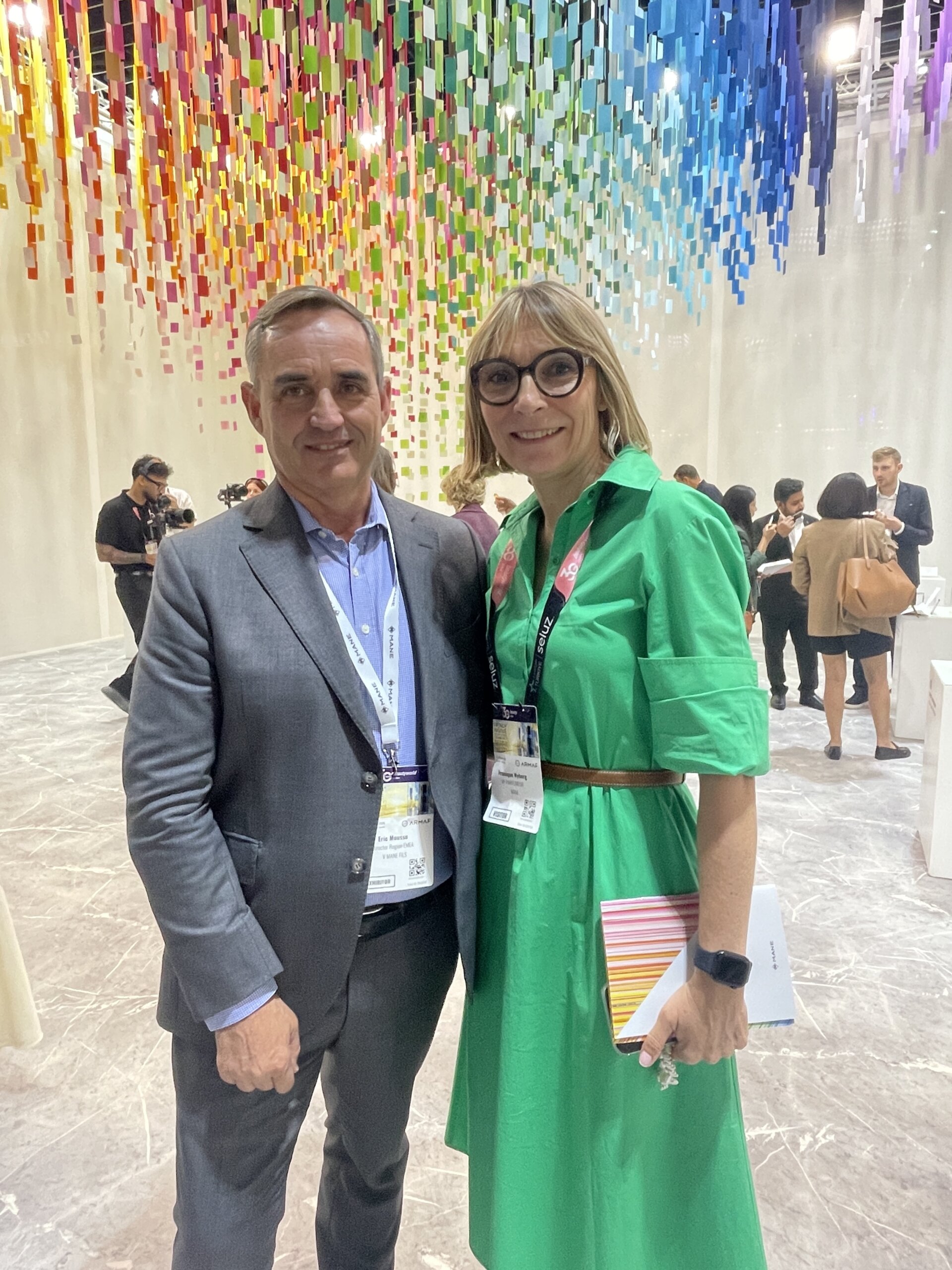
“The market is doing well, and Saudi Arabia has seen little impact from the events in terms of consumption. There has not been a slowdown in demand; the issue is more around complicated logistics and increased transport costs. Local brands are dynamic and continue to expand internationally. Dubai is becoming a hub for fragrance.”
MANE Director EMEA Region Eric Moussu
“There is a strong dynamism among Middle Eastern brands. Even though there are different ranges of fragrances, there is a real focus on quality and a pursuit of aesthetics where the ingredients lie at the heart of the creation”
MANE Vice President Perfumer & Creation Fine Fragrance Véronique Nyberg
Views from Cosmo International Fragrances
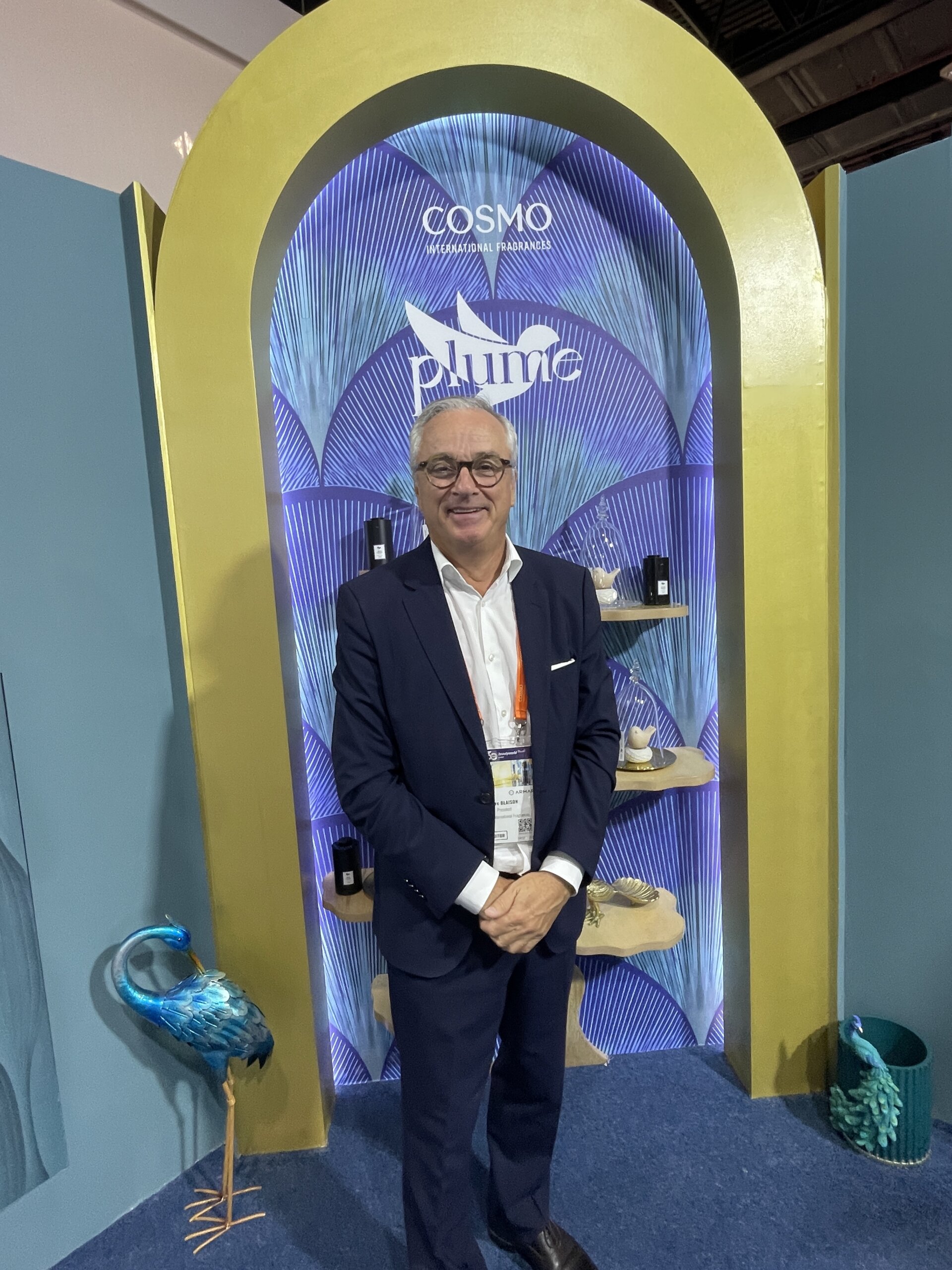
“In terms of trends, we continue to see strong growth in body mists, with more of these products now having high concentrations of fragrance. The naturals trend, which at one point had maybe subsided a little, is back in force. In addition, there is strong trend for water-based scents. The consumer is more receptive to this and the technology today is much better than it was in the past. Our water-based technology has been very well received by clients, and we continue to work on the next generation of water-based scent. There is also a lot of innovation in the area of personal care, with clients especially in the US, launching personal care with more active ingredients.”
Cosmo International Fragrances President Marc Blaison
Views from SFA Neroli
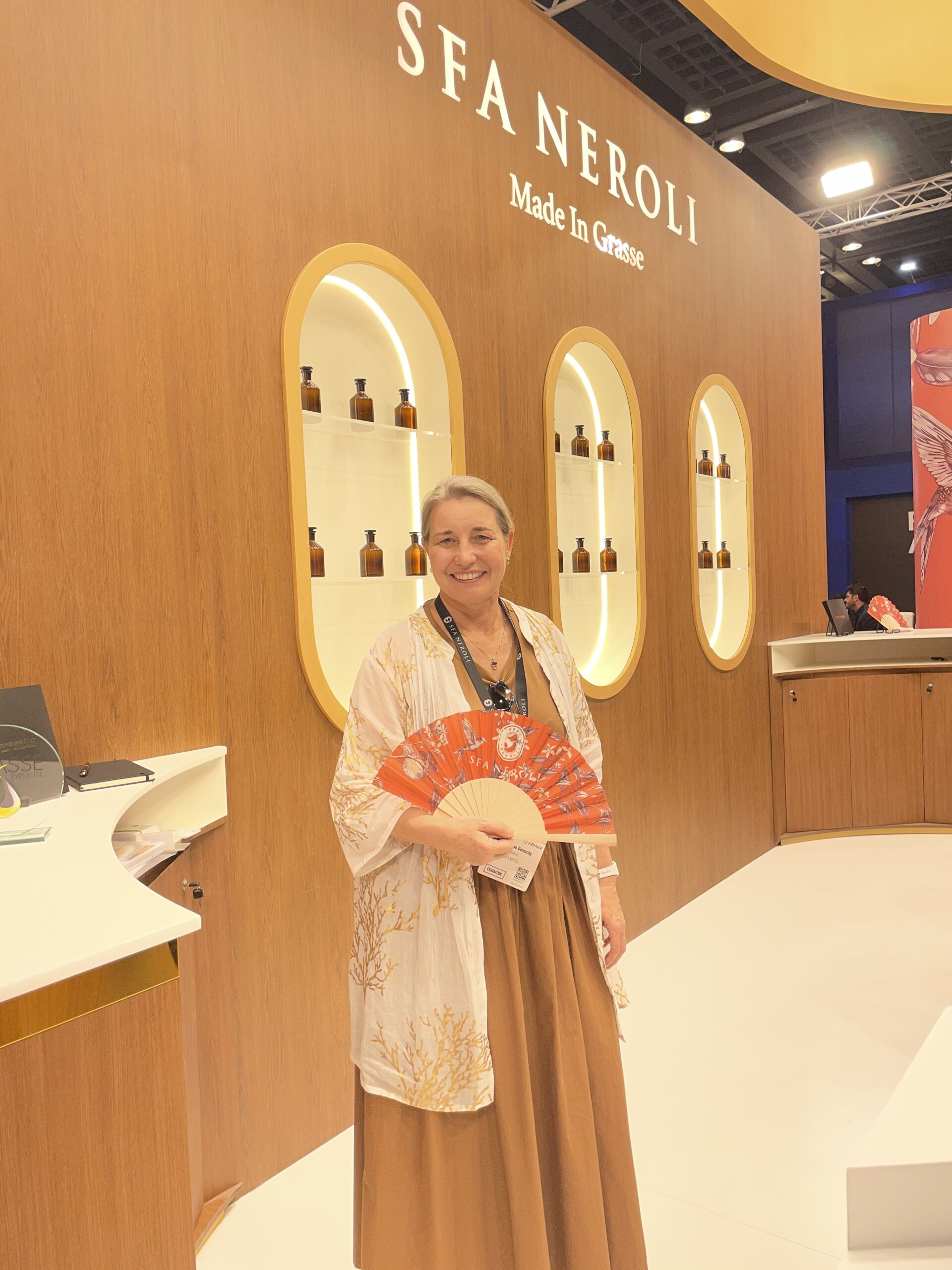
“The expansion of Middle Eastern brands is a long-term trend. The fragrances are high quality that’s why they are so successful. They also put a strong emphasis on the packaging, with heavy caps and with big sizes. This means that when you have the product in your hands, you feel you have something of value.”
SFA Neroli President Alexandrine Demachy
Seen in show
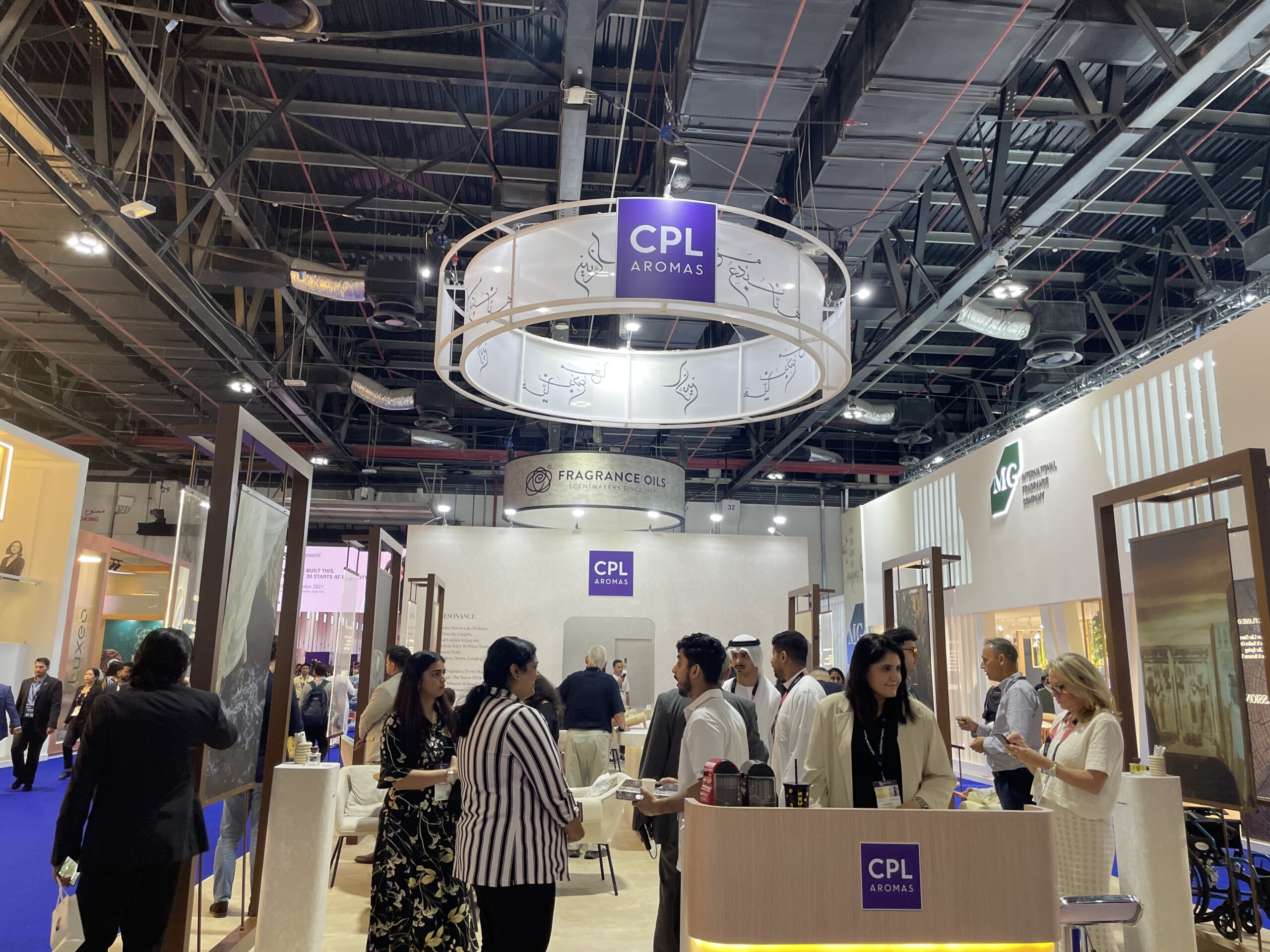
CPL Aromas presented Resonance, which is said to explore the relationship between poetry, emotion and scent. The company asked its perfumers to create a scent based on a poem and the emotions it inspired. Each scent was displayed in a cut-out nook of a book with the poem that inspired it printed on the book’s pages. The poems from the region and scents covered six emotions: passion, euphoria, longing, awe, rage and nostalgia.
CPL Aromas also shared a sneak peek of the latest addition to its AromaWellness technology platform called AromaWellness Desirability. With the new launch, CPL Aromas says it approaches desirability not just as a creative narrative, but as an emotional response that can be scientifically explored through scent. Desirability is defined within the company’s research as the degree to which a fragrance engages neural systems involved in motivational attraction. To investigate these responses, CPL Aromas used fMRI imaging alongside subjective response questionnaires to bring together subconscious neural response with participants’ conscious assessment of desire. The company says this technology creates an opportunity for brands to move beyond aspirational claims and explore fragrance benefits supported by scientific investigation.
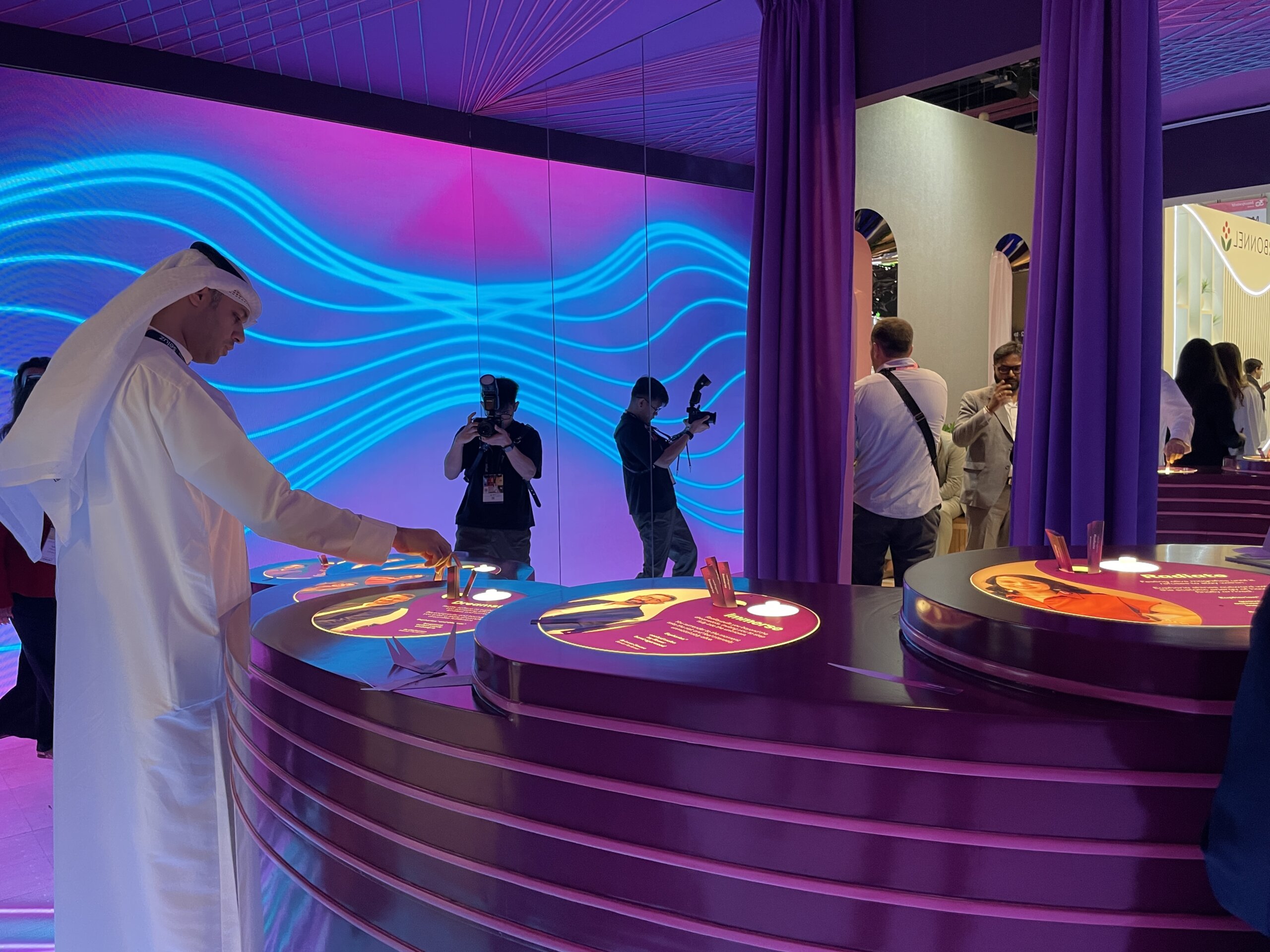
Spain-based Eurofragance presented Ascent, a collection of seven fragrances said to explore the connection between scent and emotion. The company says that the collection is an ascent, or a journey, whereby each fragrance is a step that builds towards euphoria. The scents are based on EuroMotion, the company’s mood-enhancing fragrance technology, which is designed to reinforce positive emotional responses through scent. The fragrances include Euphorion, Eurofragance’s exclusive ingredient, and several also contain Olivante, another captive.
Eurofragance was exhibiting at Beautyworld for the 16th time. Oumayma Tabet, Managing Director Middle East at Eurofragance, says the Middle East is a key market for the company and is setting trends internationally. Eurofragance operates a creative center in Dubai.
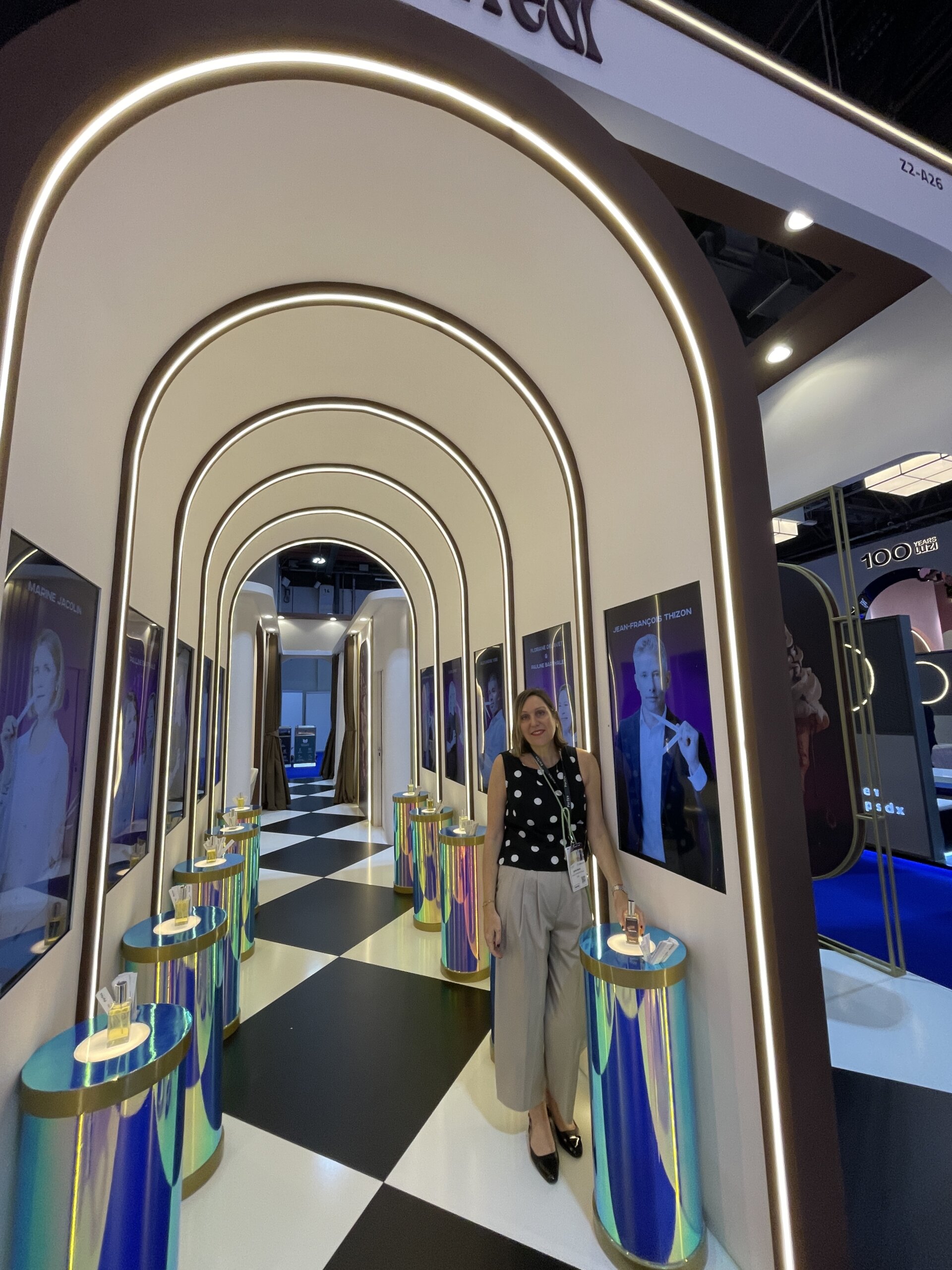
Parfex presented Hyperreal, which the company describes as a collection of six fragrances that respond to consumer demand for surprising or unexpected scents and that mirror the influence of neo-surrealism and hyperrealism in art, fashion and design. The fragrances include Clean Paradox by Marine Jacolin, which the company says pushes clean accords into more radiant territory; Hypnotik Edge by Lucie Lopez, where the contrasts of luminous creamy facets of iris, coconut and ambrette and darker textured accords of coffee, tonka bean and incense coexist and intertwine with each other, rather than unfold through top, heart and base note; and Icy Crush by Jean-François Thizon, which represents a new type of gourmand that is lighter and more textured than the rich sugary fragrances usually associated with this fragrance family.
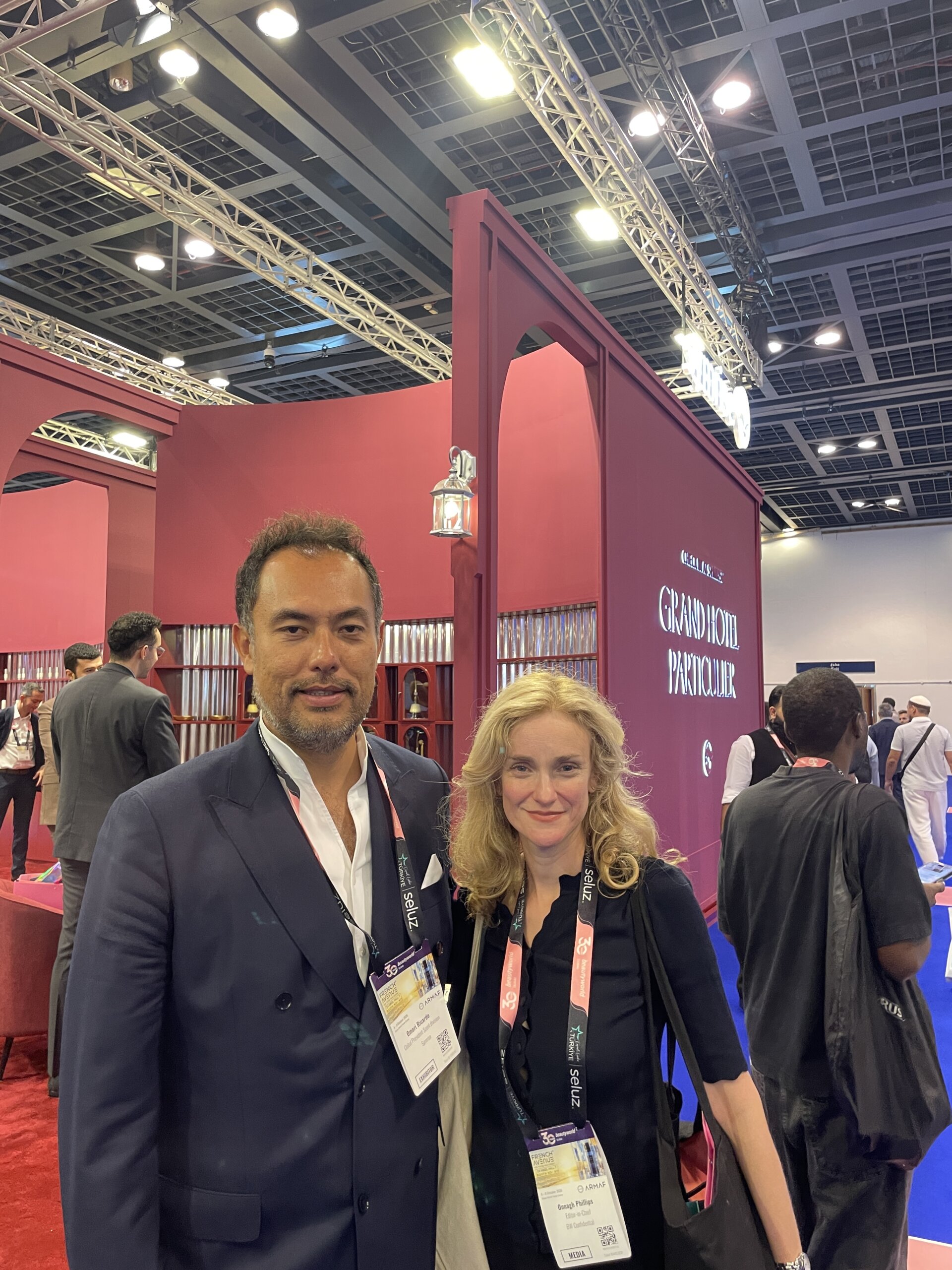
Symrise’s booth design was based on the concept of a Grand Hôtel Particulier and brought together fine fragrance, consumer products and cosmetic ingredients, in line with the company’s ONE Symrise strategy. The Grand Hôtel Particulier concept was inspired by French luxury and France’s palace hotels. It housed six clusters that evoked hotel spaces, such as the lobby, the suite and the fumoir.
In fine fragrance, the company showcased 14 creations by 13 of its perfumers. The scents highlighted premium ingredients, such as bitter orange hand-pressed Madagascar, Olibanum CO², and a co-distillation of Mandarin Hand-Pressed Madagascar with Symrise’s captive Cantaloop. It also presented a selection of raw materials from Floral Concept, the Grasse-based company Symrise acquired this year. For cosmetics ingredients, the company showed scented formulations in suncare, face creams, hair serums, mists and hand creams.
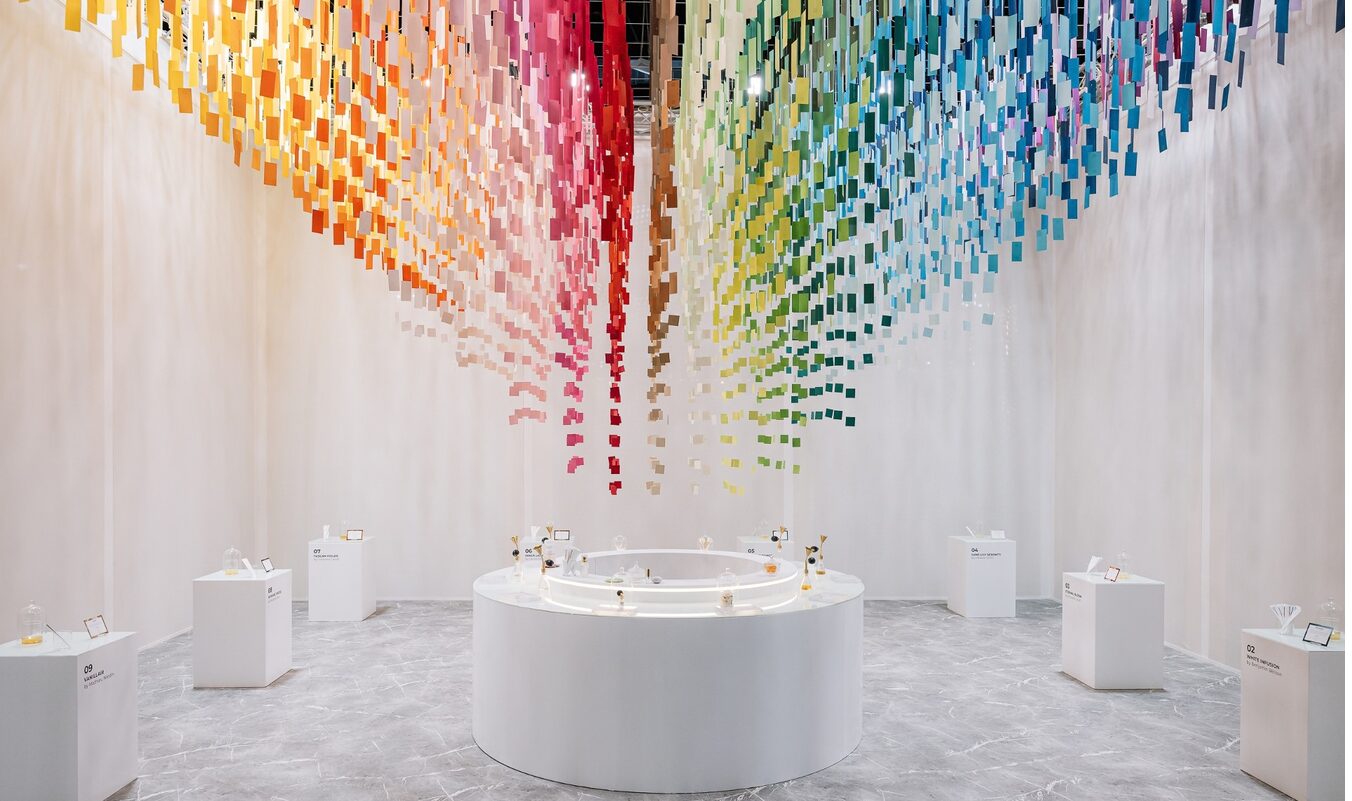
MANE showcased Prismatic, a concept based on the power of light. The company says that the idea is that just as a prism reveals colors of the spectrum within white light, fragrance reveals layers of complexity, emotion and sensation. MANE’s booth featured an installation of suspended colors by architect and artist Emmanuelle Moureaux, with each color intended to reflect fragrance emerging from a source and diffusing in the air. MANE perfumers Benjamin Bélizon, Cristiano Canali, Violaine Collas, Arturetto Landi, Isabelle Levert, Cécile Muller, Véronique Nyberg, Heesoon Oh and Cyrill Roland each created a scent inspired by a specific facet of light.
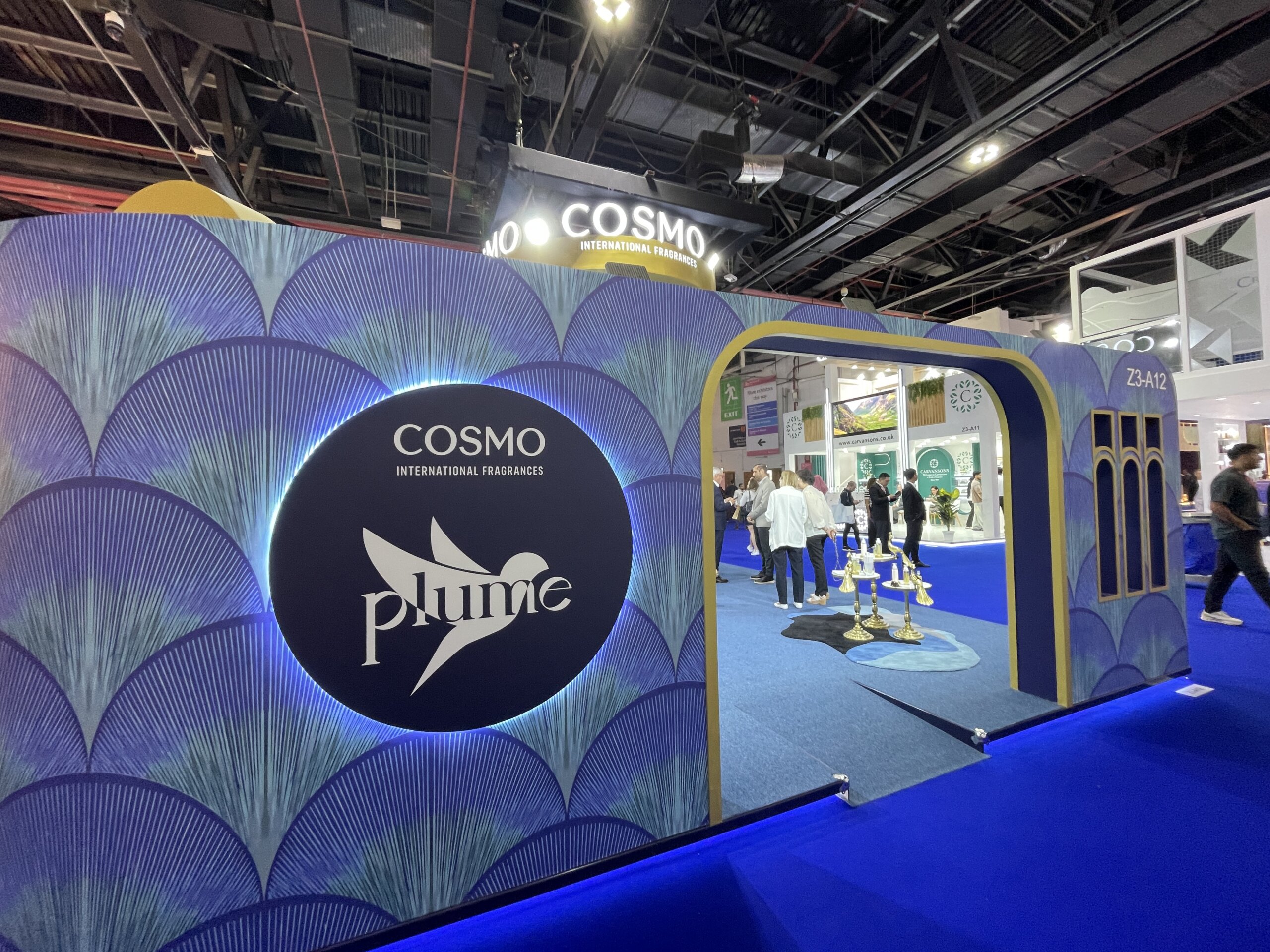
Cosmo International Fragrances presented its Plume olfactive concept, inspired by the world of birds. The collection aimed to translate the freedom symbolized by birds into fragrance, as well as celebrate birds’ characters, plumage color and instincts. The collection covered fine fragrances (with scents such as Sailor Albatross and Harlequin Parrot), hair and body mists, bakhoors and home scents. The scents featured the company’s exclusive natural ingredients and signature technologies, such as AquaElixir and ScentBloom.
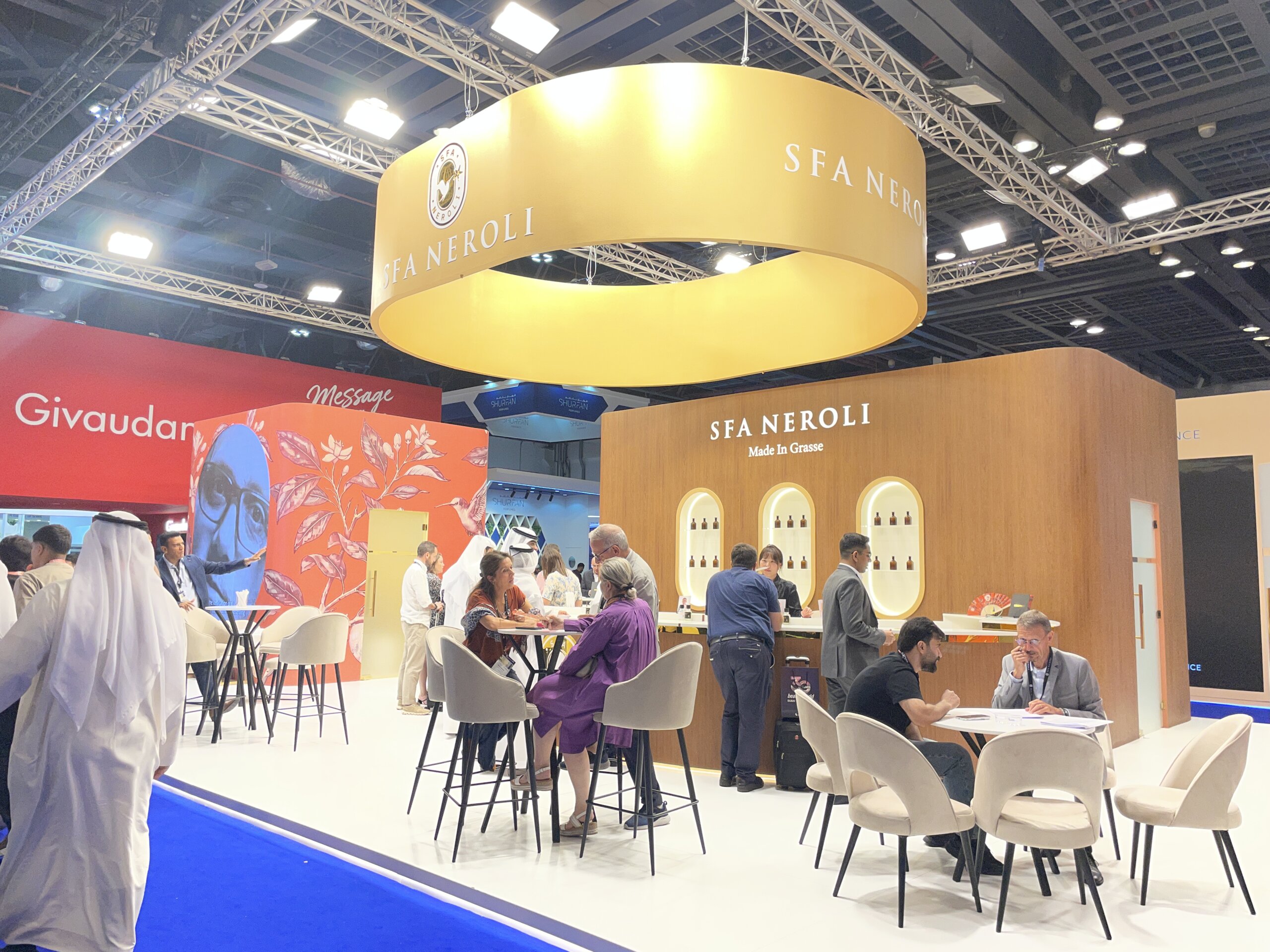
SFA Neroli (Symrise) put the focus on natural ingredients in a concept it called L’Atelier de Nos Matières (Our Raw Materials Workshop). It showcased seven scents by seven perfumers, with each crafted around seven key raw materials in perfumery: lavender, orange blossom, jasmine, orris, saffron, vanilla and myrrh. The fragrances featured ingredients from Grasse-based Floral Concept, which Symrise just acquired, and Symrise’s naturals arm Maison Lautier. (Symrise acquired SFA Romani and Groupe Neroli in 2022).
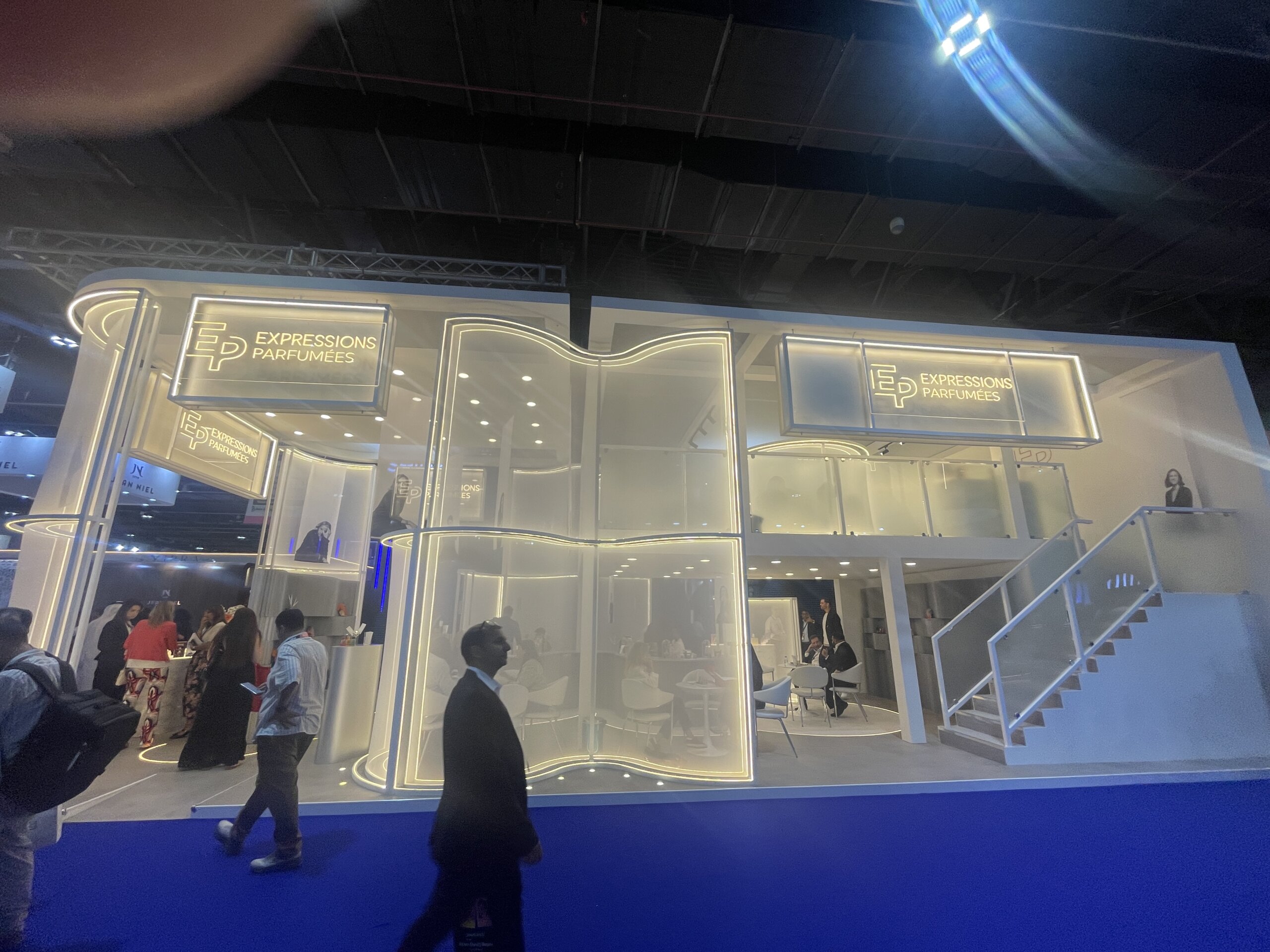
Expressions Parfumées presented The Musk Essences based on the company’s latest water-based technology, Aquaco Essence. The technology enables fragrance concentrations of up to 25% (it can also be used for all fragrance families) and means the fragrance is completely transparent and has a silky feel without the stickiness usually associated with water-based fragrances. The company says the high concentration brings fine fragrance standards to a water-based format. It adds that the removal of the drying effect of alcohol and inclusion of an emollient is in line with the skinification of fragrance trend. The Musk Essences collection includes four different water-based musk primers, which can be layered with the company’s Bare Obsession ambery skin scent to create a personalized fragrance. The company supplied a layering menu explaining the type of fragrance created with each layering option.
“This is a new approach to the fragrance gesture and sits midway between two significant trends: skinification and personalization. Traditionally perfume is a final touch applied just before leaving the house. We’ve approached this differently by starting with the skin itself and incorporating a primer, so consumers can build a base tailored to their needs, essentially creating ‘amplified skin’, explained Expressions Parfumées Marketing & Communication Director Marie-Eugénie Bouge. She continued: “Using a fragrance in this way, as part of a skincare-like application, is a departure from the conventional method of dabbing perfume onto pulse points. It introduces a deeply hyper-sensory dimension; for example, you apply it after a shower at a completely different moment in your routine. The act of application becomes crucial—it’s an integral part of the ritual, signaling that fragrance is now becoming a core element of one’s beauty regimen.”
Expressions Parfumées also presented a home fragrance line that reflects the premiumization of this category, called The Harmony of Elements. The collection applies the idea of layering to home fragrance to create more personalized scents, or to create different scents or different intensity of scents for each room. The collection includes the Tryptique Candle, featuring three different layers, with each layer revealing a different scent as it burns (each layer of the candle is also represented by its own color). Each of the fragrances are also available as an individual candle, allowing the user to experience each scent on its own or combine them to recreate and personalize the layered experience. Also in the collection is a reed diffuser, which combines all three fragrances into one composition.
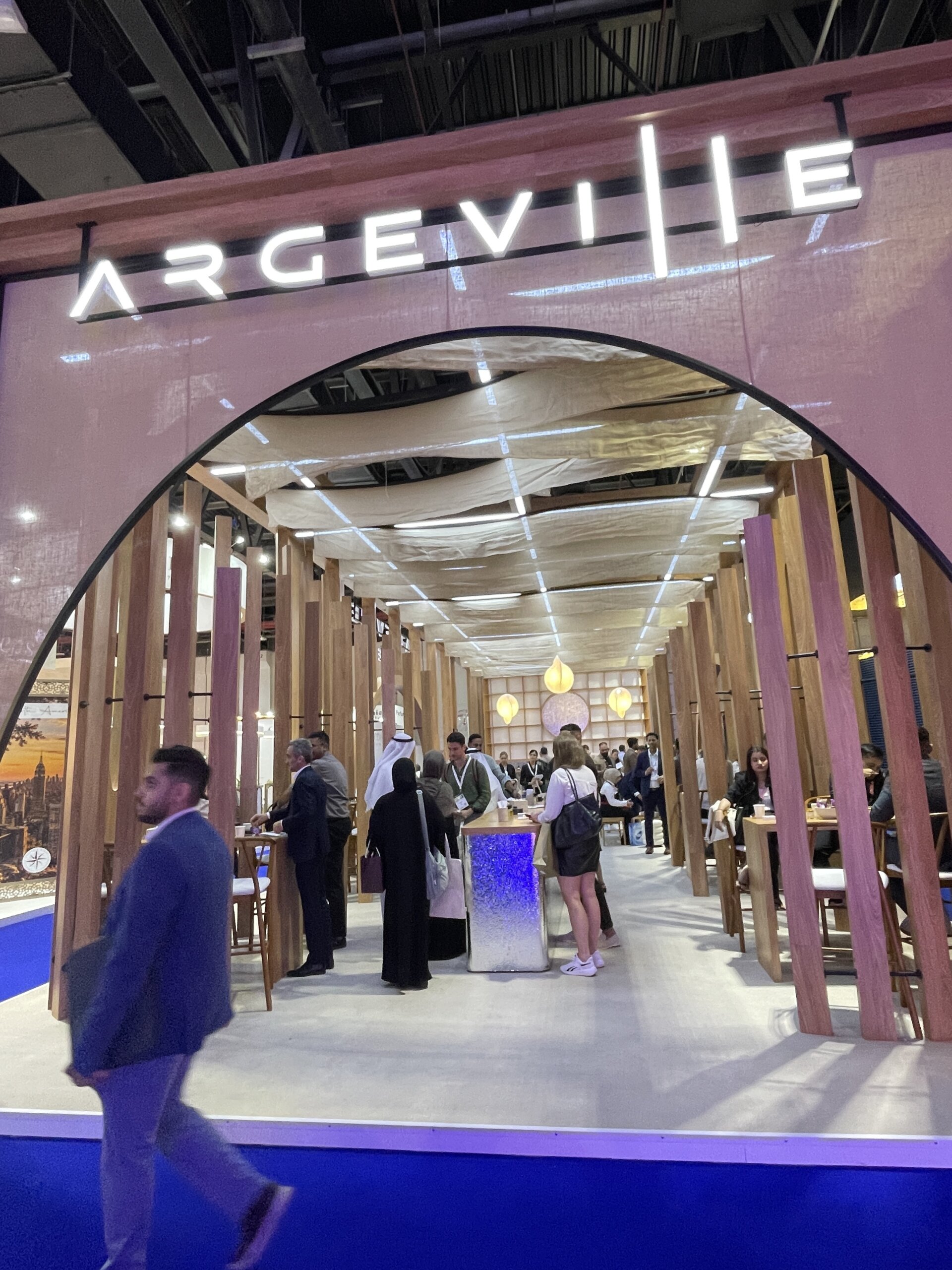
France-based fragrance house Argeville presented the Written in Dust collection, inspired by the desert. The collection explores two olfactive territories. The first, called Earth Born, was inspired by the heat and the minerality of the desert, while the second, called Untamed Creatures, was described as a homage to the creatures that live in the desert. Argeville continues to expand its international reach – its international business now accounts for 90% of its turnover and the company operates 11 centers around the world. The company reported a turnover of €90m in 2025.
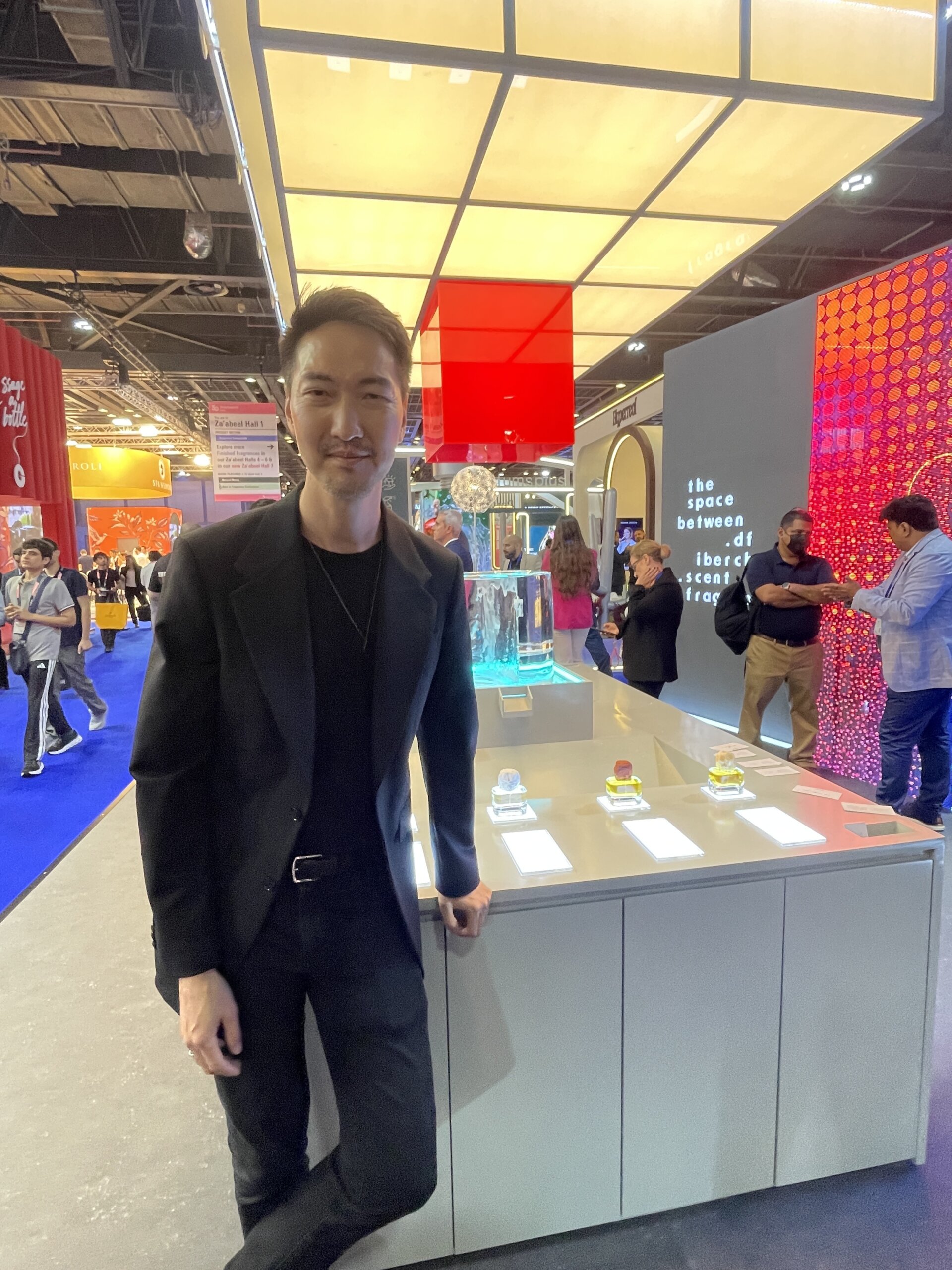
Iberchem unveiled its The Space Between concept, which the company says explores the invisible territory that exists between two opposing forces: heat and cold. This idea was conveyed on the booth by a large ice-cube-like structure. The company came up with a collection of four fragrances to reflect this concept. Each scent featured contrasting olfactive notes to illustrate the balance between warmth and freshness. The fragrances were created by Iberchem’s Fragrance Creation Director Luz Vaquero, Dubai-based perfumer Remon Ageeb, and perfumers María Ángeles Santiago and Sandra Lucas.
Iberchem also showcased its water-based fragrance technologies NovaSilk and NovaSilk Clear with either a milky or transparent appearance.
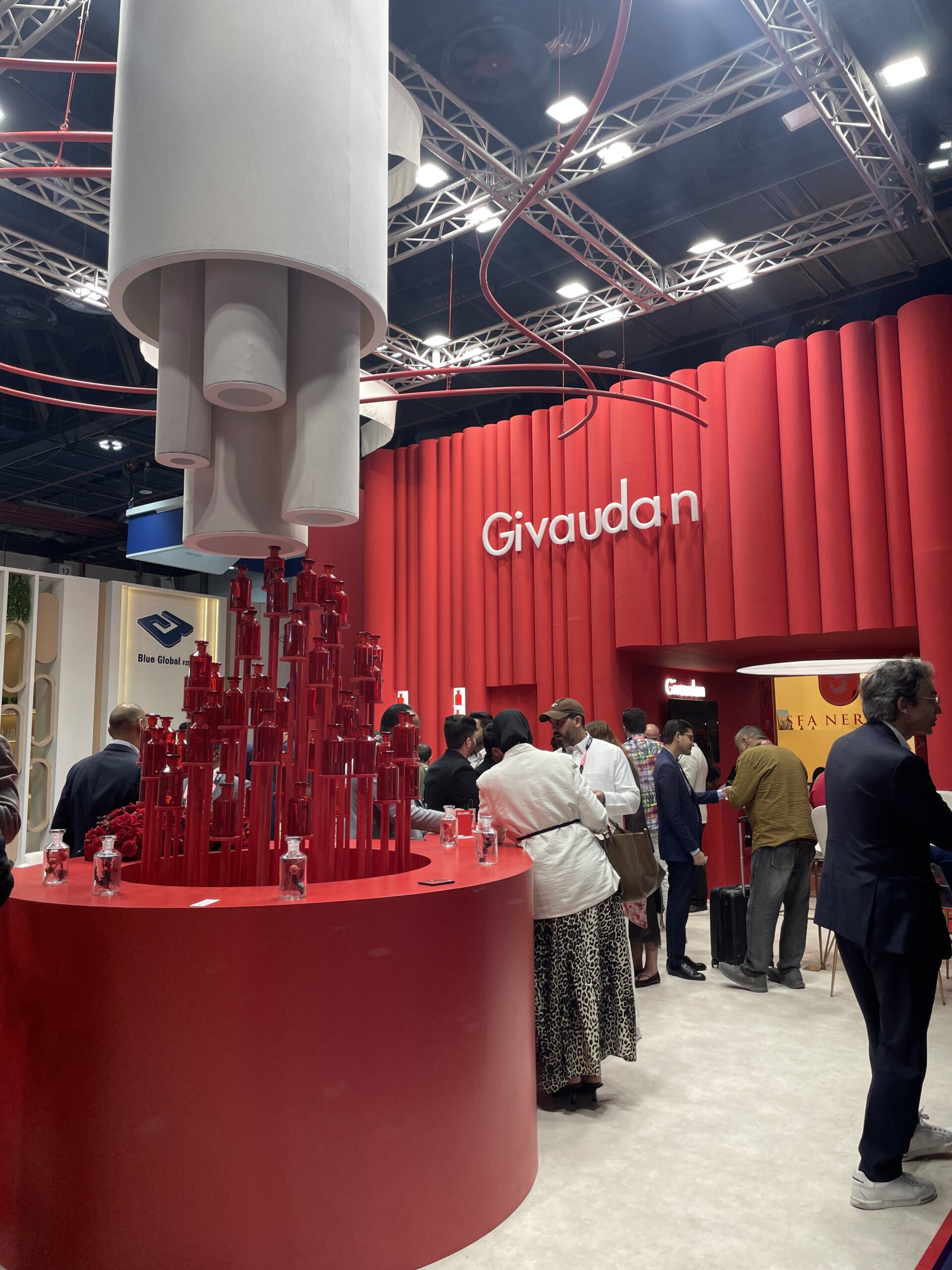
Givaudan presented ‘Message in a Bottle’, which it describes as its olfactive manifesto for the year ahead. The manifesto positions fragrance as a social gesture and as a way of social belonging in a society that is suffering from an epidemic of loneliness. The company studied the emotional and social motivations shaping fragrance use worldwide and says that there is a cultural shift towards belonging and shared experiences. Social belonging emerged as one of the strongest drivers: 43% of women and 46% of men embrace it globally, with a marked skew towards Gen Z. The initiative reimagines clean and fresh scents, tactile ‘neo-animality’ and food culture.
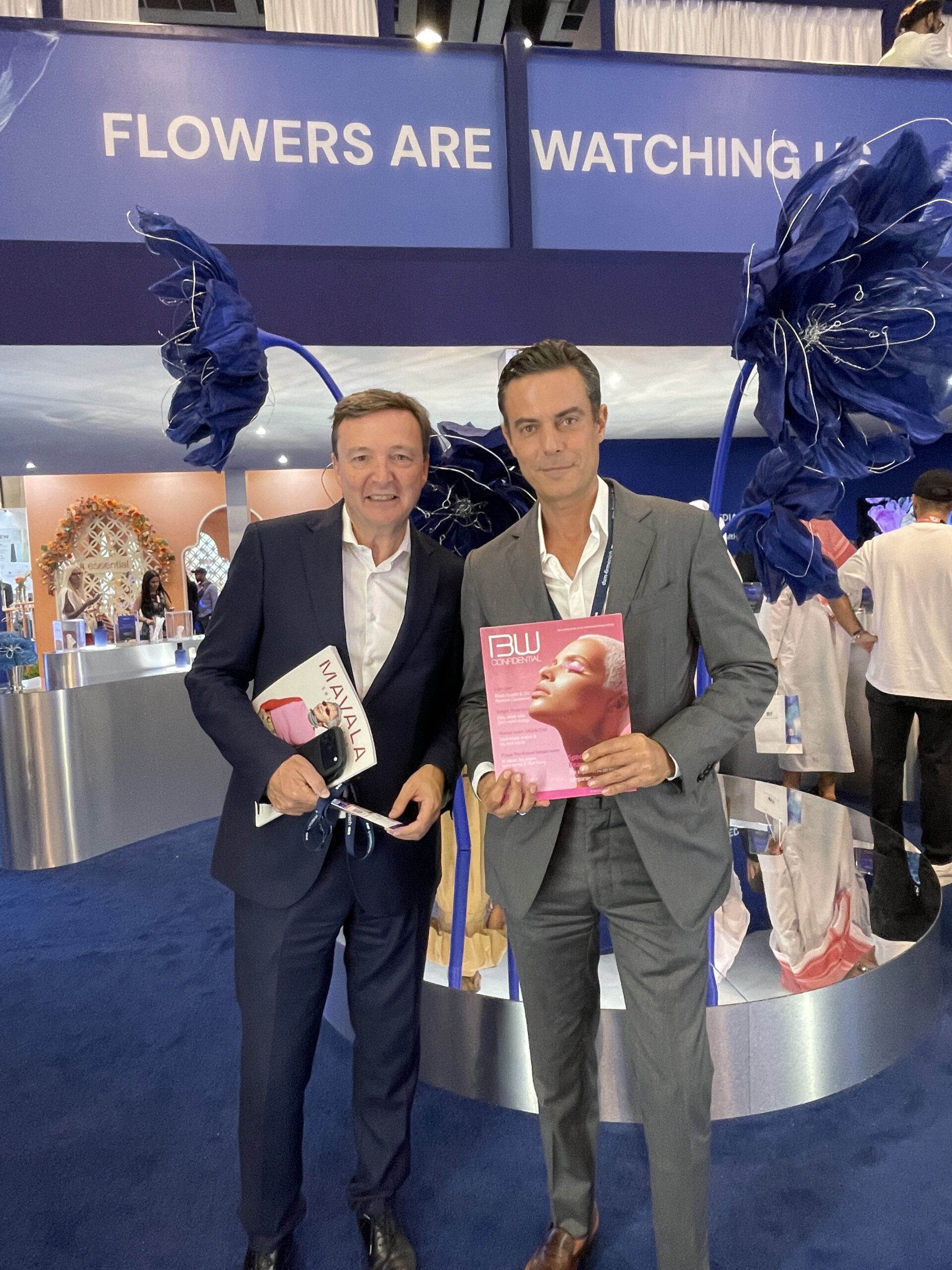
dsm-firmenich presented its Flowers Are Watching Us concept, which it describes as an artistic and olfactive exploration of the future of florals in perfumery. The company created a collection of fragrances exclusively for the show that explored how floral perfumery can evolve for a new generation of consumers who look for fragrances inspired by local culture. The fragrances, by dsm-firmenich perfumers Honorine Blanc, Nathalie Lorson, Hamid Merati-Kashani, Ilias Ermenidis, Carmita Magalhaes, Abdulkader Fattouh, and Florian Pellegrin, were described as moving beyond the literal representation of flowers to new expressions of modern Middle Eastern luxury. The scents were presented in bespoke bottles by fragrance packaging company Identiscents.
A key highlight was Muguet Firgood, which was produced using the company’s Firgood patented extraction technology and revealed the olfactive signature of the lily of the valley, a “silent” flower long considered impossible to extract. dsm-firmenich says that the solvent-free process uses only the flower’s inherent water and delivers a pure, 100% natural extract.
In addition, the company showcased its 3D Skin-Mapping technology, which claims to translate scientific measurements into clear visuals, so visitors can see how ingredients deliver benefits, such as skin hydration.
In and around the show
The Beautyworld Dubai Awards
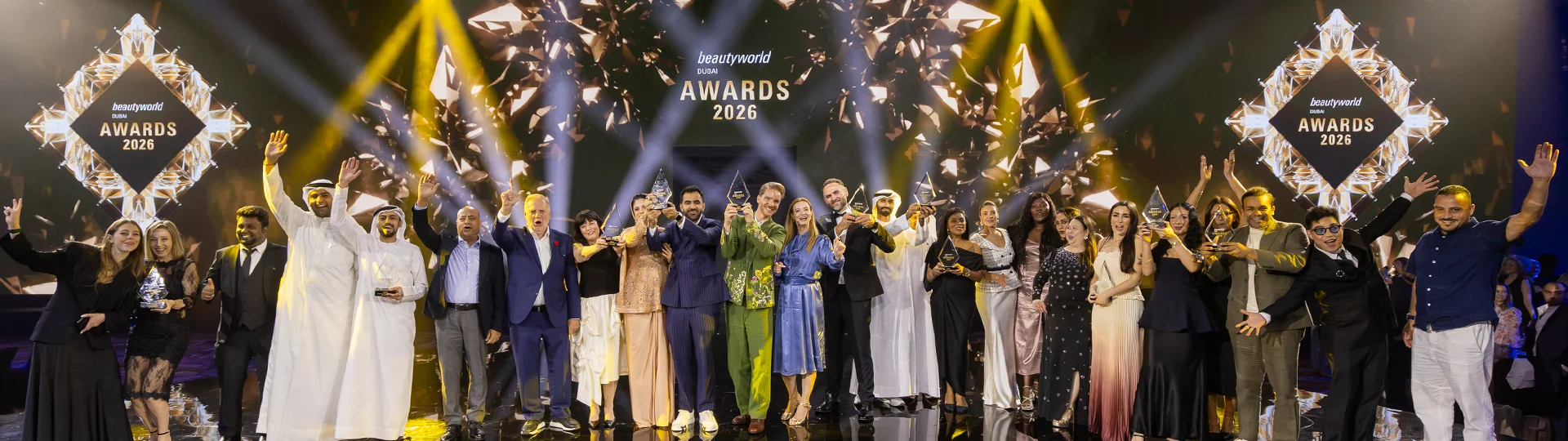
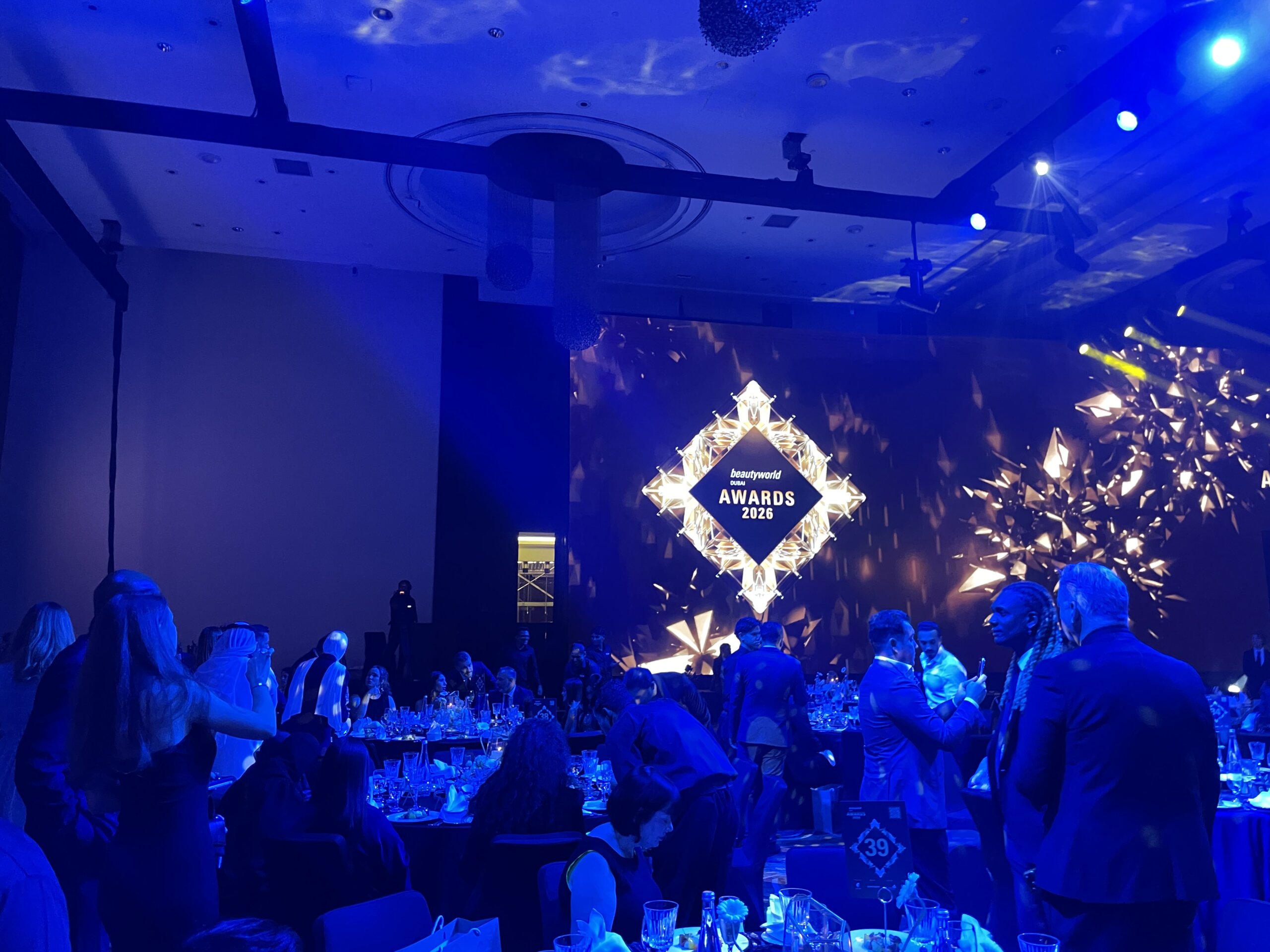
The Beautyworld Dubai Awards took place at Le Méridien Dubai Hotel & Conference Centre on October 7, during the show’s milestone 30th edition.
The Awards recognize achievement across the full breadth of the sector, from fragrance, skincare and cosmetics, to hair, packaging, retail and beauty technology.
This year’s winners were drawn from a shortlist of 85 finalists spanning established international names, homegrown Gulf brands and first-time challengers.
A highlight of the Awards ceremony was the presentation of the Beautyworld Icon Award to Huda Kattan, entrepreneur and founder of the Dubai-born Huda Beauty brand.
For more information on the winners, read our article on the Beautyworld Dubai Awards
Read BW Confidential’s Special Edition on the Awards Read the Special Edition